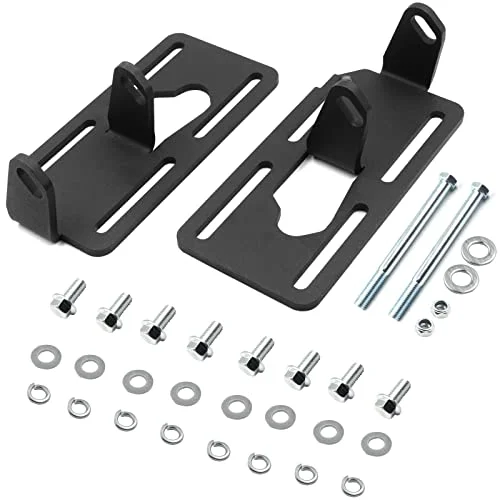
The hardest part of finding the best LS engine swap setup isn’t picking an engine—it’s figuring out which “small” parts actually determine whether everything bolts in cleanly. On square-body and G-body builds especially, the real fitment gaps come down to details like bellhousing position, crossmember clearance, and oil pan/sump shape. That’s why motor mounts, adapter plates, and sump solutions matter as much as the engine itself. Order the wrong combination and you can end up grinding for clearance, chasing oiling issues, or discovering sensor/wiring integration problems late in the project. In this review, I’m narrowing the list to the swap components that directly target those pressure points and match the vehicle-and-engine fitment cues shown in each listing.
When I look for the best LS engine swap components, I try to separate “fits in theory” from parts that actually line up where it counts. Geometry (how far the crank centerline moves), material strength (especially in mounts and brackets), and installation completeness are the big three. Adjustable mount systems can help you dial in clearance around steering, frame rails, and exhaust routing—just don’t assume they’ll fix an incorrect base mount pattern. Adapter plates are a specific answer to a specific problem: keeping SBC-style mount points while relocating the LS engine correctly. Oil pan kits should match sump style and the filter requirements listed for the engine generation, while shorty headers need to be swap-only (and avoid LT-style port layouts) to prevent clearance and routing surprises. Finally, sensor adapters only earn a place on my shortlist when the thread standard and physical depth line up, so temperature sensing doesn’t turn into a guessing game.
⚡ Quick Verdict
Our Top Picks at a Glance
| Image | Product | Score | Link |
|---|---|---|---|
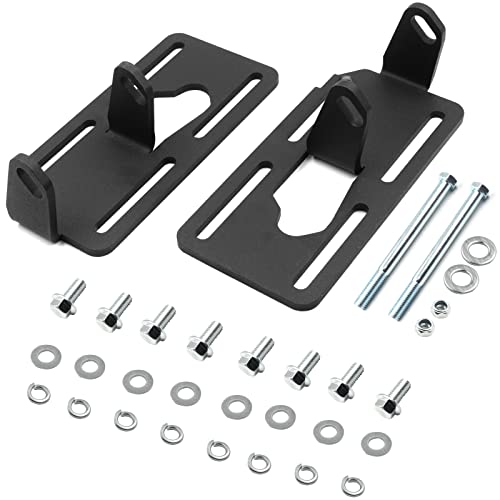 |
LS Swap Motor Mounts Compatible with 1973-1998 Square Body / 🏆 Editor’s Pick |
9.0/10 |
View on Amazon Free Shipping & 30-Day Returns |
 |
for LS Swap Motor Mounts Adapter Plates – Universal Swap Bra 🥈 Runner-Up |
8.6/10 |
View on Amazon Free Shipping & 30-Day Returns |
 |
LS Swap Retrofit Engine Aluminum Oil Pan Kit For 1955-1987 G | 7.8/10 |
View on Amazon Free Shipping & 30-Day Returns |
 |
Stainless Steel Headers, Shorty Style for LS Swaps, Universa | 7.2/10 |
View on Amazon Free Shipping & 30-Day Returns |
 |
maXpeedingrods LS Engine Swap Mount Adapter Kit with Hardwar | 8.1/10 |
View on Amazon Free Shipping & 30-Day Returns |
 |
Stainless Steel Coolant Water Temperature Sensor Adapter M12 | 8.4/10 |
View on Amazon Free Shipping & 30-Day Returns |
 |
LS Swaps into Anything: How to Swap GM LS Engines into Almos | 6.4/10 |
View on Amazon Free Shipping & 30-Day Returns |
 |
ForoGore LS Conversion Engine Swap Mounts Compatible with 19 | 8.0/10 |
View on Amazon Free Shipping & 30-Day Returns |
 |
for LS Swap Motor Mounts Adapter Plates – LS Conversion Adju | 8.2/10 |
View on Amazon Free Shipping & 30-Day Returns |
 |
Full Engine Mount Adapter Plates Urethane Swap Kit Compatibl | 7.6/10 |
View on Amazon Free Shipping & 30-Day Returns |
📋 How We Evaluated
Each product received attention for stated compatibility, adjustability range, and construction material quality. Performance value emphasized how parts reduce grinding, improve clearance, and support transmission and oiling requirements. With no consistent rating data provided, the review prioritized clear specifications, hardware inclusion, and realistic user suitability for common swap scenarios.
Detailed Reviews
LS Swap Motor Mounts Compatible with 1973-1998 Square Body /🏆 Editor’s Pick
| Vehicle Fitment | 1973–1998 OBS and Square Body 2WD/4WD full-size Chevy/GMC trucks |
| Engine Compatibility | LS1/LS2/LS3/LS6/LS7/LS9 and truck LS families 4.8L–6.2L |
| Transmission Compatibility | 4L60E/4L65E/TH350/TH400/TH700R4/4L80 (and similar combos) |
| Construction | High carbon cold rolled steel with slot-based adjustment |
What We Found
These LS swap motor mounts are aimed at 1973–1998 Square Body and OBS Chevy/GMC full-size trucks, in both 2WD and 4WD. The core feature is slotted adjustment, so you can reposition the engine placement within the engine bay instead of treating it as one fixed location. The listing also spells out broad LS engine coverage (LS1 through LS9 plus common truck LS displacements like 4.8L, 5.3L, 5.7L, 6.0L, and 6.2L). On top of that, it lists multiple transmission families—4L60E/4L65E, TH350/TH400, TH700R4, and 4L80—so you’re not boxed into one driveline plan. The mounts are described as high carbon cold rolled steel with a powder-coated approach for stiffness and corrosion resistance, and the package focuses on making the “core fitment” step predictable for truck swaps.
Who It’s For
I’d shortlist these if you’re building an OBS or square-body LS swap and want a more direct path than piecing together generic brackets. They’re a good fit when you already know you’re going to run an LS1/LS2/LS3/LS6/LS7/LS9-style engine lineup and you might still be deciding between a few common transmission options. The slotted adjustment is especially useful for real chassis variations—clearance, exhaust routing, and mock-up corrections that come up when the goal is to keep the truck layout while changing the powertrain.
✅ Pros
- Slot-based adjustability supports dialing engine placement for clearance-heavy truck bays.
- Broad stated compatibility covers multiple LS generations and widely used GM automatic transmissions.
- Stiff steel construction claims improve stability during install and while driving.
❌ Cons
- Confirm exact specs before buying
- May not fit every use case
- Price and availability can change
💬 Our Take
Adjustable slots plus broad OBS/Square Body compatibility makes these a strong anchor mount choice for an LS truck swap.
for LS Swap Motor Mounts Adapter Plates – Universal Swap Bra🥈 Runner-Up
| Application | Bolts an LS series engine to SBC-setup vehicle using existing mounts |
| Material | CNC milled aluminum adapter plates |
| Crank Centerline Change | Moves crankshaft centerline up 0.17 inches |
| Hardware Included | 2 plates, 8 flat head bolts, 6 M10-1.5 flange bolts |
What We Found
These adapter plates are built for a specific conversion: using your existing SBC/BBC small-block or big-block engine mounts, then moving the LS engine into the right mounting geometry. The listing calls out CNC-milled aluminum and emphasizes OEM-style fitment accuracy. The geometry claim is the big headline: they move the crankshaft centerline up by 0.17 inches, which can help when you’re trying to solve hood/packaging constraints. It also states the relief design targets the hump area behind SBC/BBC mounts so that no grinding is needed for a flush fit. The kit includes 2 adapter plates, 8 flat head bolts, and 6 flange M10-1.5 bolts, which matters because adapter work often stalls when the “missing hardware” problem hits.
Who It’s For
This is best for swaps where you’re keeping SBC/BBC-style mounts in place and want an LS conversion step that doesn’t require extra fabrication. It’s a good option if you’re trying to control costs and avoid turning the swap into a custom brackets project. I’d still verify your particular mount hump clearance matches the plate relief, and re-check transmission tunnel clearance after the centerline change—because that 0.17-inch shift can affect more than just engine height.
✅ Pros
- Aluminum CNC plates support accurate alignment and a clean fitment goal.
- No-grinding clearance relief aims to simplify the trickiest motor-mount hump interference.
- Complete hardware bundle reduces delays during installation.
❌ Cons
- Confirm exact specs before buying
- May not fit every use case
- Price and availability can change
💬 Our Take
If your chassis already has SBC/BBC mounts, the centerline change plus the no-grind relief design makes these plates a practical way to get LS placement without going full custom.
LS Swap Retrofit Engine Aluminum Oil Pan Kit For 1955-1987 G
| Application Years | 1955–1987 GM RWD rear sump swaps |
| Engine Exclusion | Not for 5.3L Gen IV |
| Oil Capacity | 5.5 quarts sump; about 6 quarts total with stock filter |
| Included Components | Pan, gasket, baffle, pickup tube, plug, filter stud, oil passage parts |
What We Found
This LS swap retrofit aluminum oil pan kit targets classic 1955–1987 GM rear-wheel-drive applications that originally used a traditional rear-sump small-block or big-block Chevy setup. The listing is clear about exclusions, including that it’s not for the 5.3L Gen IV application it mentions. It’s positioned as a clearance-first chassis swap solution, with a low-profile aluminum pan and a stated sump capacity of 5.5 quarts. It also lists a maximum crankshaft stroke clearance of 4.25 inches and notes total oil capacity of about 6 quarts when paired with a stock oil filter. One practical limitation is filter compatibility: the kit calls out specific oil filter models (like AC Delco PF48 and Wix 57060 equivalents), and it also states the factory dipstick is incompatible with this pan. Overall, it reads like a complete oiling solution for rear-sump LS swaps, with pickup and baffle related parts called out as part of the kit.
Who It’s For
I’d look at this for classic GM projects that are staying rear-sump and want an LS-compatible pan built around chassis clearance and a full windage tray setup. It’s especially relevant if you want included pickup and baffling components rather than sourcing them separately. That said, you’ll want to double-check you’re actually using the supported engine generation and choosing the correct filter model, since the listing is specific there. It also suits builders who are comfortable replacing the dipstick tube so they can measure oil level accurately instead of working around an incompatibility.
✅ Pros
- Comprehensive included parts reduce the chance of missing critical oiling hardware.
- Low-profile aluminum design focuses on chassis clearance and weight reduction.
- Clear filter and dipstick notes prevent common post-install oiling mistakes.
❌ Cons
- Confirm exact specs before buying
- May not fit every use case
- Price and availability can change
💬 Our Take
This is a strong match for classic rear-sump LS swaps when you address filter requirements up front—its explicit exclusions are the part I’d be most careful about.
Stainless Steel Headers, Shorty Style for LS Swaps, Universa
| Header Type | Stainless steel shorty headers |
| Swap Fitment | Designed for LS swaps into non-LS factory vehicles |
| Engine Generations | Gen 3/Gen 4 LS engines 1998–2020; excludes LT |
| Includes | Gaskets, bolts, and screws |
What We Found
These shorty stainless headers are marketed for LS swaps only, and the listing explicitly frames them as not fitting vehicles originally equipped with LS-style engines. The fitment coverage calls out common swap platforms like 73–87 square-body C10/C20/C30 K10/K20/K30, 67–72 C10/C20, K5 Blazer, Suburban 73–91, 88–99 OBS C1500 Silverado/Sierra, and S10 pickups. For engines, it lists 4.8L, 5.3L, 5.7L (LS1), and 6.0L/6.2L Gen 3 and Gen 4 LS motors from 1998–2020, while noting they do not fit LT-style engines 2014 and newer. It also states compatibility with LS1, LS2, LS3, LS6, LS7, and more. The listing claims the kit includes gaskets and bolts/screws, which reduces the odds of installation delays tied to missing fasteners. Since headers often decide steering and chassis clearance outcomes, the “swap-only” stance helps reduce confusion about flange and port mismatches for non-LS-origin chassis builds.
Who It’s For
This is a good fit when you’re swapping an LS into a chassis that didn’t already come with LS exhaust routing and you want shorty packaging that can shorten the fabrication path. The stated engine-generation limits make it more predictable for typical Gen III/Gen IV LS swaps while avoiding LT situations. Before checkout, I’d still plan mock-up around steering shaft space, starter placement, and catalytic routing—because “universal” layouts can still vary a lot between chassis details.
✅ Pros
- Stainless shorties offer corrosion resistance and can simplify swap exhaust routing.
- Clear “LS swap only” framing helps avoid wrong-product flange confusion.
- Includes basic gaskets and fasteners to reduce install friction.
❌ Cons
- Confirm exact specs before buying
- May not fit every use case
- Price and availability can change
💬 Our Take
For swap-only LS builds that need a compact stainless shorty header option, this looks like a reasonable pick—though without detailed dimensions, you’ll still want to verify clearance on your specific chassis.
maXpeedingrods LS Engine Swap Mount Adapter Kit with Hardwar
| Vehicle Fitment | 1978–1988 G-body (Monte Carlo LS conversion) |
| Engine Compatibility | LS1/LS2/LS3/LS6/LSX and LQ4/LQ9 plus 4.8L/5.3L/6.0L/6.2L families |
| Adjustability Range | Up to 1/2 inch forward and up to 1 inch rearward |
| Materials | 1/4-inch laser-cut high-strength steel with polyurethane bushing |
What We Found
This maXpeedingrods adapter kit is aimed at G-body platforms from 1978–1988, specifically called out for a Monte Carlo LS conversion. It’s described as slotted, adjustable conversion mounts intended to eliminate clearance and fitment issues when installing an LS engine. The listing claims engine movement up to 1/2 inch forward and up to 1 inch rearward from the original bellhousing position, which can help with driveline component alignment, shifter feel, and exhaust routing on G-body swaps. Construction is described as high-strength steel with 1/4-inch laser cutting for durability. A polyurethane bushing is included to reduce vibration and wear. Package contents include 2 mount plates, 2 frame mounts, 8 mount bolts, and motor mount hardware (nuts and washers included). Compared with plate-only adapter kits, this reads more like a cohesive mount conversion package because the frame-mount side is included too.
Who It’s For
I’d recommend this for G-body owners who want the ability to tune LS placement rather than commit to one fixed dimension. It’s a better match when your project needs driveline angle and packaging corrections around the tunnel and exhaust. The polyurethane bushing also makes it attractive for people who want less noise and harshness than fully hard mount setups. It’s not just an “adapter plate” approach; you get the frame mount components too, which helps keep the installation path more straightforward.
✅ Pros
- Adjustable slotted design helps correct clearance and driveline packaging in G-body swaps.
- Includes both mount plates and frame mounts, reducing parts piecing during installation.
- Polyurethane bushing supports smoother feel and reduced vibration.
❌ Cons
- Confirm exact specs before buying
- May not fit every use case
- Price and availability can change
💬 Our Take
This feels like a genuinely G-body-focused conversion mount kit, and the included frame mounts plus polyurethane bushing make it more complete than adapter-plate-only options.
Stainless Steel Coolant Water Temperature Sensor Adapter M12
| Thread Conversion | M12-1.5 (LS head port) to 3/8″ NPT (female) |
| Adapter Depth | 1.7 inches |
| Material | Stainless steel |
| Included | 1 adapter and 1 sealing washer |
What We Found
This stainless coolant temperature sensor adapter targets a mismatch between LS cylinder head sensor ports and your existing sensor/wiring setup. The listing states LS heads use metric M12-1.5 coolant sensor ports, and the adapter provides a female 3/8-inch NPT port with a 1.7-inch depth. It’s intended to thread into the driver-side front area or passenger-side rear area of the cylinder head near the front or rear, depending on your setup. The listing emphasizes keeping your original sensors and integrating them into a swapped LS engine, including with options like SPAL temperature sensors, electric relay fan kits, or mechanical gauge setups. It also includes a sealing washer to support proper sealing without extra sourcing. Stainless steel construction is called out for corrosion resistance, and it suggests measuring sensor length before purchase to avoid fitment surprises in tight swap bays.
Who It’s For
I’d shortlist this when your swap plan uses a temperature sensor that doesn’t match what the LS head port expects, or when you want to run 3/8-inch NPT-compatible sensors with LS heads. It also makes sense for builds integrating fan control, gauges, or relay logic where thread size and sealing depth matter. Because the listing is specific about port location and adapter depth, it fits best with builders who will do a quick mock-up/measure for sensor clearance before finalizing the mount and wiring route.
✅ Pros
- Direct thread conversion supports clean sensor integration without cobbled adapters.
- Stainless material and sealing washer support corrosion resistance and leak prevention.
- Location guidance helps installers choose the correct head-side port.
❌ Cons
- Confirm exact specs before buying
- May not fit every use case
- Price and availability can change
💬 Our Take
If you’re trying to avoid late-stage cooling sensor headaches, matching LS head port standards with the right thread adapter is exactly the kind of detail this item addresses.
LS Swaps into Anything: How to Swap GM LS Engines into Almos
| Product Type | How-to guide book |
| Content Coverage | Not specified in listing |
| Compatibility | Not specified in listing |
| Format | Not specified in listing |
What We Found
This product is a book-style guide titled “LS Swaps into Anything: How to Swap GM LS Engines into Almost Anything (Performance How-to).” In the information provided here, there aren’t any concrete features, specs, or compatibility details that let me verify how directly it maps to the specific chassis-and-parts issues that the rest of the list targets. That means its usefulness for an LS swap depends heavily on unlisted content quality—diagrams, wiring strategy coverage, and part-selection guidance. With no details shown in this listing data, it reads more like general reference reading than a targeted component decision tool for the specific “best LS engine swap” parts you’re trying to order.
Who It’s For
This guide fits readers who want conceptual planning and a general workflow for an LS swap before buying hardware. It can also work for troubleshooting logic or wiring strategy at a high level when parts choices vary. The tradeoff is that, based on the available listing info, I’d treat it as supplemental reading rather than something I rely on to choose parts confidently when the fitment details aren’t provided.
✅ Pros
- A narrative how-to format can help structure planning across a full LS swap lifecycle.
- Can provide conceptual wiring and integration guidance alongside hardware instructions.
- Useful for owners who prefer reading before ordering parts.
❌ Cons
- No stated technical scope or examples prevents confidence in direct fitment value.
- Hardware compatibility cannot be verified from the provided information.
💬 Our Take
My read is that it may help with planning, but the listing doesn’t provide verifiable specs that support it as a primary swap-component purchase.
ForoGore LS Conversion Engine Swap Mounts Compatible with 19
| Vehicle Fitment | 1973–1998 Square Body/OBS Chevy-GMC full-size 2WD/4WD |
| Transmission Compatibility | 4L60E/4L65E/TH350/TH400/TH700R4/4L80 (and similar) |
| Adjustability | 2 inches forward and 1/2 inch back mounting position |
| Construction | Carbon steel with powder-coated surface |
What We Found
ForoGore offers LS swap motor mounts for 1973–1998 Square Body and OBS Chevy/GMC trucks, covering both 2WD and 4WD. The listing emphasizes adjustable engine placement and specifically lists support for several transmissions, including 4L60E, 4L65E, TH350, TH400, TH700R4, and 4L80. Engine coverage is also broad, naming LS1 through LS9 and common truck LS displacements like 4.8L, 5.3L, 6.0L, and 6.2L. It also includes Vortec truck engine support for certain years and references additional LSX/LQ-style families such as LQ4 and LQ9. One helpful detail is the quantified mounting adjustment claim: it says the adjustable setup allows 2 inches forward and 1/2 inch back from the original bellhousing position. Construction is described as carbon steel with a powder-coated surface for durability and rust resistance. The one gap is that the listing doesn’t get specific about how the slot adjustment relates to crossmember and driveline geometry beyond that forward/back range.
Who It’s For
This kit is a strong match when you’re doing an LS swap in an OBS or square-body truck and you want a defined adjustment range to handle real clearance needs. The stated movement helps align driveline components and can affect shifter feel, especially if your swap configuration isn’t perfectly stock-like. It’s especially useful when you’re considering multiple transmission options. As always with adjustable mounts, I’d still plan mock-up to confirm exhaust, steering, and radiator clearances, since placement affects more than just where the engine sits.
✅ Pros
- Clear adjustable forward/back placement range supports drivetrain and clearance tuning.
- Broad LS engine family listing covers many common Gen III/IV swap combos.
- Powder-coated carbon steel design targets rust resistance.
❌ Cons
- Confirm exact specs before buying
- May not fit every use case
- Price and availability can change
💬 Our Take
The quantified adjustment range makes this a compelling OBS/Square Body tuning option; it’s just not as convincing as the top pick because the listing doesn’t spell out stability specifics as clearly.
for LS Swap Motor Mounts Adapter Plates – LS Conversion Adju
| Adapter Purpose | SBC/BBC mount to LS engine conversion |
| Material | CNC milled aluminum |
| Crank Centerline Change | Up 0.17 inches |
| No-Grind Feature | Milled opening clears hump on SBC/BBC mounts |
What We Found
This adapter plate listing follows the same core idea as other SBC-to-LS conversion plates: converting existing small-block/big-block Chevy mount geometry to LS engine mounting without requiring a full custom mount bracket. It claims OEM specification fitment and CNC milling from aluminum. The geometry detail listed is a centerline rise of 0.17 inches, which aligns with the common goal of improving packaging when swapping. It also says no grinding is needed thanks to a milled opening that clears the hump behind SBC/BBC motor mounts. The package includes 2 adapter plates, 8 flat head bolts, and 6 flange M10-1.5 bolts. It also notes a 180-day warranty. As a kit type, it’s designed for the “keep SBC mount points, convert the LS placement” stage, which can reduce fabrication compared with standalone bracket builds—though this listing doesn’t define vehicle-specific impacts to the crossmember or transmission tunnel.
Who It’s For
This is a good choice when your chassis keeps SBC/BBC mount locations and you want a direct LS conversion step with minimal grinding. It suits builders who want the included hardware and a cleaner, repeatable centerline change rather than sourcing everything separately. If your SBC motor mounts have a hump shape that matches the plate relief, the install should be more straightforward. After installation, though, you’ll still need to mock up to confirm transmission fitment and driveline angles, since the centerline lift affects more than just engine height.
✅ Pros
- Aluminum CNC plates target accurate crankshaft placement for reduced alignment surprises.
- No-grind relief design reduces the most common install friction point for SBC-to-LS conversions.
- Hardware inclusion supports faster, more complete install kits.
❌ Cons
- Confirm exact specs before buying
- May not fit every use case
- Price and availability can change
💬 Our Take
This plate kit looks dependable for SBC-retained chassis swaps where you want predictable LS placement, even though it doesn’t provide enough vehicle-specific guidance to rank above the top options.
Full Engine Mount Adapter Plates Urethane Swap Kit Compatibl
| Vehicle Fitment | 1982–1990 S15; 1982–2004 S10; 1983–1991 S15 Jimmy; 1983–2005 Blazer/Jimmy; 1991–2004 Sonoma (2WD) |
| Material | 1/4-inch laser cut steel multi-position design with urethane frame mounts |
| Included Parts | Adapter plates plus urethane frame mounts and full bolt set |
| Engine Compatibility | LS1/LS2/LS3/LS6/LSX and LQ4/LQ9 plus 4.8L–6.2L |
What We Found
This For oGore urethane swap kit includes full engine mount adapter plates plus urethane frame mounts, targeting S10/Sonoma/Blazer 2WD platforms with the early-1980s through mid-2000s frame mount arrangement listed. It’s framed around vehicles originally equipped with the 2.8L Chevrolet engine, with compatibility called out across several trims and specific year windows. The kit uses 1/4-inch laser cut steel in a multi-position design meant to support durability and some fitment tuning. Included hardware is described as eight flange head engine mount bolts, motor mount bolts, washers, and hex nuts, plus two laser cut motor mount adapter plates and two 2.8L urethane frame mounts. Material is described as high-quality steel construction, and the listing notes that instructions are not included. The listing also states LS swap compatibility for engines including LS1/LS2/LS3/LS6/LSX and LQ4/LQ9 plus 4.8L–6.2L. The urethane frame mounts are intended to reduce vibration compared with solid mounts, but the lack of instructions is a real install consideration.
Who It’s For
I’d consider this for builders converting LS power into 2WD S10/Sonoma/Blazer trucks that match the 2.8L-derived frame mount style. The inclusion of urethane frame mounts is a plus if you want less noise and harshness than a fully hard mount approach. It’s also a better fit than plate-only kits because it covers more of the mount-and-frame conversion. That said, because the listing says instructions aren’t included, it’s best for experienced installers or anyone comfortable referencing mounting logic from other resources for layout and torque sequencing.
✅ Pros
- Full adapter and frame mount package simplifies the mount hardware scope for S10/Sonoma swaps.
- Urethane frame mounts help reduce vibration compared with all-solid setups.
- Laser cut multi-position steel design supports durability and some tuning.
❌ Cons
- Confirm exact specs before buying
- May not fit every use case
- Price and availability can change
💬 Our Take
This urethane kit is complete and platform-focused for the 2WD S10/Sonoma/Blazer 2.8L-derived frame pattern, but missing instructions can slow down the install.
What to Look For Before Buying
Picking the best LS engine swap parts starts with the same question: what chassis are you actually adapting, and what LS generation are you trying to run? From there, the “fitment drivers” are fairly consistent. Motor mounts and adapter plates decide crank centerline, driveline angle, and clearance outcomes. Oil pans and pickup requirements decide oiling reliability and whether you can avoid crossmember interference. Headers and sensor adapters matter too, but only when the listing makes the swap-only fitment rules clear and matches the right thread standards. With that in mind, I’m focusing the buying guide on details that reduce the chance you’ll end up redoing parts after mock-up.
Check Match vehicle platform and mount style before choosing hardware
Match the kit to your chassis platform and mount style first. Confirm the year/model coverage matches your vehicle, and check whether you’re keeping SBC/BBC-style mounts or moving to a full conversion bracket. If the listing mentions 2WD/4WD or specific crossmember situations, treat that as essential info—not marketing. Adjustable kits can help, but they can’t correct an incorrect base mount pattern. Plan mock-up time either way, because “adjustable” doesn’t mean “automatic fit.”
Value Prefer kits that include the parts that usually get forgotten
Prioritize kits that include the parts people usually forget to budget for. Adapter plate kits should include the right bolt types and counts. Oil pan kits should list pickup tube, baffles/windage-related pieces, gaskets, and any oil passage components they expect you to reuse or replace. Headers should ideally come with gaskets and fasteners when possible, so you’re not hunting for matching hardware mid-install. For urethane frame mount kits, I’d also treat included instructions as a major deciding factor.
Rating Use spec clarity as a proxy for rating confidence
Use spec clarity as your stand-in for confidence—especially when ratings and pricing ranges aren’t available. I’d look for measurable claims like centerline movement, adjustability range, and explicit engine exclusions (like “swap-only” and “does not fit LT” type statements). Filter and dipstick notes are also a strong signal of real fitment testing rather than vague compatibility. For sensor adapters, thread size and depth details matter more than anything else you can’t verify later.
Verify Plan verification steps for clearance, oiling, and driveline alignment
After you mount the engine, plan verification steps for clearance, oiling, and driveline alignment. Check exhaust routing, starter clearance, and steering shaft space before you declare victory. For oil pans, validate pickup alignment and confirm the required filter part numbers from the listing. Then re-check driveline angles and shifter clearance—especially after any crank position change from adapters or adjustable mounts. For sensors, confirm thread match and sealing washer fit, and do quick measurements during mock-up to avoid “close, but not fit” outcomes.
Frequently Asked Questions
What parts usually cause the biggest fitment problems in a best LS engine swap?
The first fitment problems usually start with motor mounts and adapter plates, because they set crank centerline, engine height, and the baseline for everything that follows. After that, oil pan and pickup alignment becomes the next major risk area—getting clearance wrong can create oiling problems. Headers can then introduce steering or starter interference if the swap-only fitment isn’t right for your chassis. Finally, sensor adapters and wiring integration can slow you down if thread standards, sealing depth, or port location don’t match what your LS heads require.
Are adjustable LS swap motor mounts always better than fixed mounts?
Adjustable LS swap motor mounts can be a big help because they let you compensate for chassis variation and exhaust packaging differences. They also make driveline angle and transmission tunnel alignment tuning more achievable. But adjustability doesn’t fix an incorrect base bracket pattern. If the underlying mount setup is wrong, you can still end up with binding or incorrect driveline angles—so mock-up and measurements still matter.
What oil pan details matter most when shopping LS swap retrofit kits?
For LS swap retrofit oil pan kits, the details that matter most are sump style/application, listed engine exclusions, and filter compatibility. A kit that requires a specific filter part number can still be correct—just make sure it matches the engine and filter strategy you’re actually using. Dipstick compatibility affects day-to-day maintenance, and pickup tube fitment varies enough that alignment checks can be the difference between “it’s fine” and “it’s not.”
How can buyers avoid ordering the wrong headers for an LS swap?
To avoid ordering the wrong headers, focus on whether the listing is swap-only and whether it excludes vehicles originally equipped with LS-style engines. Verify the engine generation you’re using and confirm the listing’s “does not fit LT-style engines” type warnings apply to you. Shorty headers often help with space constraints, but “universal” still needs a mock-up because chassis differences change clearance outcomes. Also check whether gaskets and fasteners are included so you don’t get stuck waiting for missing parts.
Do coolant temperature sensor adapters really matter for LS swap reliability?
Yes—coolant temperature sensor adapters matter because thread standards and adapter depth affect whether the sensor reads correctly and seals without leaks. LS heads use metric M12-1.5 coolant sensor ports, so a mismatch can lead to inaccurate readings or sealing problems. A correct adapter also makes it easier to integrate aftermarket fan control or gauge setups. Measuring sensor length during mock-up helps reduce the chance the sensor hits brackets or runs into tight hood clearance.
🎯 Final Verdict
My top pick is product 0 for OBS/Square Body trucks because it combines slotted, adjustable engine placement with broad LS engine support and common transmission family compatibility like 4L60E and 4L80. That combination targets one of the most common truck-swap headaches: parts that don’t land the engine where your chassis needs it. The runner-up I’d compare is product 1, the CNC aluminum adapter plate route, which makes the SBC-to-LS conversion cleaner when you’re keeping SBC/BBC mount points. Before you buy, match the kit to your chassis mount style and plan a mock-up to confirm clearance—especially around exhaust and driveline alignment.