When you search for the best lithium RV batteries, you quickly hit a wall of vague marketing. A lot of listings promise “long life,” but RV life is rarely ideal—there are cold mornings, weekend storage, and different charge sources like alternators, solar, and shore power. On top of that, fitment gets messy: one seller’s “drop-in” can still miss if your battery box and terminal layout don’t match the claimed BCI group. And even if the battery is LiFePO4, the BMS still needs to behave correctly for your charging setup to keep things protected. In this roundup, I’m focusing on practical LiFePO4 batteries built for RV house power, solar storage, and dependable deep-cycle use.
For me, the best lithium RV battery checks three boxes: stable voltage when you’re running loads, protection that actually matches real-world use, and a cycle life that fits how deeply you’ll discharge. LiFePO4 chemistry helps reduce thermal risk compared with older lithium types, but the BMS still matters for overcharge, over-discharge, and short-circuit protection. If you camp in shoulder seasons or winter, low-temperature charging behavior is usually the make-or-break detail—many problems happen simply because a charger tries to fill a cold pack. I also look for clear temperature cut-offs, BMS current ratings that align with inverter/alternator reality, and monitoring features when they’re offered (especially if you’re managing a larger system or multiple batteries).
⚡ Quick Verdict
Our Top Picks at a Glance
| Image | Product | Score | Link |
|---|---|---|---|
 |
12V 100Ah LiFePO4 Lithium Battery, Group 31 Deep Cycle with 🏆 Editor’s Pick |
9.1/10 |
View on Amazon Free Shipping & 30-Day Returns |
 |
2 Pack 12V 100Ah LiFePO4 Batteries, Ultra-Light 21.9lb Each, 🥈 Runner-Up |
8.4/10 |
View on Amazon Free Shipping & 30-Day Returns |
 |
GoKwh 12V 320Ah LiFePO4 Lithium Battery with Bluetooth APP, | 7.9/10 |
View on Amazon Free Shipping & 30-Day Returns |
 |
12.8V 300Ah Self-Heating LiFePO4 Lithium Battery with APP Mo | 7.6/10 |
View on Amazon Free Shipping & 30-Day Returns |
 |
ECO-WORTHY 12V 280Ah Metal Case LiFePO4 Lithium Battery with | 7.3/10 |
View on Amazon Free Shipping & 30-Day Returns |
 |
12V 100Ah LiFePO4 Lithium Battery, BCI Group 24 Deep Cycle S | 8.6/10 |
View on Amazon Free Shipping & 30-Day Returns |
 |
dumfume 12V 150Ah Lithium LiFePO4 Deep Cycle Battery Recharg | 7.7/10 |
View on Amazon Free Shipping & 30-Day Returns |
 |
Litime 12V 300Ah LiFePO4 Battery, 12 Volt RV Lithium Battery | 8.3/10 |
View on Amazon Free Shipping & 30-Day Returns |
 |
12V 100Ah LiFePO4 Lithium Battery- BCI Group 24, Deep Cycle | 8.0/10 |
View on Amazon Free Shipping & 30-Day Returns |
 |
12V 600Ah LiFePO4 Lithium Battery with 200A BMS 7680Wh, Up t | 8.1/10 |
View on Amazon Free Shipping & 30-Day Returns |
📋 How We Evaluated
Evaluation focused on build approach, including LiFePO4 cell claims, enclosure or form-factor suitability, and BMS protections like over-current and short-circuit. Performance was assessed via rated capacity, cycle-life claims, and charging/discharging temperature behavior for cold climates. Value and user suitability were inferred from feature clarity, expansion options, and common Amazon-like rating signals such as warranty and specification specificity, though no per-item ratings were provided here.
Detailed Reviews
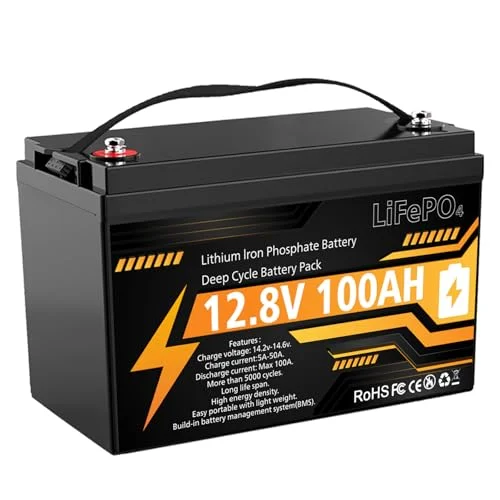
12V 100Ah LiFePO4 Lithium Battery, Group 31 Deep Cycle with 🏆 Editor’s Pick
| Battery Chemistry | LiFePO4 |
| Capacity | 12V 100Ah (≈1280Wh) |
| BMS Rating | 100A |
| Low-Temp Charging Cut-Off | 32°F (0°C) |
What We Found
This 12V 100Ah LiFePO4 battery is clearly aimed at RV, marine, and off-grid house power, with a 100A smart BMS and low-temperature charging cut-off. The protection set covers overcharge, over-discharge, over-current, and short circuits, which matters when inverter loads and accessories cause power draw swings. The headline detail is the automatic low-temperature charging cut-off at 32°F (0°C), designed to reduce the risk of charging damage in colder conditions. It’s also positioned as a lightweight Group 31 drop-in option (about 24 lb, with Group 31-compatible dimensions), so swapping from a larger lead-acid style battery box is the intended path. The cycle-life pitch is 15,000+ cycles at 60% DOD, with a 10-year service life claim, and the listing frames the charge behavior as lithium-friendly, including a reference to a 14.6V 20A charger and support for expansion up to 4S4P.
Who It’s For
I would shortlist this if I wanted one dependable 12V house battery with real temperature protection. The Group 31 fit helps if you’re replacing a larger lead-acid setup without reworking your compartment. It also makes sense for RV owners using inverters, residential-style electronics, and typical weekend fridge/light loads. If your plan includes solar or alternator charging, the emphasis on lithium-safe charging behavior and the ability to expand later can be a plus. It’s also a good match for off-grid users who value lower weight and easier mounting/transport.
✅ Pros
- Low-temperature charging cut-off at 32°F helps protect cells during cold mornings and shoulder-season travel.
- 100A smart BMS covers core safety faults like overcharge, over-discharge, over-current, and short circuits.
- Claimed 15,000+ cycles at 60% DOD pairs long service life with a 10-year lifespan expectation.
❌ Cons
- Price and third-party rating data are not provided, making real-world value harder to verify.
- Expansion claims are broad, but this single unit still supports limited current without a larger parallel bank.
- No detailed IP rating or enclosure protection level appears in the provided features.
💬 Our Take
My read is that this is the most balanced option here for typical RV house-bank needs. The combination of a 100A BMS and the 32°F charging cut-off hits a common real-world failure point for cold-season RV use, and the Group 31 form factor makes it practical.
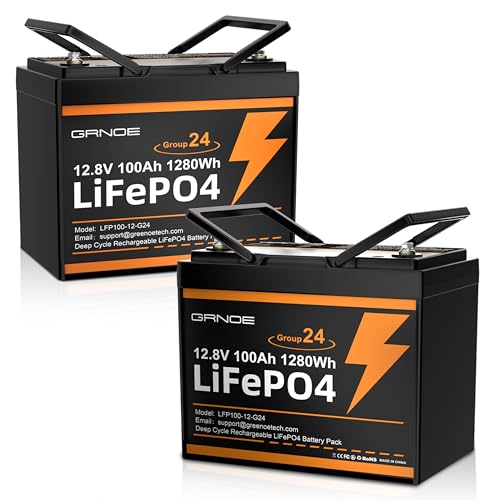
2 Pack 12V 100Ah LiFePO4 Batteries, Ultra-Light 21.9lb Each,🥈 Runner-Up
| Battery Chemistry | LiFePO4 |
| Capacity Per Battery | 12V 100Ah |
| Total Pack Energy | ≈2560Wh (2×1280Wh) |
| BMS Rating | 100A per battery |
What We Found
This is a two-pack of 12V 100Ah LiFePO4 batteries for RV and off-grid use, designed to get you usable energy quickly without complicated multi-battery wiring right away. Each battery includes a 100A smart BMS with multiple protections (overcharge, over-discharge, overcurrent, overvoltage, and short circuit). The listing also claims dustproof and moisture-proof performance, though it doesn’t show a formal IP rating. For fitment, it’s aimed at BCI Group 24 battery boxes, and each unit is listed around 21.9 lb. Cycle-life is stated at 15,000 cycles at 60% DOD with a 10-year service life expectation. It also supports expansion via 4S4P, with a system growth figure listed up to 51.2V 400Ah (20.48kWh), which appeals to people who want to upgrade capacity or voltage later.
Who It’s For
I would recommend this to RV owners who want more runtime upfront than a single 100Ah battery offers. Two units can fit well in travel trailers with steady fridge and lighting loads, or for solar setups where you want longer time between charges. The Group 24 fit can also help where a compact compartment limits your options. It’s a strong choice for DIY builders planning a multi-stage build—start with a two-pack now, then grow toward higher voltage or more stored energy later. It’ll feel like the right purchase when the two-battery size also matches your existing wiring and space.
✅ Pros
- Two-pack design increases usable energy immediately, reducing how quickly buyers must add a second bank later.
- 100A smart BMS per battery adds safety coverage for common charge and load faults.
- Expandable 4S4P system design supports future voltage and capacity growth for off-grid builds.
❌ Cons
- No price and no rating signals are provided, so true value versus single high-capacity options is unclear.
- Group 24 fit reduces compatibility for compartments sized differently than Group 24.
- Environmental claims lack a stated IP number, so water/dust expectations rely on marketing.
💬 Our Take
The two-battery approach makes sense for RVs that need more immediate capacity, and it can be a practical alternative when you don’t need (or can’t fit) a single ‘best fit’ higher-clarity option. For solar and expandable systems, it’s a choice I’d keep on the shortlist.
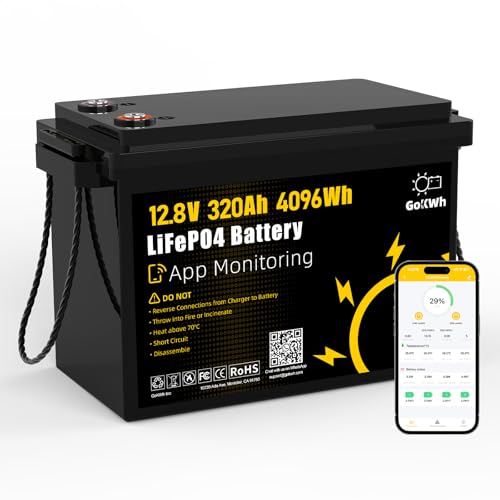
GoKwh 12V 320Ah LiFePO4 Lithium Battery with Bluetooth APP,
| Battery Chemistry | LiFePO4 |
| Capacity | 12.8V 320Ah (≈4096Wh) |
| BMS Rating | 200A |
| Low-Temp Discharge Protection | -20°C (-4°F) |
What We Found
The GoKwh 12V 320Ah battery leans hard into monitoring and larger storage capacity for longer RV stays and higher accessory loads. It includes a built-in Bluetooth app connection (Bluetooth 5.0), offering real-time readouts for battery level, voltage, current, and temperature—useful if you’d rather track what’s happening than guess from dashboard behavior. Energy capacity is listed as 4096Wh from a 12.8V 320Ah setup, which targets stable operation for common RV electronics. For expansion, the listing claims 4P4S support, potentially taking the system up to 51.2V / 65.54kWh. Its BMS is rated at 200A and includes low-temperature protection with a discharge cut-off below -20°C (-4°F). The chemistry is described as “EV-grade LiFePO4 cells,” which generally implies consistency, but the provided features don’t include specific cycle-life or warranty details.
Who It’s For
This fits me best for travelers and off-grid RV owners who want a big 12V bank in one unit. It’s a fit for long-duration camping, van-life setups, and systems powering energy-hungry gear like refrigerators or satellite internet. If you prefer visibility into your battery’s state (especially temperature and current), the Bluetooth app is a real convenience. The scale-up claims also appeal to people who plan to evolve the system over time. That said, it may be too much capacity (and complexity) for small RVs with limited space or lower daily energy usage.
✅ Pros
- Bluetooth 5.0 app monitoring adds actionable visibility into voltage, current, and temperature while off-grid.
- 200A BMS supports higher surge currents than many 100A units, improving compatibility with inverter loads.
- Large 4096Wh capacity suits extended off-grid use without constant recharging.
❌ Cons
- No cycle-life duration or warranty period appears in the provided features, reducing confidence in long-term value.
- Expansion support is ambitious, but it requires careful parallel/series matching for safety and performance.
- The listing focuses on monitoring, yet detailed charging cut-off behavior for cold charging is not specified here.
💬 Our Take
This earns consideration for buyers prioritizing monitoring plus high storage capacity. My hesitation is that the cycle-life and warranty specifics aren’t included in the features shown, which makes it harder to judge it as a top value pick versus options that clearly state the longevity story.
12.8V 300Ah Self-Heating LiFePO4 Lithium Battery with APP Mo
| Battery Chemistry | LiFePO4 (self-heating) |
| Capacity | 12.8V 300Ah (≈3840Wh) |
| BMS Rating | 200A |
| Cycle Claim | 5000+ cycles at 100% DoD |
What We Found
This 12.8V 300Ah self-heating LiFePO4 battery is aimed at cold-climate RV use by adding an integrated self-heating function. The listing claims over 5000 charge-discharge cycles at 100% depth of discharge, which is positioned as well beyond what you’d expect from lead-acid. It includes a 200A BMS with protection for overcharging, over-discharging, low-temperature charging, overcurrent, and short circuits, plus cell balancing for stable operation. There’s also APP monitoring that provides real-time voltage, current, temperature, and cycle-related data. The self-heating feature is meant to improve charging and discharging consistency in cold temperatures by reducing cold-induced strain. Weight and exact dimensions aren’t included in the provided details, and the listing also doesn’t spell out maximum charge current or charger voltage guidance here—so it reads more like a cold-weather concept than a fully specified electrical plan.
Who It’s For
I would point to this for RVs that actually run in winter or keep batteries inside unheated compartments. The self-heating idea helps when low temperatures would otherwise limit lithium charging performance. The app monitoring is useful if you want to watch system behavior without extra external meters. It can also fit larger loads like marine-style use, trolling motors, or off-grid sessions where you’ll be drawing regularly. For comparison, the 300Ah size could be a better fit than smaller packs if you expect extended outages and want more reserve capacity.
✅ Pros
- Self-heating support directly addresses the common cold-weather charging limitation for LiFePO4 banks.
- 200A BMS plus balancing aims for safer operation under load and during charge events.
- APP monitoring provides continuous insight into temperature and performance metrics.
❌ Cons
- Exact temperature thresholds and charge-current limits are not provided in the supplied details.
- Cycle-life claim comes without a defined test standard, making comparisons less precise.
- No stated warranty or compliance testing information appears in the provided features.
💬 Our Take
The cold-weather angle is compelling, but the missing electrical threshold specifics lower confidence a bit. It’s best for buyers who know they specifically need help charging or operating in colder conditions.
ECO-WORTHY 12V 280Ah Metal Case LiFePO4 Lithium Battery with
| Battery Chemistry | LiFePO4 |
| Capacity | 12V 280Ah (≈3584Wh) |
| BMS Rating | 200A |
| Monitoring | Bluetooth app |
What We Found
The ECO-WORTHY 12V 280Ah battery uses a metal case design with built-in Bluetooth monitoring and low-temperature protection. The metal enclosure is positioned as improving heat resistance and fire safety. There’s also a weak-current (low-voltage) cut-off switch for one-touch output cutoff, which can make installs and maintenance feel simpler. The listing claims you don’t need a separate battery box because the metal case includes mounting feet for direct RV or camper installation. It also highlights resistance to shock and vibration through the reinforced shell and internal cell holders—something that can matter on rough-road travel. A BMS is included with low-temperature charging cutoff behavior, but the exact temperature thresholds aren’t stated in the features provided. The listing includes capacity information (up to 3584Wh max) and notes a 200A BMS. Compared to plastic-case batteries, the metal enclosure may help with physical protection, though wiring practices and ventilation still matter.
Who It’s For
I’d shortlist this if I wanted a tougher physical enclosure and a more straightforward install approach for an RV or van. It’s particularly attractive if you travel often, see vibration, and want that added physical protection. The Bluetooth app is a plus for quick status checks during camping and for maintenance planning. It’s also compelling when a standalone battery box is inconvenient due to space constraints. Before buying, though, I would verify compartment clearance and confirm what low-temperature charging cutoff behavior means for your specific climate, since the thresholds aren’t spelled out here.
✅ Pros
- Metal case design prioritizes fire resistance and adds physical protection for road-travel conditions.
- No battery box requirement can simplify RV installation and reduce extra components.
- Bluetooth monitoring and a cut-off switch improve daily usability and maintenance safety.
❌ Cons
- Low-temperature cut-off temperature values are not provided, complicating cold-weather planning.
- The listing includes random exterior label styles, which may indicate variable packaging quality.
- No cycle-life count or warranty period is shown in the provided features.
💬 Our Take
This is a strong pick if installation toughness matters to you—metal enclosure plus a built-in cutoff switch is a practical combo. I rank it lower overall mainly because key performance details like cycle-life and exact cold thresholds aren’t included.
12V 100Ah LiFePO4 Lithium Battery, BCI Group 24 Deep Cycle S
| Battery Chemistry | LiFePO4 |
| Capacity | 12V 100Ah (≈1280Wh) |
| BMS Rating | 100A |
| Low-Temp Charging Stop | 32°F (0°C) |
What We Found
The SUPER EMPOWER 12V 100Ah LiFePO4 battery focuses on compatibility and clear cold-weather charging safeguards for RV auxiliary power. It’s designed specifically for deep-cycle energy storage and explicitly says it’s not for engine starting or cranking. Its BMS is listed with protections for overcharge, over-discharge, overcurrent, short circuit, and temperature extremes. Cycle performance is stated at about 5000 cycles at 100% DOD, about 6000 cycles at 80% DOD, and 15,000 cycles at 60% DOD, with Grade A+ cells referenced. For fitment, it claims BCI Group 24 dimensions and M8 terminal setup, and it lists weight around 21.6 lb. Charging guidance is also unusually specific: use a 14.4–14.6V lithium charger in CC/CV mode, and set MPPT/PWM controllers to lithium mode. Cold behavior is clearly spelled out: charging pauses below 32°F (0°C) by BMS protection, discharge stops at -20°C (-4°F), and resumes above 41°F (5°C).
Who It’s For
I’d choose this for a straightforward lead-acid to lithium upgrade for house power and solar storage. It works well for small to mid-size systems that want a reliable 12V bank with charger instructions you can actually follow. The “energy storage only” note is a good fit for RV setups that already have a separate cranking battery. For cold climates, the explicit charging pause and discharge stop/resume thresholds make it easier to plan around winter travel. It’s also a solid match for marine-style trolling motor systems where deep-cycle reliability matters more than cranking power.
✅ Pros
- Clear cold-weather thresholds specify charging pause below 32°F and discharge stop around -4°F.
- Includes specific charging guidance for lithium profiles and lithium-mode MPPT/PWM controller settings.
- Cycle-life claims align with common LiFePO4 expectations, including 15,000 cycles at 60% DOD.
❌ Cons
- No Bluetooth/app monitoring or advanced user interface appears, which may reduce convenience.
- No stated warranty or certifications appear in the provided details.
- Energy-storage-only positioning limits use for combined start/house battery roles.
💬 Our Take
This gets high marks for practicality because the cold-weather charge behavior is clearly defined and the charger compatibility is stated. If you want predictability over extra monitoring features, this is the kind of battery I’d put near the top.
dumfume 12V 150Ah Lithium LiFePO4 Deep Cycle Battery Recharg
| Battery Chemistry | LiFePO4 |
| Capacity | 12V 150Ah (≈1920Wh) |
| BMS Rating | 100A |
| Cycle Claim | 4000+ cycles (to 80% capacity) |
What We Found
The DUMFUME 12V 150Ah LiFePO4 battery emphasizes capacity with a manageable weight for RV and off-grid use. It lists 1920Wh of energy and claims over 4,000 cycles, referencing performance at 80% capacity. Safety is handled by a built-in 100A BMS protecting against overcharge, over-discharge, short circuit, and overheating. The listing also notes performance requires temperatures of 5°C or higher, which affects expectations for cold-season use. Temperature protection is mentioned, but it doesn’t provide an exact low-temperature charging threshold beyond the general minimum operating guidance. The battery weighs 22.05 lb and is described as space-saving with compact dimensions, supporting a Group 31 style fit. Expansion is supported up to 4S4P, letting you build custom voltage and capacity configurations. One operational note stands out for long storage: it requires a full maintenance cycle every 6 months during extended storage, which can matter for seasonal RV owners.
Who It’s For
I’d put this in the middle-ground category: more capacity than 100Ah, without jumping to very large bank sizes. It fits weekend solar storage and off-grid runs when you can recharge periodically. The compact Group 31-style fit can help if your compartment is sized for that form factor. The 100A BMS is likely enough for typical inverter and house loads, but it could limit peak current compared with 200A models. The temperature note makes it better suited to climates where freezing conditions are mild or where your system includes some way to keep batteries above the minimum operating range.
✅ Pros
- 150Ah capacity increases runtime for RV refrigerators, lighting, and electronics compared to 100Ah units.
- 100A BMS protection covers key safety risks like overcharge, over-discharge, short circuit, and overheating.
- Compact footprint and low weight support easier installation in RV battery compartments.
❌ Cons
- Cold-weather limits are vague, with only a minimum 5°C requirement stated.
- A maintenance-cycle requirement every six months during storage adds user overhead for seasonal owners.
- No clear warranty or detailed temperature cut-off numbers appear in the provided features.
💬 Our Take
This is a reasonable capacity step for RV and solar users, but cold-climate suitability is harder to confirm. I’d treat it as a better buy when your operating temperatures stay above the stated minimum and you’re willing to follow the storage routine.
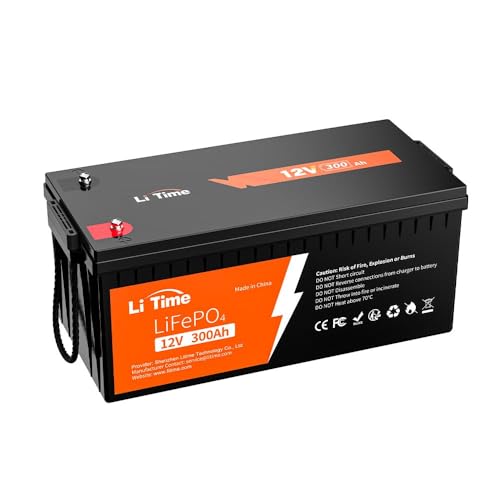
Litime 12V 300Ah LiFePO4 Battery, 12 Volt RV Lithium Battery
| Battery Chemistry | LiFePO4 (EV-grade cells) |
| Capacity | 12V 300Ah (≈3840Wh) |
| BMS Rating | 200A |
| Cycle Claim | 15,000 deep cycles |
What We Found
The Litime 12V 300Ah LiFePO4 battery targets RV and off-grid power with EV-grade cells, a 200A BMS, and system expandability. It claims 3840Wh of energy and lists a maximum load figure of 2560W, which matters if you’re sizing an inverter or dealing with higher-draw bursts. Cycle life is stated as 15,000 deep cycles, and the listing also references 10+ year lifespan claims with 4000 cycles at 100% DOD. For expansion, it supports 4P4S to reach much larger system power targets up to 40.96kW / 61.44kWh, offering a path from simple RV storage to larger backup arrays. It’s positioned as lightweight with high energy density (about one-third the weight of lead-acid) and it specifically calls out ETL-tested 200A BMS, which suggests an added quality check for safety electronics. Some numeric comparisons in the listing appear inconsistent, and there’s no Bluetooth app monitoring mentioned here.
Who It’s For
I’d shortlist this for RV owners who want more than 100Ah while still staying in a manageable 12V bank setup. It fits solar homes, off-grid cabins, and RV travel trailers running daily loads plus occasional higher-draw moments. A 200A BMS can be useful when your inverter or DC gear can demand higher surge current. If you want future growth, the 4P4S expandability is a strong selling point. It’s less ideal if you specifically want app-based monitoring or if you need a clearly documented cold charging cut-off in the details provided.
✅ Pros
- 200A BMS offers stronger headroom for inverter and demanding RV loads.
- EV-grade cell emphasis plus ETL-tested BMS supports a safety-forward design choice.
- 4P4S expansion supports long-term system growth for off-grid and backup power.
❌ Cons
- Cold-weather charging thresholds are not stated in the provided features, limiting winter planning clarity.
- Cycle-life claims show mixed metrics, such as deep-cycle claims versus 4000 cycles at 100% DOD.
- No Bluetooth/app monitoring is mentioned, which may reduce day-to-day convenience.
💬 Our Take
This is a strong capacity-and-current option for RV owners with higher draw plans and expansion in mind. I’d just want clearer cold-charging transparency before calling it the top pick.
12V 100Ah LiFePO4 Lithium Battery- BCI Group 24, Deep Cycle
| Battery Chemistry | LiFePO4 |
| Capacity Per Battery | 12V 100Ah (≈1280Wh) |
| Total Pack Energy | ≈2560Wh |
| Low-Temp Charging Stop | 32°F (0°C) |
What We Found
This “2 Pack” listing repeats the SUPER EMPOWER 12V 100Ah deep-cycle LiFePO4 approach, bundling two units for a larger energy bank. Each battery includes LiFePO4 cells and an integrated BMS providing protection against overcharge, over-discharge, overcurrent, short circuit, and temperature extremes, and it’s positioned as energy storage only (not suitable for engine starting or cranking). The cycle performance claims match the single-unit description: about 5000 cycles at 100% DOD, 6000 at 80% DOD, and 15,000 at 60% DOD. Fitment guidance uses a BCI group size claim and M8 terminals, with weight around 21.6 lb per battery in the provided features. Charging guidance recommends lithium chargers in the 14.4–14.6V CC/CV range and lithium-mode settings for MPPT/PWM controllers. Low-temperature charging behavior is clearly defined here: charging disabled below 32°F (0°C), discharge stops at -20°C (-4°F), and resumes above 41°F (5°C).
Who It’s For
This two-pack works well for RV owners who want a bigger 12V house bank without moving to a physically larger single battery. It suits travel trailers running fridges, lights, and charging ports daily. Doubling capacity can also reduce how often you need to recharge, which matters for solar systems and limited generator runtime. Cold-climate users benefit from the explicit 32°F charging stop and the -4°F discharge stop/resume guidance. It can also fit marine-style house banks where deep-cycle energy storage is the priority over cranking amps.
✅ Pros
- Two-pack capacity doubles usable runtime for common RV house loads.
- Explicit cold-weather charging stop at 32°F reduces risk of charging too cold.
- Lithium charging guidance and lithium-mode MPPT/PWM compatibility support correct system setup.
❌ Cons
- No monitoring features like Bluetooth or display are mentioned, reducing at-a-glance convenience.
- The listing includes a possible BCI mismatch (Group 24 vs Group 34) within the provided text, requiring careful fit verification.
- No warranty or certification detail appears in the supplied features.
💬 Our Take
This is a practical two-battery upgrade with clear cold-weather charging guidance. I’d place it slightly behind the top pick because fitment may be more ambiguous and monitoring features aren’t highlighted.
12V 600Ah LiFePO4 Lithium Battery with 200A BMS 7680Wh, Up t
| Battery Chemistry | LiFePO4 |
| Capacity | 12V 600Ah (≈7680Wh) |
| BMS Rating | 200A |
| Water/Dust Protection | IP65 |
What We Found
The YEAGULCH 12V 600Ah LiFePO4 battery is built for high-capacity RV or marine installations and heavier backup-style energy needs. The listing claims the battery weighs about 104 lb while offering much more capacity than many lead-acid alternatives. Safety is handled with an enhanced BMS offering protections for overcharging, over-discharging, low-temperature charging, over-current, and short circuits. It also claims automatic balancing when voltage exceeds 14.1V. Expansion is supported through series and parallel, and the listing suggests creating a 48V system by placing four units in series. IP65 waterproofing is included, which can matter for harsh outdoor setups and marine environments. Warranty is stated as five years. Cycle-life figures are present but not tied to specific test conditions; the listing suggests 8000 cycles to 80% depth of discharge. This is a heavy-duty option, so planning for weight, wiring, and inverter sizing is part of the job here.
Who It’s For
I’d suggest this for users who need far more energy than a typical RV house bank—think off-grid cabins, power-wall style builds, and RVs designed for extended boondocking with heavier loads. IP65 claims can be a big plus for outdoor and marine-style installations. It also fits DIY system designers building 48V or larger arrays with multiple batteries. For compact RV compartments, though, the weight (about 104 lb) and the wiring complexity make it less practical for everyday swaps.
✅ Pros
- Very large 7680Wh capacity supports long-run RV boondocking and backup power needs.
- IP65 waterproofing claim and enhanced BMS protections suit harsh outdoor environments.
- Five-year warranty provides a stronger long-term support signal than many listings.
❌ Cons
- High weight (about 104 lb) makes installation and relocation significantly harder than smaller RV batteries.
- Low-temperature charging specifics and voltage behavior are not clearly quantified in the provided details.
- No precise cycle-life test conditions are shown beyond general expectations, which limits apples-to-apples comparison.
💬 Our Take
This is the right choice when the goal is major capacity and backup power, especially with the IP65 and five-year warranty claims. It’s just not the most practical lithium RV upgrade for average battery compartments.
What to Look For Before Buying
The best lithium RV batteries aren’t just about long cycle life—they’re about safe charging, stable voltage under real loads, and protection that doesn’t require constant babysitting. I start by matching battery chemistry and capacity to how the RV is actually used, then I check that the BMS current rating makes sense for inverter surge demands and the charge sources you’ll use. If you camp in cooler months, pay extra attention to low-temperature charging behavior; it matters more than most buyers expect. Finally, I’d verify physical fit using the stated BCI group size and terminal type, and I’d prioritize clear warranty terms and supporting documentation so you’re not guessing what you’re covered for.
Check Match fitment and terminal layout to your RV battery box
I would confirm fitment first using the listing’s BCI group size and stated dimensions, not just the word “drop-in.” Also check terminal type and size—M8 terminals show up in multiple listings, but you still need to verify your setup. Measure your compartment depth, width, and height with wiring clearance, then double-check whether your tray/strap-down points line up with the battery’s mounting feet or design. “Drop-in” can mean different things across manufacturers, so assuming everything will match is where problems start.
Value Balance capacity with usable cycle life at your depth of discharge
Cycle-life claims only matter if you match them to your actual depth of discharge. I’d compare cycle numbers at the DOD you’ll realistically hit (60% vs 80% makes a big difference in how meaningful the longevity claim is). For weekend RV use where you recharge frequently, a smaller capacity might fit better than chasing maximum amp-hours. For longer boondocking, more capacity can reduce how hard you push the battery—value comes from lower replacement risk plus energy needs that fit your routine, not from Wh-per-dollar on a spec sheet.
Rating Use BMS protection and temperature cut-offs as your safety “ratings”
I treat BMS protection and temperature cut-offs as the safety “ratings” that actually protect your system. Look for explicit overcharge, over-discharge, over-current, and short-circuit protection. For cold weather, I’d want specific charging and discharge cutoff behavior—thresholds like “charging disabled below 32°F” are far more helpful than vague “low-temp protection.” Then sanity-check the BMS amperage against your inverter surge needs and charger output. If you plan to expand the bank later, I also look for balancing support or expansion compatibility.
Verify Verify expansion plans only after confirming charging and wiring strategy
Expansion plans like 4S4P or 4P4S only help if the charging and wiring plan is already stable. I’d map out your charging sources first—alternator charging behavior (lithium-compatible) and solar settings via MPPT modes—and confirm the charge controller supports the battery’s voltage profile and low-temperature behavior. Then use proper fusing, cable sizing, and a safe battery isolation approach. Expanding without a dependable charging strategy can reduce longevity and make troubleshooting a headache.
Frequently Asked Questions
What low-temperature charging cut-off should be expected from the best lithium RV batteries?
A common expectation from quality LiFePO4 RV batteries is a defined charging disable threshold around 32°F (0°C), paired with discharge protection at colder temperatures. Some batteries also resume charging only after the battery warms back up. If the listing only says “low-temp protection” without numbers, I would treat the cold behavior as uncertain—those cut-off thresholds are the details that determine how safe charging will be in winter.
How large should a lithium RV battery be for boondocking?
Sizing depends on how many watt-hours you use per day and how long you plan to stay off-grid. Lithium batteries can handle deeper cycling better than many lead-acid setups, but it’s still smart to avoid extreme depths of discharge if you want longevity. A practical approach is to target a DOD level like 60% (to preserve cycle life), then add extra capacity so you still have recharge time margins based on your solar size and/or generator runtime.
Is Bluetooth monitoring necessary when choosing a lithium RV battery?
Bluetooth monitoring is helpful, but it’s not required for safe operation as long as the BMS protection is solid. Monitoring mainly adds convenience and helps you catch unusual patterns in voltage, temperature, or current. If you’re trying to keep the setup simple (or you have limited space), app-free batteries can be totally workable. For multi-battery builds, monitoring can make troubleshooting easier.
Can lithium RV batteries replace both house and starting batteries?
Most LiFePO4 deep-cycle batteries are meant for energy storage (house loads), not high-current engine cranking. Many listings explicitly note they’re not suitable for starting or cranking. In a typical RV dual-battery setup, keep a separate cranking battery or use a purpose-built lithium cranking battery so the BMS and current limits don’t become a reliability bottleneck.
What charger settings should be used for LiFePO4 RV batteries?
Use a lithium-compatible charger that supports LiFePO4 charging behavior, typically with a CC/CV profile matched to the chemistry. Many listings reference charging around 14.4–14.6V for bulk/absorption. For solar, set your MPPT or PWM controller to lithium mode (not a generic lead-acid profile). Avoid mismatched charging profiles because they can shorten longevity and may trigger protection circuits.
🎯 Final Verdict
My best overall recommendation is the 12V 100Ah LiFePO4 battery with the smart 100A BMS (product index 0). The biggest reason is that the low-temperature charging cut-off is clearly stated at 32°F (0°C), and that protection set is aligned with common RV failure risks. It’s also in a practical Group 31 form factor for a lot of RV house-power upgrades, balancing safety, weight, and long-cycle claims. If you want capacity immediately and like the idea of building from there, the two-pack 12V 100Ah option (product index 1) is my strongest alternative—just verify battery-box fit and confirm what your cold-weather needs look like before you commit.