When you switch a golf cart from lead-acid to lithium, the trouble spots are usually the same: you’re left guessing about what the BMS actually protects (and when it cuts you off), whether the charger is truly matched, and how much continuous power the pack can deliver when you’re climbing or accelerating—not just during short bursts. On top of that, buyers often wonder if an app monitor is worth it day to day, and whether metal vs. plastic enclosure choices change the day-to-day reliability. This review focuses on lithium battery golf cart packs (with chargers and monitoring included) so you can compare voltages, capacity in Ah/kWh, and BMS current ratings for a cleaner, lower-stress upgrade.
My baseline for a lithium battery golf cart pick is simple: it has to match your cart’s system voltage and it needs enough continuous discharge headroom for how you actually drive (hills, starts, longer runs). LiFePO4 is the safer bet for stability and deeper cycling, and I would only move forward when the BMS spells out the protection categories—overcharge, over-discharge, over-current, short circuit, and temperature cutoffs. For day-to-day peace of mind, I like kits that include an LCD screen and/or Bluetooth app so you can catch issues early and track state-of-charge trends. Finally, a complete kit (especially a correctly sized charger) reduces setup mistakes and downtime.
⚡ Quick Verdict
Our Top Picks at a Glance
| Image | Product | Score | Link |
|---|---|---|---|
 |
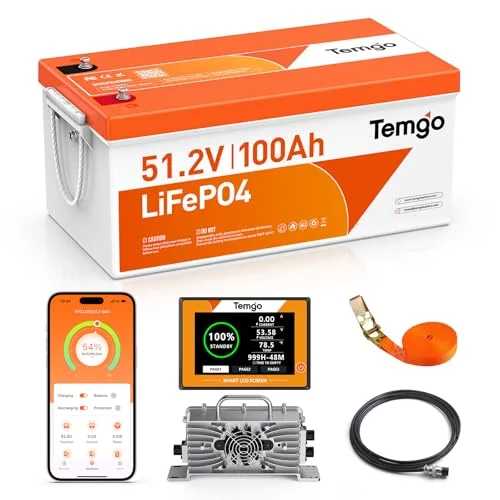
TEMGO 48V (51.2V) 100Ah LiFePO4 Lithium Golf Cart Battery, C 👑 Premium Pick |
8.5/10 |
View on Amazon Free Shipping & 30-Day Returns |
 |
DC HOUSE Metal Case 48V 100Ah Pro Lithium Golf Cart Battery, 🏆 Editor’s Pick |
9.1/10 |
View on Amazon Free Shipping & 30-Day Returns |
 |
OGRPHY 48V Lithium Golf Cart Battery, 200A BMS(1000A Peak Cu | 7.4/10 |
View on Amazon Free Shipping & 30-Day Returns |
 |
LOSSIGY 48V Lithium Battery Golf Cart Conversion Kit, 48 Vol | 6.8/10 |
View on Amazon Free Shipping & 30-Day Returns |
 |
TEMGO 36V (38.4V) 100Ah LiFePO4 Lithium Golf Cart Battery, C | 8.2/10 |
View on Amazon Free Shipping & 30-Day Returns |
 |
48V Lithium Battery Golf Cart,48V 100AH Golf Cart Batteries | 7.9/10 |
View on Amazon Free Shipping & 30-Day Returns |
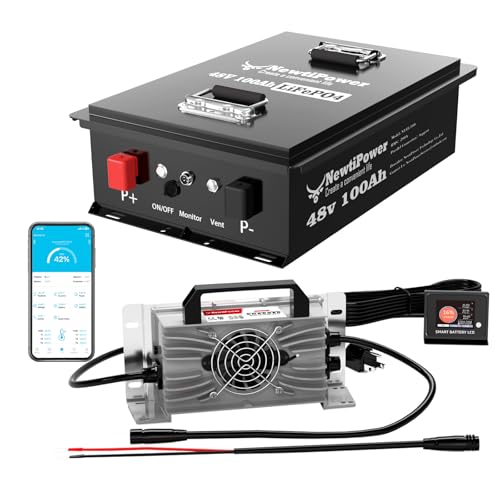 |
48V 100Ah Lithium LiFePO4 Golf Cart Battery with APP&Monitor | 7.6/10 |
View on Amazon Free Shipping & 30-Day Returns |
 |
48V(51.2V) LiFePO4 Lithium Golf Cart Battery Built-in 250A B | 8.4/10 |
View on Amazon Free Shipping & 30-Day Returns |
 |
DC HOUSE Metal Case 36V 100Ah Pro Lithium Golf Cart Battery, | 8.9/10 |
View on Amazon Free Shipping & 30-Day Returns |
 |
36V Lithium Golf Cart Battery – Built-in Bluetooth & 200A BM | 7.8/10 |
View on Amazon Free Shipping & 30-Day Returns |
📋 How We Evaluated
Evaluation focused on build quality signals like metal versus plastic enclosures, integrated safety features in the BMS, and stated continuous and peak discharge limits. Performance assessment prioritized practical output ratings for hills and acceleration, plus charge compatibility via included chargers. Value and suitability were considered using kit completeness, upgrade ease, and reliance on typical Amazon-style buyer signals like clarity of specifications and likely installation support, even where ratings were not provided here.
Detailed Reviews
TEMGO 48V (51.2V) 100Ah LiFePO4 Lithium Golf Cart Battery, C👑 Premium Pick
| Voltage System | 48V (51.2V nominal) |
| Capacity | 100Ah |
| Continuous Discharge | 200A |
| Included Charger | 58.4V 18A |
What We Found
TEMGO’s kit is built as a ready-to-install 48V (51.2V) LiFePO4 upgrade, including a 58.4V 18A charger, a 2.8-inch LCD touch display, and a retention strap. It’s designed around A-grade LiFePO4 cells and claims 5000+ deep cycles at an 80% depth of discharge (DOD). On the power side, it lists a 200A continuous discharge figure (and higher short-peak numbers) with up to 10.24kW output. Safety is handled by an integrated 200A smart BMS with Bluetooth monitoring and protections for overcharging, over-discharging, short circuits, and temperature extremes. The listing also positions it for parallel expansion (up to multiple units) if you want more usable energy in a larger setup.
Who It’s For
I would shortlist this kit if you’re upgrading to 48V and want a bundle that’s functional right out of the box—charger, monitoring, and mounting included. The LCD plus Bluetooth app setup is a good fit if you like checking voltage and fault behavior without relying on assumptions. It also makes sense for off-grid or expansion-minded buyers who might parallel units later. Before buying, I would double-check fitment and charger placement in your cart battery bay so you’re not surprised by compartment size or wiring layout.
✅ Pros
- Includes an 18A charger and 2.8-inch LCD touch monitor, reducing extra shopping during an upgrade.
- Bluetooth-enabled 200A smart BMS supports app visibility and safety protections like overcharge and temperature extremes.
- 10.24kW maximum power output claims align well with acceleration and moderate climbing needs.
❌ Cons
- No Amazon rating or price data is listed, making value comparisons harder.
- Parallel scaling is offered, but physical fit and wiring layout still depend on the cart compartment.
- Range expectations depend heavily on motor power and driving conditions, which vary by cart model.
💬 Our Take
My read is that TEMGO does a good job balancing “kit completeness” with a clearly stated 200A smart BMS and a strong power spec. If your goal is a straightforward 48V lithium conversion with monitoring included, it lands in the top tier.
DC HOUSE Metal Case 48V 100Ah Pro Lithium Golf Cart Battery,🏆 Editor’s Pick
| Voltage System | 48V |
| Capacity | 100Ah |
| BMS Rating | 200A |
| Peak Current | 670A |
What We Found
DC HOUSE leans hard into protection and durability with its metal case design. The 48V 100Ah LiFePO4 kit comes with a 48V 18A charger, an LCD Bluetooth monitor, and app support for battery monitoring. It uses a 200A BMS and emphasizes a wide set of safeguards, including enhanced low-temperature cutoff behavior plus the standard overcharge, over-discharge, over-current, short-circuit, and overload protections. For load handling, the listing mentions 2C discharge capability and a peak current rating that’s aimed at climbing and acceleration without power sag. It also calls out fast charging and provides an estimated full charge window, along with compatibility with major 48V cart families (Yamaha, EZ GO, Club Cart). The listing still warns that physical fit can vary by cart compartment design.
Who It’s For
This is a good match for buyers who care about the enclosure as much as the electronics—especially if the cart sees rougher handling, transport, or storage. The metal case plus Bluetooth/LCD monitoring is also appealing if you’re running the cart frequently and want more visibility into battery behavior than a basic setup offers. If you drive in ways that put more demand on acceleration and hill power, the 2C-oriented discharge design is worth attention. Just make sure the battery bay in your cart matches the kit’s dimensions and terminal layout.
✅ Pros
- Metal, fireproof-style casing with a one-key safety switch emphasizes practical durability.
- Bluetooth app plus LCD monitoring supports real-time status and fault awareness.
- Strong discharge and peak current claims support climbing and acceleration demands.
❌ Cons
- Fitment can vary by golf cart battery compartment, and improper installation may require modifications.
- Charging time claims depend on initial SOC and charger behavior, which can differ in real use.
- Price and verified third-party rating signals were not provided.
💬 Our Take
DC HOUSE is the most convincing pick here because the metal-case hardware pairs with a feature-complete Bluetooth monitoring setup. For everyday ownership, that combination feels like a safer-feeling upgrade rather than a “spec-only” conversion.
OGRPHY 48V Lithium Golf Cart Battery, 200A BMS(1000A Peak Cu
| Voltage System | 48V |
| Capacity | 105Ah |
| BMS Rating | 200A |
| Charger | 18A |
What We Found
OGRPHY positions its 48V pack around high power claims and includes Bluetooth monitoring plus a 200A BMS. The listing references premium A-grade LiFePO4 cells and gives a capacity reference for a 48V 105Ah configuration. What stands out is the way the power numbers are presented—very high continuous output on paper, paired with even larger peak figures and a peak-current rating intended for short bursts. The BMS section highlights multiple protections and mentions different peak-current durations to support hill climbs and transient loads. The kit includes an 18A charger and a touch monitor, and it claims tested range of over 50 miles on a 3kW motor under specific conditions. It also states a compact form factor intended to fit more battery bays.
Who It’s For
I would consider OGRPHY if your cart setup is demanding—steep terrain, stronger motor/controller combinations, or you simply want more headroom on short bursts. The Bluetooth monitoring helps if you’re managing longer rounds or off-grid charging where you want clearer state-of-charge awareness. It’s also a fit if you’re converting from lead-acid and want LiFePO4 cycle life without extra maintenance. That said, because the listing emphasizes peaks heavily, I’d verify the continuous output rating you’ll actually rely on for sustained hill work, and confirm physical fit before committing.
✅ Pros
- Bluetooth-enabled monitoring supports quick checks via a phone app.
- Multiple peak-current duration claims aim to cover real-world acceleration spikes.
- Compact dimensions target easier fit across different golf cart bays.
❌ Cons
- Some power figures appear inconsistent across sections, so spec interpretation requires care.
- No price or rating data limits confidence in value versus alternatives.
- Range statements depend on motor wattage and driving style, not just capacity.
💬 Our Take
OGRPHY clearly leans into maximum power marketing. It may work well for high-demand carts, but my advice is to treat spec clarity—especially continuous output and real fitment—as the deciding factor.
LOSSIGY 48V Lithium Battery Golf Cart Conversion Kit, 48 Vol
| Voltage System | 48V |
| Chemistry | LiFePO4 |
| BMS Rating | 200A |
| Peak Current Claim | 1000A (3-5s) |
What We Found
LOSSIGY offers a 48V lithium conversion kit with an integrated 200A Bluetooth BMS and a strong emphasis on deep-cycle longevity. The listing highlights Grade A cells and calls out at least 4000 cycles. It describes BMS protections that cover high temperature, low temperature, short circuit, over-current, and overload, and it’s described as self-contained for 48V systems with simplified installation compared to series lead-acid packs. The peak-current story is prominent: the BMS is described as capable of reaching very high peak current for short durations to meet controller requirements across many carts. It also includes an after-sales support promise (90 days of worry-free service and 24-hour technical support). Charger and monitor details aren’t as explicitly listed here as they are for some competitors.
Who It’s For
This is for buyers who prioritize cycle-life claims and want strong short-burst current for acceleration. The 200A Bluetooth BMS works well if you want remote monitoring without complex wiring. It also fits golfers who charge often and want a pack that’s built to handle repeated seasons rather than a quick replacement. My caution is that “kit” can mean different things—so I would confirm what charger model/spec and monitor/accessories are included and how the kit dimensions match your battery bay.
✅ Pros
- Bluetooth BMS and broad protection coverage target safer operation in common fault conditions.
- Long-cycle positioning supports ownership beyond typical lead-acid lifespan.
- Customer service commitments can help during install and early troubleshooting.
❌ Cons
- Specific included charger and monitor details are not clearly quantified in the provided features.
- No voltage balance, low-temperature cutoff values, or installation dimensions are listed here.
- No price or rating data is available for value judgment.
💬 Our Take
LOSSIGY looks good on paper for burst current and protections, but the package transparency isn’t as strong as better-documented options. I’d treat it as a reasonable buy only after verifying the exact included charger specifications and physical kit contents.
TEMGO 36V (38.4V) 100Ah LiFePO4 Lithium Golf Cart Battery, C
| Voltage System | 36V (38.4V nominal) |
| Capacity | 100Ah |
| Continuous Discharge | 200A |
| Included Charger | 42.6V 20A |
What We Found
TEMGO’s 36V kit follows the same bundle approach as its 48V version. It includes a 42.6V 20A charger, a 2.8-inch LCD touch display, and a retention strap aimed at simplifying the upgrade. The BMS is rated 200A and includes Bluetooth-enabled monitoring. Cell life is positioned at 5000+ deep cycles with an 80% depth-of-discharge target for longevity. Power claims list 200A continuous discharge and 600A for a short burst, with a maximum power output of 7.68kW for a 36V pack. The listing also mentions compatibility beyond golf carts, including solar/off-grid usage, and parallel expansion up to multiple units (the listing frames this as an energy-capacity expansion path).
Who It’s For
I would shortlist this for owners with 36V carts who want a complete upgrade kit and a clear focus on continuous discharge capability. The LCD plus app monitoring makes it easier to do routine checks across seasons. It’s a good match for people doing multiple rounds and wanting less maintenance than lead-acid systems. The included 20A charger also helps reduce turnaround time between outings. If you’re planning solar or off-grid storage later, the parallel expansion angle may fit your longer-term plan.
✅ Pros
- Includes a 20A charger and LCD touch monitor, reducing setup friction for a 36V upgrade.
- 200A smart BMS with Bluetooth monitoring targets safer day-to-day operation and visibility.
- 7.68kW maximum power output fits typical 36V golf cart acceleration needs.
❌ Cons
- Range depends on motor output and terrain, and no verified miles figure is provided in the listing.
- Parallel scaling requires correct cart and pack bay planning to ensure safe installation.
- No external rating or price data is listed for value comparisons.
💬 Our Take
TEMGO’s 36V kit reads like a clean, bundle-ready lithium upgrade with strong continuous discharge ratings. It’s a practical choice if your cart is 36V and you want monitoring plus LiFePO4 cycle life.
48V Lithium Battery Golf Cart,48V 100AH Golf Cart Batteries
| Voltage System | 48V (51.2V nominal) |
| Capacity | 100Ah |
| BMS Rating | 200A |
| Included Charger | 58.4V 18A |
What We Found
This 48V 100Ah listing highlights EVE A+ grade cells and a 200A smart BMS with Bluetooth monitoring. It states a 5.12kWh energy capacity and frames the pack for up to 10.24kW of power output. The kit includes a 58.4V 18A charger, a 2.8-inch LCD touch screen, and mounting straps. It uses a plastic enclosure and emphasizes the low weight (about 82.89 lbs) and compact dimensions for easier handling. Discharge support is described as 2C for extended seconds, and it includes a maximum current figure of 600A in the stated section. The BMS section also mentions temperature cutoffs and standard safety protections, and it references testing/certification expectations (UL/IEC and CE/RoHS), which may matter if you’re particular about compliance documentation.
Who It’s For
I would consider this battery if you want a lighter, more compact pack and need a direct 48V replacement for common cart platforms. The LCD plus Bluetooth monitoring appeals to owners who want quick diagnostics without specialized tools. The included 58.4V 18A charger is sized for regular recharging between rounds, and the listing suggests it can fit off-grid charging scenarios like solar setups. My main check before buying would be terminal layout and exact battery bay dimensions, since enclosure fit is usually where “it should fit” listings can disappoint.
✅ Pros
- EVE A+ cell claim plus low self-discharge positioning supports reliable storage and performance.
- Kit includes charger, LCD touch monitor, and mounting straps for a simpler upgrade.
- Bluetooth app monitoring improves fault visibility during use.
❌ Cons
- Continuous versus peak power figures are not consistently expressed across sections, which can confuse buyers.
- Plastic casing may feel less robust than metal enclosure options for impact resistance.
- No price or rating data is included to validate value.
💬 Our Take
This listing is strong on completeness and monitoring, but its enclosure toughness and spec consistency don’t compare as directly to metal-case kits. Still, it can be a strong option if you’ve verified fitment.
48V 100Ah Lithium LiFePO4 Golf Cart Battery with APP&Monitor
| Voltage System | 48V |
| Capacity | 100Ah (claims 103Ah actual) |
| BMS Rating | 200A |
| Max Load Power | 10240W |
What We Found
NewtiPower’s 48V 100Ah LiFePO4 battery focuses on long cycle life and an accessories-ready approach. It claims A+ cells and suggests a higher real-world capacity around 103Ah (in addition to the 100Ah positioning). Safety is built around a 200A BMS with protections for overcharging, over-discharging, overcurrent, and short circuits. For load handling, it lists a maximum load power of 10240W, with continuous current around 250A and peak current around 500A. The kit completeness is one of its core themes, describing included monitors, charger, and the supporting connections needed to install. The listing also claims 10,000+ cycles and includes a longer service program with a 10-year service activation promise. The enclosure type isn’t clearly emphasized, but it repeatedly frames the purchase as “ready to use” right away.
Who It’s For
I’d shortlist this if you want the “everything you need when it arrives” approach—especially when you’d rather not hunt for cables, charger details, or monitor accessories separately. If long cycle-life is a priority for multi-year ownership, the protection set and battery-life claims are aligned with that goal. It also suits drivers who prefer automatic fault prevention from the BMS. As always, you still need to confirm physical size and terminal compatibility—because “ready to use” still depends on whether it fits your cart bay.
✅ Pros
- Accessories-on-arrival approach targets a smoother install with fewer missing parts risks.
- 200A BMS protection covers core lithium safety scenarios like overcurrent and short circuit.
- Strong stated load power and high cycle-life claims suit frequent-use carts.
❌ Cons
- Peak and continuous load numbers may vary by interpretation and are not tied to measured test conditions here.
- Enclosure and thermal management details are limited in the provided features.
- No price or rating data reduces confidence in the value proposition.
💬 Our Take
NewtiPower’s biggest strength is the accessories bundle plus bold load-power language. I’d be most confident after confirming cart compatibility and physical fit before ordering.
48V(51.2V) LiFePO4 Lithium Golf Cart Battery Built-in 250A B
| Voltage System | 48V (51.2V) |
| Capacity | 105Ah |
| BMS Rating | 250A |
| Included Charger | 48V 20A |
What We Found
XRH provides a 48V (51.2V) 105Ah LiFePO4 kit built around a built-in 250A Bluetooth BMS. The package includes a 48V 20A lithium charger, a mobile app, a touch monitor, a port plug, and retention straps—aimed at delivering a full conversion kit experience. The listing also emphasizes grade-A cells and mentions support for a 3C discharge rate for high-current output. Discharge protection is quantified with a continuous discharge rating of 250A and multiple peak modes, including a peak 400A rating for a longer short window and a peak 600A value for very brief bursts. Low-temperature cutoff technology is part of the protective strategy. It also notes a “double terminal design” that’s intended to make installation and connection flexibility easier for carts with tighter battery compartments. Cycle life is listed at 6000+ cycles, which is positioned to improve long-term ownership value.
Who It’s For
This is a fit for owners who want more BMS headroom than the more common 200A setups. The higher 250A BMS rating plus the multi-mode peak currents are aimed at carts that need stronger acceleration or hill-climb power. Bluetooth plus touch monitoring is helpful when you’re doing proactive checks during heavy seasonal use. The included 20A charger can also reduce downtime between rounds. I’d still treat fitment as your first checkpoint since the provided features don’t include the kind of dimensioning you’d want to confirm compatibility at a glance.
✅ Pros
- 250A Bluetooth BMS gives extra safety and current handling for demanding driving.
- Touch monitor and mobile app support convenient battery state visibility.
- Double terminal design and port plug focus on install practicality.
❌ Cons
- Installation fit and exact dimensions are not listed in the provided features.
- Some specifications are broad, and real continuous output may differ with temperature and controller demand.
- No price or rating data is available to gauge value versus competing 200A kits.
💬 Our Take
XRH stands out because it pairs kit completeness with a 250A BMS and more current capacity than many 200A options. If your cart is higher load, that extra current margin matters.
DC HOUSE Metal Case 36V 100Ah Pro Lithium Golf Cart Battery,
| Voltage System | 36V |
| Capacity | 100Ah |
| BMS Rating | 200A |
| Included Charger | 36V 25A |
What We Found
DC HOUSE’s 36V metal case LiFePO4 battery is centered on safety and enclosure design, including a fireproof, impact-resistant metal shell. The kit includes a one-touch power switch to cut output when not in use and a built-in pressure relief valve for venting in extreme scenarios. It comes paired with a 36V 25A charger and an LCD Bluetooth monitor. The listing also frames the battery as suitable for trolling motor and marine-like use, which typically implies better vibration tolerance and practical output handling. Performance claims include a 3.84kWh capacity and a 200A BMS with 2C-rated discharge support; it lists maximum discharge as 280A for a short duration and 670A peak for a very brief period. The listing claims 30–40 miles of range and supports motors up to 5kW. It also mentions the charger supports 0V charging, which can be useful if the pack is deeply discharged and compatible with that recovery behavior.
Who It’s For
I’d put this as a top pick for 36V owners who want a more robust safety enclosure plus easier output control via the one-touch switch. The metal case makes more sense when the cart is transported often, stored in less controlled environments, or used in vibration-heavy setups. Bluetooth monitoring is a nice add for tracking usage patterns. It also fits trolling-motor style power needs and cart use with higher motor wattage. Before buying, confirm your charger voltage match and that your cart/controller support the battery’s stated discharge behavior for smooth control.
✅ Pros
- Metal case design plus pressure relief valve and one-touch power switch emphasize real safety controls.
- Includes a 25A charger and LCD Bluetooth monitoring for quicker, safer routine recharging.
- High-current peak and 2C discharge claims target hill torque and stronger load applications.
❌ Cons
- Range and motor compatibility depend heavily on actual cart and controller load profiles.
- Heavier metal enclosure can increase handling complexity versus lightweight plastic kits.
- No price or rating data is provided here.
💬 Our Take
Among the 36V options here, DC HOUSE’s metal-case kit feels like the safest, most purpose-built choice—especially with the one-touch switch and peak-current claims aimed at demanding use.
36V Lithium Golf Cart Battery – Built-in Bluetooth & 200A BM
| Voltage System | 36V (38.4V) |
| Capacity | 100Ah |
| BMS Rating | 200A |
| Included Charger | 43.8V 25A |
What We Found
LOSSIGY’s 36V 100Ah battery listing targets both golf carts and trolling motors with a LiFePO4 “class A” positioning. It includes a 43.8V 25A smart charger, a touch monitor, and a built-in Bluetooth chip. The BMS is rated 200A, and the listing claims 3840W output with a 1000A peak current for 3–5 seconds, aiming to cover transient controller loads. It also positions the battery as deep-cycle with at least 4000 cycles versus lead-acid lifespans that are typically much shorter. For outdoor durability, it lists IP65 waterproof protection, supporting splash-prone installation scenarios. The listing also describes internal balancing via the BMS chip(s) and lists protections for overcharge, over-discharge, overcurrent, short circuit, plus high/low temperature conditions. Installation guidance points to parallel-only expansion, recommending up to four batteries in parallel and explicitly discouraging series connections.
Who It’s For
This is a fit if you need a 36V lithium pack with outdoor resilience and waterproofing. Bluetooth plus touch monitoring makes it easier to check state of charge without extra tools, and the 25A charger supports regular recharging schedules between rounds. The high peak current claim can benefit carts that need short acceleration bursts from the controller. It also makes sense for marine-style trolling motor setups where splash resistance is part of the buying decision. Just plan on parallel-only expansion and confirm the cart’s battery bay can accommodate the stated size and weight.
✅ Pros
- IP65 waterproof rating improves suitability for outdoor and splash-prone environments.
- Bluetooth and touch monitor provide real-time SOC visibility during rides.
- Strong peak current claim targets acceleration spikes and demanding transient loads.
❌ Cons
- Peak-focused marketing can obscure continuous output expectations for sustained hill climbs.
- Parallel-only expansion guidance may limit future configurations for some buyers.
- No price or rating data is provided to confirm value.
💬 Our Take
LOSSIGY delivers a feature-rich 36V kit with IP65 protection and strong monitoring. I’d treat it as the better match when outdoor conditions and peak-burst needs matter more than metal-case enclosure styling.
What to Look For Before Buying
Picking the right lithium battery golf cart pack starts with matching your cart’s voltage and then looking at the continuous current reality, not just peak marketing numbers. I focus on LiFePO4 chemistry and BMS protection that clearly covers overcharge, over-discharge, overcurrent, short circuit, and temperature cutoffs. From there, I’d prefer kits that include the correct charger voltage and offer a monitoring method like an LCD or Bluetooth app. Last, don’t skip the basics—verify physical dimensions and terminal layout so you avoid fitment headaches when it shows up.
Check Match Voltage, Capacity, and Load Current
Match your cart’s nominal voltage first—then verify that the battery’s continuous discharge rating gives you headroom for hills and acceleration. Ah capacity influences how long you can drive, but continuous current is what you’ll feel when the cart is working. I would read the BMS continuous rating as the “what it can sustain” number, not the peak burst figures. If your motor and controller draw heavy load for more than a few moments, peak-only specs can be misleading. When a listing advertises peak power without clear continuous output support, I would assume continuous performance may be lower than the headline.
Value Prioritize Kit Completeness Over Separate Parts
Most conversion problems come from missing parts—chargers, mounting straps, or the monitoring unit—not from the battery cells themselves. I would prioritize kits that include the correct charger voltage, plus LCD and/or app monitoring, and the mounting hardware you’ll need for your cart. Also check whether the charger amperage matches how you recharge (especially if you want faster turnaround between outings). “Ready to use” should also mean cables/connectors are included where your cart needs them, because a complete kit typically reduces labor and return risk.
Rating Use Rating Signals and Spec Clarity Together
Use rating signals and spec clarity together when you can. If ratings are missing, I would lean more heavily on whether the listing reports consistent continuous and peak current numbers across the page and doesn’t contradict itself. Prefer setups that clearly describe temperature cutoff behavior and safety protections rather than vague “protected” language. If the listing heavily emphasizes large peak current while the continuous output is unclear, I’d treat it as a caution flag and shop more carefully.
Verify Verify Physical Fit and Terminal Layout Before Buying
Golf cart battery compartments vary by model, year, and even charger placement, so fitment is not optional. Confirm dimensions, weight, and how the terminals connect so the pack sits securely. Check terminal type/polarity and whether your cart uses bus bars or existing connectors that may need adapters. Metal-case kits can be heavier and bulkier, while plastic cases may be lighter but less impact-resistant—so your storage and transport conditions should drive that choice. Finally, plan for safe mounting and strain relief on cables so the BMS and connections aren’t stressed while the cart vibrates.
Frequently Asked Questions
What continuous discharge current matters most for lithium golf cart batteries?
Continuous discharge current is what governs sustained hill climbing and long stretches of acceleration. Peak current supports brief bursts, but I wouldn’t treat peaks as the battery’s everyday working output. Match your motor/controller draw to the BMS continuous rating for reliable performance, then factor in temperature—because protection cutoffs may reduce output when cells run hot or cold.
Do lithium golf cart batteries need a specific charger voltage?
Yes. Most packs require a charger matched to the battery chemistry and voltage—for example, 58.4V chargers for 48V LiFePO4 packs. Using the wrong charger can trigger protection behavior or shorten battery life. A complete kit helps reduce that risk because the correct charger model is included, but you should still double-check connector type and charging-curve compatibility.
Is Bluetooth monitoring worth it on a golf cart battery?
Bluetooth monitoring is useful when you want more than a basic status check. It helps you track state of charge, voltage trends, and fault codes, which reduces guesswork when performance drops. The LCD is convenient during rides, while the app can show deeper status details. I’d call it most worth it for people who run long days, multiple carts, or off-grid charging setups.
Metal-case or plastic-case lithium batteries: which is safer?
Metal-case batteries often provide better impact resistance and a more robust enclosure, especially if the cart is transported often or stored in rougher conditions. Plastic cases can still be safe when paired with a strong BMS and good venting/mounting, but metal typically offers an added layer of protection against bumps and vibration. If you expect frequent rough handling or harsh storage, metal-case designs usually have the advantage.
Can lithium golf cart batteries be connected in series for more voltage?
Most of the listed LiFePO4 golf cart packs recommend parallel-only expansion rather than series wiring. Series connections can create balancing and protection risks if cells or BMS behavior don’t align perfectly. If you need more voltage or capacity, the safest approach is typically a manufacturer-approved configuration using matching components. Stick to the manual and avoid mixing battery types or different BMS setups.
🎯 Final Verdict
My top pick is the DC HOUSE 48V 100Ah metal case kit because it combines a protective metal enclosure with a 200A Bluetooth BMS and a complete charger-and-monitor package. For day-to-day ownership, that safety-forward hardware plus the monitoring support makes the upgrade feel more reassuring. TEMGO’s 48V 100Ah upgrade kit is the strong alternative if you want a lighter-feeling bundle and you prefer its 200A smart BMS with clear monitoring. Either way, I’d confirm battery-compartment fit first—then choose the pack that matches your motor demand and how you usually charge. Upgrade with confidence by verifying voltage, terminal layout, and included accessories before ordering.