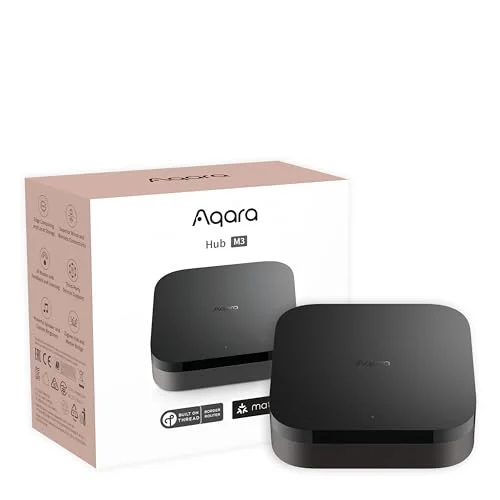
When I say “best matter hub,” I don’t mean the marketing name on the box—I mean the hub that actually fits the devices you already have (and the ones you plan to add). The tricky part is that Matter support alone isn’t enough. Some hubs still lean on cloud services for key actions, others lock Zigbee to one brand, and many don’t deliver reliable local automation. You also need to watch for practical details like whether the hub can route Thread (Thread border router) and whether it’s Wi‑Fi-first in a way that fits your home. This review compares nine hubs across Matter bridging, Thread routing, Zigbee support, and local execution, so your purchase aligns with real integration needs—not just labels.
In my view, a good Matter hub has three jobs: it translates between ecosystems, it keeps connections stable, and it behaves predictably when the internet isn’t available. Local execution matters because it preserves routines during outages. Compatibility matters just as much—especially when you’re mixing Matter with Zigbee and Thread. I also factor in how the hub is built and how regularly it gets updates, since that’s what usually protects you against security and device compatibility issues over time. And if the hub includes helpful extras—like PoE to simplify wiring or an IR blaster to handle HVAC/legacy electronics—you can avoid buying extra hardware later. Here, I focused on multi-protocol coverage, local reliability, and fit with common platforms like Home Assistant, Alexa, and SmartThings.
⚡ Quick Verdict
Our Top Picks at a Glance
| Image | Product | Score | Link |
|---|---|---|---|
 |
Aqara Smart Home Hub M3 for Advanced Automation, Matter Cont 🏆 Editor’s Pick |
8.8/10 |
View on Amazon Free Shipping & 30-Day Returns |
 |
Aqara Smart Hub M200, Matter Controller, Thread Border Route 🏆 Editor’s Pick |
9.2/10 |
View on Amazon Free Shipping & 30-Day Returns |
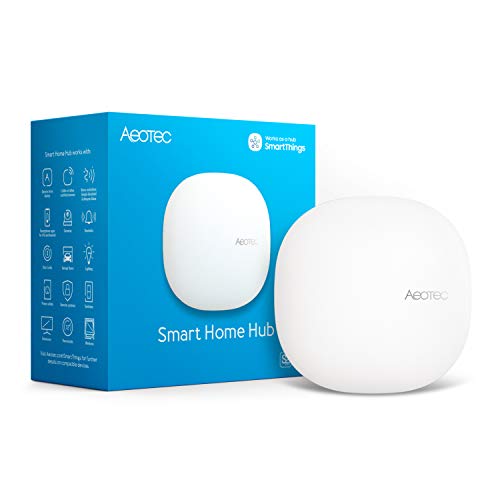 |
Aeotec Smart Home Hub, Works as a SmartThings Hub, Z-Wave, Z | 7.8/10 |
View on Amazon Free Shipping & 30-Day Returns |
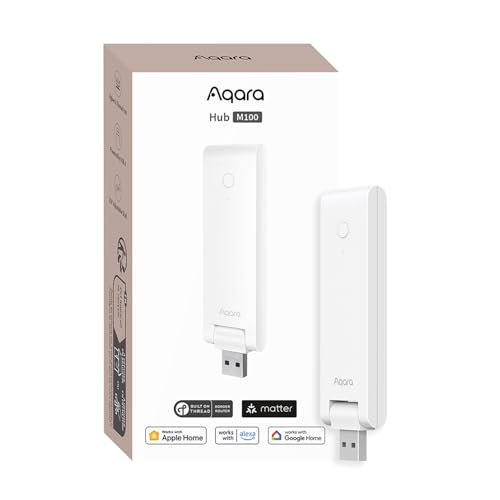 |
Aqara Smart Hub M100 for Home Automation, Matter Controller, | 7.1/10 |
View on Amazon Free Shipping & 30-Day Returns |
 |
Tapo Smart IR & IoT Hub with Chime – Matter-Certified, Unive | 6.6/10 |
View on Amazon Free Shipping & 30-Day Returns |
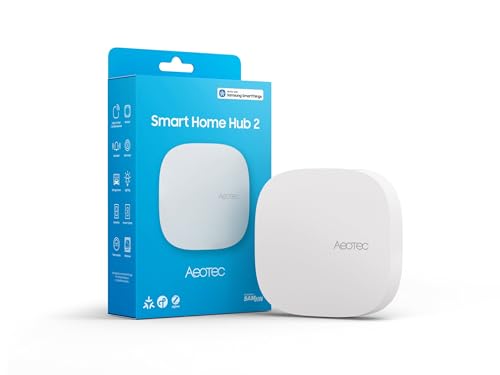 |
Aeotec Smart Home Hub2 – V4, Works as a SmartThings Hub, Zig | 7.3/10 |
View on Amazon Free Shipping & 30-Day Returns |
 |
Matter Smart Home Hub M6, Matter & Zigbee Gateway with Anten | 7.0/10 |
View on Amazon Free Shipping & 30-Day Returns |
 |
Hubitat Elevation C-8 Pro Smart Home Hub – Latest Platform U 👑 Premium Pick |
9.4/10 |
View on Amazon Free Shipping & 30-Day Returns |
 |
Yoolax Zigbee Matter Smart Hub, Gateway Smart Hub Compatible | 6.8/10 |
View on Amazon Free Shipping & 30-Day Returns |
📋 How We Evaluated
Evaluation focused on integration depth for Matter, Zigbee, and Thread, plus whether local automations keep running without cloud access. Build quality signals came from feature completeness such as PoE, encrypted storage where stated, and continuous platform update promises. Value and suitability weighed device capacity limits, protocol exclusions, and available Amazon-style rating signals, which were not provided here, so conclusions rely on stated capabilities and typical usage fit.
Detailed Reviews
Aqara Smart Home Hub M3 for Advanced Automation, Matter Cont🏆 Editor’s Pick
| Matter Controller and Bridge | Matter bridge with Aqara-exclusive scenes and signals |
| Thread Border Router | Supports Thread devices; repeaters may be needed for larger setups |
| Zigbee Device Capacity | Up to 127 Aqara Zigbee devices (not third-party Zigbee) |
| Connectivity | Dual-band Wi‑Fi with WPA3 and PoE; USB‑C for mini-UPS/power bank |
What We Found
The Aqara Smart Home Hub M3 is built around local control, with a Matter bridge plus a Thread border router. It supports Aqara Zigbee and Thread devices, but it’s not a free-for-all—there are explicit caps of up to 127 Aqara Zigbee devices and up to 127 Thread devices, and it states that non-Aqara Zigbee devices aren’t supported. That limitation will frustrate anyone trying to mix lots of brands on Zigbee, but it also keeps the experience tightly managed. I also like that the 360° IR blaster includes feedback and learning, which is aimed at more accurate status detection when you’re using IR remotes. On the HVAC side, it can expose an AC setup to Matter behavior when paired with an Aqara Temperature and Humidity Sensor, with the note that only one AC device can be exposed to Matter. For connectivity, the M3 includes dual-band Wi‑Fi with WPA3 and PoE support, plus a USB‑C port for optional backup power setups. Aqara’s privacy positioning also comes through via the “no mic/no camera” approach and encrypted local storage.
Who It’s For
I’d shortlist the M3 if your device inventory is mostly Aqara Zigbee and Thread. It’s a strong match for households that want local automations and prefer the stability that comes with PoE. If you want Matter integration for HVAC—without juggling separate IR remotes—this IR blaster feature set is a clear reason to consider it. It can also appeal to Home Assistant users looking to sync Aqara signals through Aqara’s Matter bridging approach. If you’re hoping to add a lot of third-party Zigbee devices, you’ll want to look elsewhere because this is explicitly Aqara Zigbee–only.
✅ Pros
- Large capacity for Aqara Zigbee and Thread devices supports bigger Aqara-heavy homes.
- Local automations with an Edge Hub design helps automation continue during internet outages.
- Smart IR blaster with feedback targets more reliable AC state syncing than simple IR control.
❌ Cons
- Zigbee support excludes third-party Zigbee devices, limiting cross-brand expansion.
- AC-to-Matter exposure is restricted to one device, which constrains multi-zone HVAC control.
- Pricing and availability are unclear here, making value assessment difficult.
💬 Our Take
My read is that the M3 earns attention for the combo of PoE + local automation focus + an IR blaster that’s designed for feedback-based HVAC control. It’s a top pick for Aqara-first homes, but it’s not the choice I’d make for cross-brand Zigbee flexibility.
Aqara Smart Hub M200, Matter Controller, Thread Border Route🏆 Editor’s Pick
| Matter Controller and Bridge | Matter controller plus advanced Matter bridging to major ecosystems |
| Thread Border Router | Supports Thread devices; repeaters may be needed for coverage |
| Zigbee Capacity | Up to 40 Aqara Zigbee devices (not third-party Zigbee) |
| Power and Connectivity | Dual-band Wi‑Fi with WPA3 plus PoE; USB‑C for mini-UPS/power bank |
What We Found
The Aqara Smart Hub M200 is centered on Matter bridging and Thread routing, delivered through a multi-protocol hub that also leans on PoE. It functions as a Matter controller, Thread border router, and Matter bridge, and it syncs Aqara-focused features into ecosystems like Apple HomeKit, Alexa, SmartThings, and Home Assistant. The Zigbee and Thread device capacities are smaller than the M3, rated up to 40 Aqara Zigbee devices and 40 Thread devices. The 360° IR blaster is a major part of the pitch here too—it supports feedback and learning, aiming to detect how IR remotes are used so AC status can be more accurate. The HVAC integration includes a Matter exposure note for one AC device, and it also calls out that behavior can vary based on the Matter integration app you use. On the local automation side, it states that local execution supports Zigbee and Matter routines, while some cloud push notifications may still require internet access. There’s also a built-in speaker for alarms/alerts, and the privacy approach aligns with Aqara’s typical no-mic/no-camera stance.
Who It’s For
I’d point you to the M200 if you want a practical Aqara hub that still checks the “useful plumbing” boxes—especially wired PoE reliability and Matter bridging into multiple ecosystems. It fits medium-size Aqara setups that include HVAC via IR, plus optional sensors for automation. It also works well for people who care about keeping routine lighting, climate, and security patterns functioning locally. Choose it when your household uses both Apple Home and Alexa (or at least expects those Matter paths to be smooth) and when you’re comfortable with the Aqara-only Zigbee limitation.
✅ Pros
- PoE support improves reliability versus Wi‑Fi-only hubs for whole-home installs.
- Local automation capability supports Zigbee and Matter devices even during internet outages.
- IR blaster with feedback targets better HVAC state accuracy than basic IR gateways.
❌ Cons
- Zigbee compatibility is limited to Aqara devices, which may restrict future additions.
- Matter exposure for AC is restricted to one device.
- Device capacity at 40 each may feel tight for larger sensor networks.
💬 Our Take
The M200 comes across as the most well-rounded Aqara option in this lineup because it brings PoE, Matter bridging, and an IR blaster designed for feedback-based AC control. If you’re building an Aqara ecosystem and want Matter without sacrificing local reliability, it’s the easier path.
Aeotec Smart Home Hub, Works as a SmartThings Hub, Z-Wave, Z
| SmartThings Hub Role | Powered by SmartThings for device monitoring and automations |
| Matter Gateway | Certified for Matter integration |
| Connectivity Options | Wi‑Fi or Ethernet setup |
| Supported Protocols | Z-Wave Plus (V3 model only) and Zigbee |
What We Found
Aeotec’s Smart Home Hub emphasizes compatibility through the SmartThings ecosystem, paired with certified Matter gateway support. It’s a SmartThings hub and it also supports Z-Wave plus Zigbee alongside Matter gateway functionality. Setup can be done using Wi‑Fi or Ethernet, which is helpful if you want more stable performance in a crowded network. The listing also references local automation for many routines, which can improve resilience during internet outages. Voice assistant support is described via Alexa and Google Home, and the hub is positioned as designed for North America. The biggest thing to verify is the Z-Wave note: the summary suggests Z-Wave support depends on the exact model tier/version (the listing references certification for Z-Wave Plus V3 only). For Zigbee + Matter users, SmartThings is often a strong pairing environment when you’re mixing brands, but the Z-Wave/version dependency is the main “do your homework” item before you buy.
Who It’s For
This hub makes sense for households that are already invested in SmartThings and for people mixing multiple smart home platforms. I’d also consider it if you specifically want Matter plus Z-Wave and Zigbee in one gateway, and if you care about Ethernet stability more than Wi‑Fi convenience. It’s most compelling when your planned device ecosystem includes more non-Aqara brands. My caution is that it’s less ideal if your goal is a clean, brand-simplified Zigbee-to-Matter bridge experience with guaranteed deep local-first behavior across the board.
✅ Pros
- Strong ecosystem fit for SmartThings users with wide accessory availability.
- Ethernet support improves stability for multi-device automation setups.
- Matter certification supports newer devices without abandoning existing platforms.
❌ Cons
- Z-Wave support depends on the specific model version, requiring careful confirmation.
- Local execution is described generally, but cloud features may still matter for some automations.
- No rating data and no listed price make value comparisons harder.
💬 Our Take
Aeotec’s SmartThings-centric approach is a good fit when you need a mixed-device home—especially with Z-Wave in the mix. It’s not the smoothest choice if you want the simplest Matter bridging path with minimal variable behavior.
Aqara Smart Hub M100 for Home Automation, Matter Controller,
| Zigbee Device Capacity | Up to 20 Aqara Zigbee devices (not third-party Zigbee) |
| Thread Device Capacity | Up to 20 Thread devices |
| Matter Bridging | Connects Aqara Zigbee products to Matter-compatible ecosystems |
| Wireless Security | 2.4GHz Wi‑Fi 6 with WPA3 |
What We Found
The Aqara Smart Hub M100 is a smaller, budget-leaning option in Aqara’s lineup, with Matter bridging and Thread border router functionality. It’s explicitly limited to Thread devices and Aqara Zigbee only, with caps of up to 20 Aqara Zigbee devices and 20 Thread devices. As a Matter bridge, it connects Aqara Zigbee products into other ecosystems like Apple Home and Alexa, and it supports cross-ecosystem Aqara features (including more advanced automation and facial recognition, where enabled). Local execution is part of the pitch for Zigbee and Matter automations, and the response time is described as millisecond-level. However, it also notes that some cloud-based push notifications may still require internet access. Power and placement matter here: the hub requires a 5V USB power adapter (not included) and advises keeping it continuously powered during use. Connectivity is listed as 2.4GHz Wi‑Fi 6 with WPA3, and the design includes an adjustable placement shaft, which can help in tighter spots. That physical flexibility can make it easier to deploy, but the device caps limit how far it can take you long-term.
Who It’s For
I’d choose the M100 for smaller setups where most of your devices are Aqara and you aren’t trying to build a whole-home network of sensors and switches. It can work well for apartments, single-floor homes, or add-on rooms where you don’t need maximum capacity. It’s also a reasonable fit when Apple Home or Alexa Matter bridging is important and when you want local automation without adding bigger networking hardware. If you expect a large Aqara Zigbee/Thread expansion, I’d avoid it because the 20-device limits can force an upgrade early.
✅ Pros
- Small form factor and adjustable placement reduce installation friction.
- Local execution for Zigbee and Matter supports continuity during internet outages.
- Matter bridging keeps Aqara features accessible across major ecosystems.
❌ Cons
- Capacity limits of 20 devices each can constrain growing smart homes.
- Zigbee compatibility excludes third-party Zigbee devices.
- Requires a specific 5V 0.5A power adapter and continuous power.
💬 Our Take
My take: the M100 is a pragmatic choice for small, Aqara-only builds that still need Matter bridging and local automation. If your plan includes scaling up, you’ll be better served by a higher-capacity hub from the start.
Tapo Smart IR & IoT Hub with Chime – Matter-Certified, Unive
| Matter-Certified IR Hub | Matter-certified for voice and home integration |
| Universal Remote Coverage | Control for 8,000+ IR brands |
| Alarm Capability | Built-in 93 dB alarm and sensor-triggered alerts |
| Automation Access | App control plus custom schedules and automations |
What We Found
Tapo’s H110 is built around IR control and universal remote functionality, rather than acting like a hub for broader home sensors and full Thread/Zigbee bridging. What it does offer is Matter-certified control for compatible devices through voice assistants such as Alexa, Google Assistant, and Siri via Matter. It’s designed for legacy electronics with support for 8,000+ IR brands and many appliance categories, including TVs, air conditioners, fans, set-top boxes, and audio devices. The hub supports schedules, automations, and remote access through the Tapo app on iOS and Android. It also includes a built-in 93 dB alarm for alert scenarios when paired with Tapo sensors, which makes it feel more “security/alert” capable than a simple remote. The practical limitation is that it’s primarily an IR/IoT hub—so it doesn’t replace a Thread border router or a Zigbee-to-Matter bridging strategy for lighting and sensors.
Who It’s For
This is a good match for people who want Matter-certified control for TV and HVAC/IR devices—especially if you’re dealing with lots of remotes and mostly need consolidation. It can also work as a quick add-on when a full multi-protocol hub would be overkill. The alarm + sensor alerts make it more attractive for renters or apartment setups where you want something functional without heavy infrastructure. I would not shortlist it for someone who needs Thread routing, Zigbee bridging, or a central automation backbone for sensors and lights beyond IR control.
✅ Pros
- Massive IR brand support reduces compatibility guesswork for older appliances.
- Matter voice control enables hands-free operation without a separate IR remote.
- Built-in loud alarm improves alert usefulness for motion and door events.
❌ Cons
- IR-first design does not cover Thread border routing or Zigbee gateway needs.
- No stated device capacity or multi-protocol expansion details for non-IR devices.
- It may rely on Tapo app services for broader functionality.
💬 Our Take
My read is that the H110 is excellent as a Matter-certified IR hub—but it isn’t the kind of “matter hub” that anchors a whole smart home. It’s the right pick for HVAC and entertainment consolidation, not for comprehensive Matter/Thread/Zigbee routing.
Aeotec Smart Home Hub2 – V4, Works as a SmartThings Hub, Zig
| Matter Support | Supports Matter gateway functionality |
| Zigbee Support | Zigbee for lighting, sensors, plugs, switches, and thermostats |
| Local Automations | Many local automations continue during internet outages |
| Protocol Exclusion | No Z-Wave support |
What We Found
Aeotec Smart Home Hub2 V4 is positioned as a SmartThings-powered hub with Zigbee and Matter support, while explicitly excluding Z-Wave. It supports the newest Matter standard plus Zigbee for devices like lighting, sensors, plugs, switches, and thermostats. Setup options include both Wi‑Fi and wired Ethernet, which can help performance in crowded networks. The listing also promises that many automations continue working during internet downtime, reinforcing the local automation angle. Through SmartThings, it emphasizes broad compatibility across Aeotec and many other brands. The main practical limitation is that you’re missing Z-Wave entirely, which matters if you currently rely on Z-Wave devices. Another gap in this listing summary is that it does not mention Thread border routing; if Thread devices are on your plan, that’s an important capability to confirm separately. Without Thread routing and Z-Wave, it still can be an effective choice for SmartThings-first, Zigbee-heavy homes that want Matter support.
Who It’s For
I’d shortlist Hub2 V4 for buyers who are committed to the SmartThings app and who mainly use Zigbee devices, with newer Matter accessories added on top. It’s also a fit for people who want the option of Wi‑Fi or Ethernet during installation. The missing Z-Wave is great if you never planned to use it—otherwise it’s a dealbreaker for Z-Wave households. This is best for mid-size device portfolios where Zigbee and Matter cover most of your needs.
✅ Pros
- SmartThings integration supports a broad set of Zigbee and Matter devices.
- Ethernet option helps reduce Wi‑Fi bottlenecks for busy networks.
- Local automation messaging aligns with reliability goals during outages.
❌ Cons
- No Z-Wave support removes compatibility with many existing Z-Wave ecosystems.
- Thread capability is not described, limiting Thread device adoption.
- Worth depends heavily on SmartThings ecosystem fit rather than protocol breadth.
💬 Our Take
Hub2 V4 feels like a sensible pick for SmartThings-first Zigbee homes that want Matter support. I wouldn’t call it a strong buy for Thread users or Z-Wave users, since those protocol paths may hit capability walls.
Matter Smart Home Hub M6, Matter & Zigbee Gateway with Anten
| Zigbee Gateway | Supports Zigbee gateway functionality with antenna |
| Matter Integration | Matter support requires a Thread border router for full operation |
| Device Capacity | Connect 125+ smart devices |
| OTA Updates | Automatic OTA updates for remote upgrades |
What We Found
The “Matter Smart Home Hub M6” is presented as a combined Zigbee hub and a Matter integration gateway, with a key requirement called out in the description: you need a Thread border router for full Matter Thread workflows. It claims integration across Matter plus Tuya, and it mentions Google Home and SmartThings, with a note that Alexa is not currently supported. Zigbee gateway capacity is described as 125+ smart devices, which suggests it’s intended for larger homes and more demanding coverage needs across multiple stories. The overall strategy seems to be dual-protocol—keeping Zigbee functionality strong while adding Matter bridging pathways—plus it mentions automatic OTA updates for ongoing improvements. The upside here is the big device-count direction and the intent to maintain Zigbee connectivity via an integrated antenna. The main risk is mismatch: if Alexa support is required, the listing’s note matters a lot, and it also leaves some uncertainty about how broad the Zigbee device compatibility is for third-party brands.
Who It’s For
This hub could be a good fit if you’re building a larger Zigbee network and you’re aligned with Google Home or SmartThings rather than Alexa. It also makes sense for multi-story homes where range/coverage matters. If you’re experimenting with Tuya integrations and want one hub to connect multiple ecosystems, it’s worth a closer look. I would skip it if Alexa is non-negotiable or if you’re expecting everything—especially Thread border router duties—to be handled fully in one box, since the listing says the border router may be external.
✅ Pros
- High Zigbee device capacity supports larger automation networks.
- OTA updates help maintain firmware and integration compatibility.
- Antenna-based design supports long-range coverage for multi-story layouts.
❌ Cons
- Alexa support is not currently supported, narrowing ecosystem compatibility.
- Matter may require an additional Thread border router depending on device types.
- Third-party device compatibility details are less specific in the provided feature list.
💬 Our Take
My take: the M6 is compelling for large Zigbee networks tied to Google Home or SmartThings, but it becomes a weaker fit for Alexa users and for anyone expecting a complete Thread border-router solution without additional hardware.
Hubitat Elevation C-8 Pro Smart Home Hub – Latest Platform U👑 Premium Pick
| Local Control | Runs automations without cloud, even during internet outages |
| Matter Support | Matter 1.5 support |
| Zigbee and Z-Wave | Zigbee 3.0 and Z-Wave 800 LR |
| Update Policy | Continuous platform updates with new capabilities |
What We Found
Hubitat Elevation C-8 Pro is built around local-first automation, meaning the hub runs automations inside your home rather than relying on remote servers. It explicitly supports Matter 1.5, Z-Wave 800 LR, Zigbee 3.0, and Bluetooth, giving it a broad protocol foundation. The listing also includes Ring support via platform updates and indicates it works with Alexa, Apple HomeKit, and Google Home. The standout strength for me is the emphasis on continuous platform updates, which extends compatibility and adds features without requiring new hardware. Matter being positioned as current with Matter 1.5 support helps with future device adoption. It also pushes the “no subscription/no cloud dependency for core automations” angle, which improves privacy and makes routines more resilient during outages. The tradeoff is that this local rules approach can require more setup effort—advanced local automations may take time to configure well.
Who It’s For
I’d recommend this hub to people who want the most control and reliability from day one and who are comfortable putting time into configuration. It works especially well in homes that mix Zigbee, Z-Wave, and Matter devices. If you enjoy automating beyond basic schedules, the local rules engine and update cadence can be a big advantage. It’s also a strong fit for privacy-focused buyers who don’t want core automation logic depending on cloud services. Beginners may find the setup and device handling less turnkey than single-ecosystem hubs.
✅ Pros
- Local-first automation keeps smart home rules running during internet outages.
- Broad protocol coverage supports Matter plus Zigbee and Z-Wave in one system.
- Continuous platform updates improve compatibility over time without new hardware.
❌ Cons
- More advanced platform can increase setup time for beginners.
- Some device integration details depend on the hub’s evolving platform and community support.
- No listed price makes affordability comparisons uncertain.
💬 Our Take
The C-8 Pro is the strongest “hub brain” here in terms of unifying protocols and prioritizing local automation with frequent updates. It leads for reliability and long-term flexibility—even if you’ll likely do a bit more setup work to get everything dialed in.
Yoolax Zigbee Matter Smart Hub, Gateway Smart Hub Compatible
| Device Management | Supports adding and controlling up to 128 devices |
| App Integration | Connects via Yoolax Home app for remote management |
| Voice Assistants | Compatible with Alexa and Google Assistant |
| Signal Coverage | Reported coverage of about 590 inches |
What We Found
Yoolax’s Zigbee Matter Smart Hub leans heavily into Zigbee motor compatibility and “Matter-adjacent” control as described, including targeted scenarios like smart blinds that use Zigbee motors. It claims support for up to 128 smart devices, and it positions itself for voice control with Alexa and Google Home through the Yoolax Home app connection. The listing also mentions signal coverage of 590 inches, which suggests it’s aimed at practical range for smaller offices and home deployments. It further references Sub-GHz low-frequency transmission to reduce Wi‑Fi interference and improve wall penetration—useful in dense apartment environments. The bigger concern is clarity: the description emphasizes Zigbee motor use cases, but it doesn’t clearly spell out full Thread border routing, broad Matter controller roles, or comprehensive multi-protocol coverage. If you’re shopping for a strict Matter/Thread backbone across varied brands, I would treat this as a “verify compatibility and pairing paths” situation rather than a plug-and-play certainty.
Who It’s For
This is the type of hub I’d consider for buyers who specifically need Zigbee motor support—for example, smart blinds and motorized window treatments. It also fits renters or smaller spaces where a compact hub per floor makes sense. If what you want is app-based control plus Alexa/Google voice control, it could match that need without much networking complexity. It’s less ideal for full-scale sensor networks where you expect strict, consistent Matter controller behavior across many third-party device categories.
✅ Pros
- Strong focus on Zigbee motorized blind control fits a common automation need.
- App-based remote control supports off-site management.
- Range claims and Sub-GHz interference reduction can improve stability in apartments.
❌ Cons
- Matter support details are vague compared with dedicated Matter hubs.
- Compatibility across non-blind device types is not clearly specified.
- Performance and reliability can vary based on app bridging and device ecosystems.
💬 Our Take
Yoolax looks promising for Zigbee motor-based automations, especially around blinds and similar setups. I’d still verify the details carefully before relying on it as an all-in-one solution for broad Matter and Thread requirements.
What to Look For Before Buying
A “best matter hub” should support the Matter workflows your household actually needs—based on what you already own. If internet downtime would break your routines, prioritize hubs that clearly support local automation. Then look closely at which protocols are covered in practice: Zigbee, Thread, and (if you use it) Z-Wave. Zigbee support also needs scrutiny—some hubs are effectively brand-locked even when they mention compatibility. Finally, match the install requirements (like PoE options and realistic range) to your home layout, so the hub you buy today doesn’t become a weak link tomorrow.
Check Match protocols to your device inventory
I’d start by matching protocols to your current device inventory. Matter-only setups can fall short if you expect Thread or Zigbee routing. Check whether the hub includes a Thread border router or if it expects you to add one separately. For Zigbee, confirm whether support is limited to a single brand’s devices—some listings explicitly say “not third-party Zigbee.” Before you buy, I’d list your existing sensors, plugs, and lights and compare them directly to the hub’s pairing story.
Value Account for practical hardware costs
Think about practical hardware costs, not just the hub price. PoE can reduce outlet clutter and improve reliability, especially in less convenient install spots. Battery-free sensors still depend on your hub’s connection stability, so don’t ignore installation quality. Watch for adapter requirements (for example, USB power needs) and whether any power supplies are included. And if Thread coverage is part of your plan, pay attention to the listing’s guidance about repeaters to extend range.
Rating Weight reliability signals, not promises
I’d weigh reliability signals over marketing promises. When a hub clearly claims local automation, it usually translates into better behavior during outages. Consistent platform update messaging is another strong indicator that you’ll get device compatibility fixes over time. Missing rating data for Amazon (or any retailer) increases uncertainty, so I’d rely more on documented feature completeness and, when possible, community feedback about pairing friction.
Verify Confirm ecosystem fit for voice assistants and apps
Ecosystem fit is where Matter hubs can differ a lot in day-to-day use. Check whether the hub works with Alexa, Apple HomeKit, Google Home, and SmartThings—or if one is explicitly excluded (like “Alexa not supported”). Also look at how Matter bridging handles practical features like scenes and notifications, not just device pairing. Pick the hub that matches the platform you actually use every day, not the one you tried once.
Frequently Asked Questions
Do Matter hubs replace Zigbee and Thread devices?
Not automatically. Many Matter hubs act as bridges, translating Zigbee or Thread device data into Matter experiences, so your devices can appear and behave like part of your Matter setup. For Thread devices, you typically need a Thread border router—so if the hub doesn’t provide Thread routing, you may still need extra hardware or a more limited setup depending on how the hub handles it.
What does “local automation” mean for a Matter hub?
Local automation means the hub runs the automation rules on the hub itself instead of depending on a cloud server. That usually keeps control working during internet outages. Some cloud-based notifications may still require an internet connection, even when the core control logic is local. If local execution matters to you, look for explicit claims that cover Matter and Zigbee routine behavior, not just device pairing.
Why do some hubs limit Zigbee to one brand?
Brand-locked Zigbee support reduces pairing inconsistencies and can improve integration depth for proprietary features. The downside is less flexibility when you want to add third-party Zigbee devices later. If you’re shopping for compatibility across brands, check statements like “not third-party Zigbee devices” before committing.
Can an IR blaster hub integrate HVAC into Matter?
Some hubs include IR blasters that can expose certain HVAC controls to Matter. Accurate state feedback generally depends on learning/detection features—not just sending IR commands. Limitations can apply, including exposing only one AC device to Matter. I’d verify the specific HVAC device type support and whether the hub supports thermostat-style behavior the way you expect.
Which is better: a multi-protocol hub or an IR-only Matter hub?
Multi-protocol hubs are meant to anchor whole-home automation with sensors, lights, locks, and plugs (including routing/bridging where supported). IR-only Matter hubs are more about consolidating TVs and legacy remotes and appliances. If you need Zigbee or Thread routing as your backbone, an IR-only solution won’t replace a proper gateway. Choose based on whether your priority is home automation infrastructure or entertainment/HVAC remote consolidation.
🎯 Final Verdict
Hubitat Elevation C-8 Pro is my top pick for “best matter hub” status because it combines Matter 1.5 with Zigbee 3.0, Z-Wave 800 LR, and Bluetooth under a local-first automation engine. The continuous platform updates also help protect compatibility as new devices arrive. My main alternative here is Aqara Hub M200, which can be easier for Aqara-heavy homes and adds PoE plus an IR blaster with feedback for HVAC-style integrations. If you want maximum flexibility, I’d choose C-8 Pro; if you want a smoother Aqara-centered Matter path (and you’re comfortable with its Zigbee limitations), the M200 is the more straightforward route. Confirm your protocol needs and which ecosystems you rely on daily, then buy with more confidence.