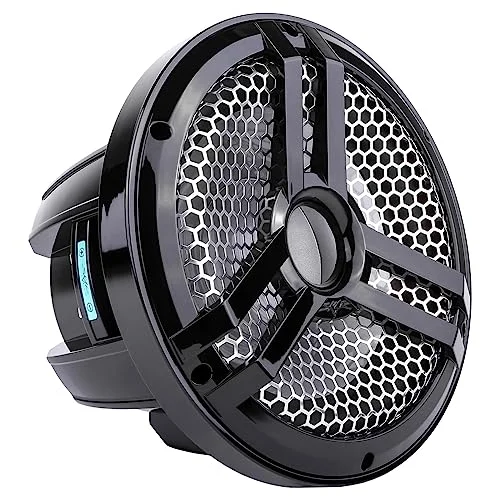
Shopping for the best marine subwoofer gets messy fast. Between splash-ready materials, shallow-mount options, and the need for enough watts to keep bass audible over engine noise, it’s easy to end up with a sub that looks right but sounds weak. You also have to sort out impedance and frequency info that isn’t always clear—two things that can make the difference between tight low-end and disappointing thump at speed. In this review, I’m comparing marine-focused subwoofers (and a matching marine amp) with an eye on frequency range, build, and real-world install fit—especially for under-helm and under-seat setups.
A marine subwoofer has to handle moisture, vibration, and UV exposure, but the audio side matters just as much. Boats tend to lean out the lows as speed increases, so “higher tuning” can end up sounding thin. I also treat power ratings carefully: peak numbers don’t tell the whole story, and RMS plus system matching usually predicts what you’ll actually hear. This lineup covers the most common upgrade paths—from sealed marine drivers to low-profile amplified systems, plus a marinized class D monoblock amplifier for people building a more controlled bass setup.
⚡ Quick Verdict
Our Top Picks at a Glance
| Image | Product | Score | Link |
|---|---|---|---|
 |
Skar Audio SKM10WBD2 10″ 1000W Max Power Dual 2 Ohm Marine S 🏆 Editor’s Pick |
8.8/10 |
View on Amazon Free Shipping & 30-Day Returns |
 |
Pyle 10-Inch Low-Profile Amplified Subwoofer System – 900 Wa 💰 Best Value |
7.2/10 |
View on Amazon Free Shipping & 30-Day Returns |
 |
Pyle 10-Inch Outdoor Marine Audio Subwoofer – 500 Watt Singl | 7.6/10 |
View on Amazon Free Shipping & 30-Day Returns |
|
Pyle PLMRW8 8-Inch Outdoor Marine Audio Subwoofer – 400 Watt | 6.9/10 |
View on Amazon Free Shipping & 30-Day Returns |
 |
Skar Audio SKM10WD4 10″ 1000W Max Power Dual 4 Ohm Marine Su | 8.3/10 |
View on Amazon Free Shipping & 30-Day Returns |
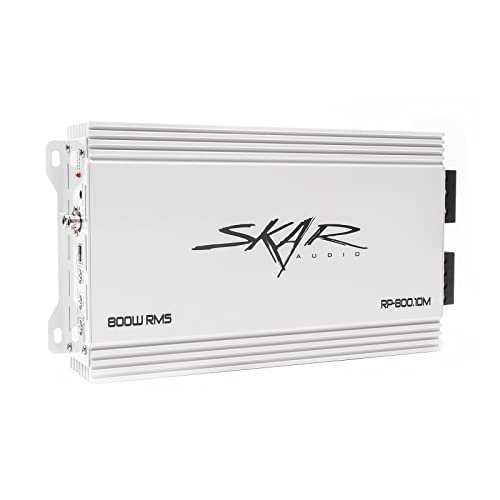 |
Skar Audio RP-800.1DM 800 Watt Monoblock Class D Marine Subw 👑 Premium Pick |
9.4/10 |
View on Amazon Free Shipping & 30-Day Returns |
 |
Pyle 8-Inch Low-Profile Amplified Subwoofer System – 600 Wat | 6.6/10 |
View on Amazon Free Shipping & 30-Day Returns |
|
Skar Audio SKM10WBD4 10″ 1000W Max Power Dual 4 Ohm Marine S | 8.2/10 |
View on Amazon Free Shipping & 30-Day Returns |
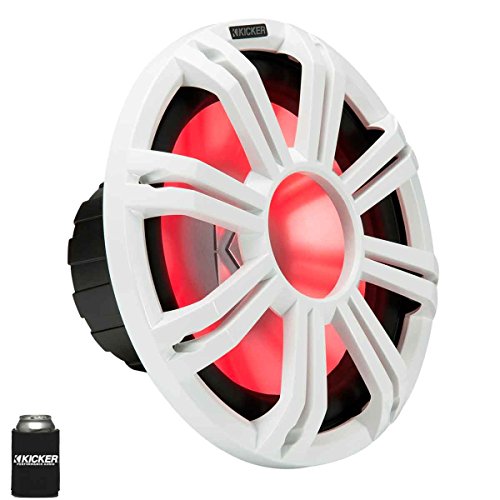 |
KICKER KMF124 12″ Marine Subwoofer with LED White Grill 4 Oh | 8.0/10 |
View on Amazon Free Shipping & 30-Day Returns |
 |
Polk Audio DB1042 SVC – DB+ Series 10″ Shallow Subwoofer, Ca | 8.1/10 |
View on Amazon Free Shipping & 30-Day Returns |
📋 How We Evaluated
Each option gets evaluated on marine build quality, including waterproofing, corrosion resistance, and surround materials. Performance analysis focuses on stated frequency response and RMS power, plus how the design supports clean bass instead of just loud output. Value and user-suitability consider typical install needs, impedance options, and the strength of Amazon-style rating signals like consistency and durability feedback, even when no formal rating data appears here.
Detailed Reviews
Skar Audio SKM10WBD2 10″ 1000W Max Power Dual 2 Ohm Marine S🏆 Editor’s Pick
| Driver Size | 10-inch |
| Impedance Configuration | Dual 2-ohm |
| Peak / RMS Power | 1,000 W max / 500 W RMS |
| Frequency Response | 34 Hz – 700 Hz |
What We Found
The Skar Audio SKM10WBD2 is rated for 1,000 W max power with 500 W RMS output from a 10-inch dual 2-ohm driver. It uses a 2.4-inch high-temperature copper voice coil, which is designed for sustained use, and the ferrite motor plus high-roll rubber surround are meant to hold up to a moving, vibrating boat environment. The published frequency response is 34 Hz to 700 Hz, so it’s positioned to bring true low bass fundamentals while still supporting mid-bass punch. Sensitivity is listed at 85.1 dB, which should help it stay efficient when paired with the right amp. My read is that this driver can perform well in marine-oriented builds, but enclosure type and amplifier settings will largely decide how clean the bass ends up at speed.
Who It’s For
I would shortlist this if you’re building or upgrading a sealed (or properly tuned) marine enclosure and you want deeper bass than many shallow options. The dual 2-ohm wiring is also handy if you’re trying to match different amplifier channel or bridged setups. If you’re aiming for both low thump and musical mid-bass, plan on spending time on gain and low-pass/crossover tuning so you don’t end up with muddy output.
✅ Pros
- Deep-leaning 34 Hz lowest spec helps retain real bass weight rather than just mid-bass punch.
- High-temperature copper voice coil supports stable operation during long boat sessions.
- Dual 2-ohm design offers flexibility for common marine amplifier matching.
❌ Cons
- Performance depends on enclosure design, and a poor box can reduce bass impact quickly.
- Requires careful amplifier gain and low-pass settings to avoid distortion in open water cabins.
- No built-in amplification means extra equipment is mandatory for standalone use.
💬 Our Take
My read is that the SKM10WBD2 earns its place as a marine bass driver thanks to its low-end-capable 34 Hz spec and its voice-coil construction built for long-term abuse at the waterline.
Pyle 10-Inch Low-Profile Amplified Subwoofer System – 900 Wa💰 Best Value
| Subwoofer Size | 10-inch |
| Amplified Power | 900 W max |
| Height | 3-inch low profile |
| Inputs | Low-level (RCA) and High-level (speaker) with sensitivity 0.12V to 3.5V |
What We Found
This Pyle 10-inch low-profile system is built for tight spaces, with a compact 3-inch height and an integrated amp rated up to 900 watts max. It includes an adjustable built-in amplifier with input sensitivity from 0.12V to 3.5V, plus low-pass crossover control and variable bass boost—useful for dialing output to your head unit and cabin acoustics. It supports low-level (RCA) and high-level (speaker wire) inputs, which makes it easier to install on marine stereos that don’t include RCA sub outputs. One limitation in the provided details: there’s no published frequency output range, so low-end extension can’t be confirmed from specs alone. Also, power is max-rated, which can overstate real-world loudness compared to RMS-focused products. Still, the under-seat form factor makes it one of the more straightforward bass upgrades here.
Who It’s For
I would recommend this for buyers who want bass quickly with minimal wiring and limited mounting depth. It’s a good fit for under-seat or small-compartment installs where a separate amp and enclosure are a headache. The dual input approach is especially useful if you’re upgrading older marine audio setups without RCA outputs. I’d choose it when convenience and space-saving matter more than chasing the deepest sub-bass extension.
✅ Pros
- Low-profile 3-inch height simplifies under-seat mounting in crowded boat layouts.
- Built-in amp plus both RCA and speaker-level inputs reduce install complexity.
- Remote level control module enables quick cabin tuning.
❌ Cons
- Max watt ratings do not guarantee deeper bass at the lowest frequencies.
- Limited space can restrict cone movement and reduce real sub-bass impact.
- No marine enclosure detail provided, so splash exposure and mounting require careful planning.
💬 Our Take
This Pyle system is more about easy, audible bass in constrained installs than guaranteed depth. It’s a practical add-on when you need something that fits, but I’d temper expectations versus standalone marine sub drivers plus a marinized amp.
Pyle 10-Inch Outdoor Marine Audio Subwoofer – 500 Watt Singl
| Subwoofer Size | 10-inch |
| Impedance | 4-ohm |
| Peak Power | 500 W peak |
| Frequency Response | 25 Hz – 2.5 kHz |
What We Found
The Pyle PLMRW10 is aimed at weather-ready installation, using a marine-grade waterproof plastic case. It’s rated at 500 watts peak power with 4-ohm impedance and uses a 10-inch polypropylene cone. The magnet structure is listed at 50 oz, and the voice coil is described as 1.5-inch high-temperature, both of which are meant to support durability. The published frequency response runs from 25 Hz to 2.5 kHz, which suggests it can cover low-end extension while also contributing some midrange energy. Physically, the overall diameter is 10.6 inches with a 4.60-inch mounting depth, so it’s easier to fit into under-helm cavities and compact placements. As with most compact marine drivers, how clean the low frequencies come through will still depend heavily on enclosure space (or lack of it) and how firmly it’s mounted.
Who It’s For
I would put this in front of shoppers working with small boats that need a single compact bass unit—either in an under-helm space or a simple custom box. It suits people who want splash-resistant housing and straightforward mounting depth requirements. The 4-ohm impedance is compatible with many marine receivers and amps, but you still need to match impedance correctly. Choose it when compact packaging and broad frequency coverage matter more than building a dedicated sub enclosure.
✅ Pros
- Marine-grade waterproof plastic case supports splash-prone installations.
- 25 Hz lowest spec promises deeper bass than typical compact drivers.
- Flexible placement options help in under-helm and box or cooler builds.
❌ Cons
- Peak power alone may not reflect realistic continuous loudness.
- Long-range response claims can produce uneven bass if crossover tuning is incorrect.
- Compact mounting depth can limit excursion compared with larger enclosure systems.
💬 Our Take
My read is that the PLMRW10 makes sense for compact builds thanks to its waterproof housing and a low 25 Hz stated response. It’s still a “depends on the install” driver—clean sub-bass requires proper crossover and solid mounting.
Pyle PLMRW8 8-Inch Outdoor Marine Audio Subwoofer – 400 Watt
| Subwoofer Size | 8-inch |
| Impedance | 4-ohm |
| Peak Power | 400 W peak |
| Frequency Response | 35 Hz – 3.5 kHz |
What We Found
The Pyle PLMRW8 brings compact outdoor marine bass in a waterproof plastic case with an 8-inch polypropylene cone. It lists 400 watts peak power at 4-ohm impedance. The magnet structure is rated at 40 oz and the voice coil is described as 1.5-inch high-temperature. The published frequency response is 35 Hz to 3.5 kHz, which points to bass-forward output and also the ability to add some midrange presence. Installation options include under-helm, behind-helm seat mounting, or use inside a box/cooler-style cavity. With an 8.5-inch overall diameter and 3.60-inch mounting depth, it’s well suited to tight compartments. The tradeoff is that shallow, compact drivers often hit less hard in larger cabins unless enclosure tuning and placement do their job.
Who It’s For
I’d shortlist the PLMRW8 if you want a smaller marine sub for boats with limited space—think day boats, runabouts, and setups where you need under-seat or front-compartment mounting. With 4-ohm impedance, it should integrate more easily with many marine systems. I’d choose it for dependable water-resistant bass coverage rather than ultra-deep, sub-hertz type extension.
✅ Pros
- Water-resistant waterproof housing supports common splash zones on small boats.
- Compact 3.60-inch mounting depth helps fit cramped mounting cavities.
- High-temperature voice coil supports longer duty cycles.
❌ Cons
- Lowest stated frequency at 35 Hz limits deep sub-bass impact compared with larger drivers.
- Compact size can reduce output headroom in louder, larger cabins.
- As a standalone driver, it still needs proper amplification and crossover.
💬 Our Take
The PLMRW8 is a practical compact upgrade with splash-resistant housing. It delivers useful utility bass, but it won’t match the slam you usually get from larger tuned 10-inch or 12-inch marine sub setups.
Skar Audio SKM10WD4 10″ 1000W Max Power Dual 4 Ohm Marine Su
| Driver Size | 10-inch |
| Impedance Configuration | Dual 4-ohm |
| Peak / RMS Power | 1,000 W max / 500 W RMS |
| Frequency Response | 35 Hz – 700 Hz |
What We Found
The Skar Audio SKM10WD4 uses the same core platform as the dual 4-ohm version, rated at 1,000 W max power and 500 W RMS. The 10-inch driver features a dual 4-ohm 2.4-inch high-temperature copper voice coil, intended to support stable performance under sustained load. Sensitivity is listed at 85.6 dB, and the frequency response is 35 Hz to 700 Hz. The ferrite motor and high-roll rubber surround are meant for durability in a vibration-heavy marine environment. The white finish can help you visually distinguish the install, but it doesn’t replace proper weatherproofing. My take is that you’ll get the best results when this driver is paired with the right marinized amplifier and the enclosure is tuned with the low-pass crossover set correctly.
Who It’s For
This is a good fit when your install needs dual 4-ohm wiring flexibility and you have marine amplifier channels that match it. It works especially well for people building a sealed or tuned enclosure so the box can handle low-frequency extension. The 500 W RMS rating is a sweet spot for many marinized Class D or AB marine amps when the pairing is done correctly. I’d also see it as an option for listeners who want bass into the mid-30s without needing the space a larger 12-inch sub typically demands.
✅ Pros
- Dual 4-ohm option simplifies matching with a wide range of amps.
- 85.6 dB sensitivity supports efficient output for its power class.
- High-temperature copper voice coil supports long marine listening sessions.
❌ Cons
- Deep bass depends on enclosure tuning; open mounting will sound thin.
- Needs a proper marine amplifier and low-pass calibration for best results.
- Frequency response stops at 700 Hz, so integration with mains requires attention.
💬 Our Take
The SKM10WD4 reads like a strong 10-inch marine driver, with efficient sensitivity and a durable coil design. It’s an easy pick when impedance matching points to dual 4-ohm wiring.
Skar Audio RP-800.1DM 800 Watt Monoblock Class D Marine Subw👑 Premium Pick
| Amplifier Type | Marine Class D MOSFET Monoblock |
| Power at 1 Ohm | 800 W RMS / 1,200 W peak |
| Frequency Response | 20 Hz – 250 Hz |
| Bass EQ | +6 or +12 dB boost at 45 Hz |
What We Found
The Skar Audio RP-800.1DM is a marinized class D monoblock amp built specifically for subwoofer power in harsh environments. It uses a marine class D MOSFET design, with waterproof coating on the circuit board and rust-proof painting on the mechanical case. Power specs include 800 W RMS at 1-ohm and 1,200 W at 1-ohm peak, with a published frequency response of 20 Hz to 250 Hz. There’s an onboard bass EQ switch offering +6 or +12 dB boost at 45 Hz, which can help restore perceived bass weight when cabin acoustics reduce punch. Protection is handled with a 4-way protection circuit, and it supports strong current delivery with 4-gauge power and ground terminals. Overall, this amp’s strengths are control, protection, and marine readiness rather than just chasing numbers.
Who It’s For
I’d aim this amp at anyone building a real marine sub setup who wants consistent operation around salt fog and vibration. It’s especially relevant when you care about tuning—boats with enclosed cabins, areas with standing-wave issues, or installs where sub placement reduces impact. The +45 Hz EQ switch also makes sense when you need a bit of recovery for punchy bass. If you’re building around Skar (or other marine sub drivers) and want a marinized amp matched to the impedance, this is the type of piece I would pair with that plan.
✅ Pros
- Fully marinized design with waterproof circuit coating improves reliability in salt environments.
- On-board +45 Hz EQ helps restore bass punch without extra accessories.
- 4-way protection plus 4-gauge terminals supports stable power delivery.
❌ Cons
- Monoblock requires a matched subwoofer impedance plan before purchase.
- Overboosting +12 dB can increase distortion if the enclosure and gain are not tuned.
- No dedicated enclosure control means sub placement still heavily affects output.
💬 Our Take
Out of the options here, the RP-800.1DM is the most installation-ready because of its marinized construction and the tuned 45 Hz bass EQ. It tends to improve the outcome more than just swapping drivers without addressing control and tuning.
Pyle 8-Inch Low-Profile Amplified Subwoofer System – 600 Wat
| Subwoofer Size | 8-inch |
| Amplified Power | 600 W max |
| Input Options | Low-level (RCA) and high-level (speaker) |
| Mount Type | Low-profile underseat design |
What We Found
The Pyle PLMRSBA8 is an 8-inch low-profile amplified underseat solution with a built-in amp rated up to 600 watts maximum. It’s designed for tight installs with a compact footprint and uses low- and high-level inputs so it can integrate with more head units. Low-pass crossover control and sensitivity adjustment are included, which helps you match output to your marine stereo. The low-profile mounting is a plus when space limits both sub size and enclosure depth. One important spec gap: the provided details don’t include a published frequency response, so you can’t confirm true low-end extension from the listing alone. As an active compact system, it should add audible bass quickly, but it may not provide the same depth and headroom as passive subs paired with a dedicated marinized amplifier.
Who It’s For
I’d point this to boat owners and utility-vehicle drivers who want a straightforward bass upgrade with minimal installation. If your head unit doesn’t have RCA outputs, the high-level inputs are a big convenience. It also suits smaller cabins where an 8-inch driver reduces the risk of overpowering or overwhelming the space. I’d treat it as a convenience-first choice rather than the route to maximum low-frequency reach.
✅ Pros
- Built-in amplifier reduces components and speeds installation.
- Low and high level inputs handle both modern and older marine head units.
- Low-profile design works in shallow mounting locations.
❌ Cons
- Missing frequency response details make deep bass expectations uncertain.
- Smaller 8-inch size can limit extension compared with 10-inch and 12-inch options.
- Power is max-rated, which may overstate real-world continuous output.
💬 Our Take
The PLMRSBA8 is a space-saving bass add-on, not a deep-bass specialist. It’s best for quick upgrades where simplicity matters more than extension.
Skar Audio SKM10WBD4 10″ 1000W Max Power Dual 4 Ohm Marine S
| Driver Size | 10-inch |
| Impedance Configuration | Dual 4-ohm |
| Peak / RMS Power | 1,000 W max / 500 W RMS |
| Frequency Response | 35 Hz – 700 Hz |
What We Found
The Skar Audio SKM10WBD4 is a dual 4-ohm 10-inch marine subwoofer rated at 1,000 W max power and 500 W RMS. It uses a 2.4-inch dual 4-ohm high-temperature copper voice coil aimed at dependable power handling in a marine environment. Sensitivity is listed at 85.6 dB, with a frequency response range of 35 Hz to 700 Hz. The ferrite motor supplies magnetic strength, and the high-roll rubber surround is meant to support movement durability. The black finish fits traditional marine builds. Like the other passive drivers here, the real-world result will depend on enclosure tuning, amplifier matching, and low-pass crossover settings.
Who It’s For
This driver fits installs where dual 4-ohm wiring is needed to match the available marine amplifier. It’s a solid pick if you’re planning a dedicated enclosure to control excursion and improve bass clarity. The published response starting at 35 Hz suggests it can deliver musical bass across common boating genres without forcing you into a larger footprint. It’s also a good option for listeners seeking punchier low-end without stepping up to a 12-inch sub that takes more space.
✅ Pros
- Solid 500 W RMS rating supports meaningful bass performance with proper amplification.
- High-temperature copper voice coil improves reliability under frequent use.
- Efficient 85.6 dB sensitivity helps reduce wasted power.
❌ Cons
- Deep bass performance depends strongly on enclosure and tuning, not only on spec sheets.
- Needs careful crossover integration with midrange speakers to avoid overlap.
- Passive design requires additional purchase of a marinized amplifier.
💬 Our Take
The SKM10WBD4 reads like a dependable 10-inch marine driver, especially when it lands in a properly tuned enclosure. My take is that it’s a good match if you already know you’ll handle the amplification stage.
KICKER KMF124 12″ Marine Subwoofer with LED White Grill 4 Oh
| Driver Size | 12-inch |
| Power | 175 W RMS / 350 W peak |
| Frequency Response | 30 Hz – 500 Hz |
| Mounting Style | Free-air applications |
What We Found
The KICKER KMF124 brings a larger 12-inch marine sub driver designed for free-air applications. It features waterproof grilles with thick silicone-coated LEDs intended to add splash protection and UV resistance. The motor structure is listed as sealed, and there’s a locking terminal cover to help keep the setup splash-proof. For durability, it uses a Santoprene surround and a marine-grade cone suited to excursion in both fresh and salt water conditions. Power is specified at 175 W RMS and 350 peak, with a frequency response of 30–500 Hz. That 30 Hz starting point can help fill out bass in a typical boat cabin. Since it’s free-air capable, it can simplify installs—but actual output will still depend on the boat’s baffle and the cavity acoustics behind the mount.
Who It’s For
I’d consider this for owners who want a 12-inch upgrade without building a complex dedicated enclosure. Free-air design makes sense if your boat provides a suitable cavity or baffle space behind the mounting location. Even with the lower RMS rating versus some high-power 10-inch options, it can still deliver strong bass if placement is right. Choose it if you care about rugged weatherproofing and want more cone area without the enclosure complexity.
✅ Pros
- Marine grade sealed construction and locking terminal cover support splash-proof reliability.
- 12-inch cone area helps produce louder bass even at moderate RMS power.
- 30 Hz lowest spec improves perceived low-end output for boat cabins.
❌ Cons
- Free-air installs vary widely by boat geometry, which can change bass quality a lot.
- Lower RMS rating limits absolute output compared with high-power Skar builds.
- LED grill adds visual appeal but also adds a component to maintain.
💬 Our Take
My read: the KMF124 balances weatherproof durability with a true 12-inch footprint. The output ceiling is lower than high-power drivers, but for many boats the install simplicity and size payoff are the bigger win.
Polk Audio DB1042 SVC – DB+ Series 10″ Shallow Subwoofer, Ca
| Driver Size | 10-inch |
| Voice Coil | Single 4-ohm (SVC) |
| Frequency Response | 30 Hz – 200 Hz |
| Marine Protection | IP56 marine certification |
What We Found
The Polk Audio DB1042 SVC (DB+ series) is built around shallow mounting with a marine-certified approach. It uses a polypropylene woofer cone and a Santoprene surround, and it’s listed with an IP56 marine certification for splash-proof performance. The listing claims 1050 W peak power and positions it for marine and car sound systems with compact installation needs. The frequency response is stated at 30 Hz to 200 Hz, which lines up with typical subwoofer crossover regions rather than aiming for full-range coverage. It also includes a Dynamic Balance Technology system intended to reduce distortion by balancing materials and how the motor behaves. The DB1042 SVC designation indicates a single 4-ohm voice coil, which simplifies amplifier matching for many marine mono setups.
Who It’s For
I’d shortlist this when mounting depth is your limiting factor and you still want marine-ready durability. It makes sense for under-helm and shallow deck installations where standard 10-inch subs can be too deep. The 30 Hz to 200 Hz range matches common tuning goals—clear bass without adding too much midrange content. Choose it if you want distortion-focused behavior, marine-certified splash protection, and easier integration in crossover-managed systems.
✅ Pros
- Marine-certified IP56 rating supports splash-proof use in typical boat conditions.
- 30 Hz to 200 Hz range matches sub behavior and helps avoid muddy overlap.
- Shallow-focused design makes it practical for limited-depth installs.
❌ Cons
- Peak power claims do not ensure the same real loudness as higher-RMS drivers.
- Shallow mounting can reduce deep bass output depending on enclosure volume or baffle depth.
- Full performance depends on correct crossover and amplifier pairing.
💬 Our Take
The Polk DB1042 SVC stands out as a shallow marine sub choice with IP56 protection and a bass-friendly frequency range. It’s a strong competitor specifically when depth is the bottleneck.
What to Look For Before Buying
The best marine subwoofer starts with fitment. I’d measure mounting depth first, then decide whether your best option is free-air mounting, a sealed enclosure, or a compact under-seat active system. After that, I’d verify marine durability details—waterproofing, corrosion resistance, and UV exposure—because boats don’t forgive weak materials. Finally, I’d match impedance and tuning to your amplifier and head unit so you get clean bass at speed, not just loudness on paper.
Check Match the sub to the boat’s mounting space
Before you choose 8-inch, 10-inch, or 12-inch, I’d measure both depth and width and confirm what the cavity behind the mount can realistically handle. Then decide whether you’ll be doing a sealed/tuned enclosure, free-air mounting, or an under-seat active setup. Low-profile powered systems make installs easier, but they can limit both output and extension. Larger drivers often hit harder—if the baffle and airflow behind the sub are stable and the mounting is firm.
Value Compare RMS power and realistic bass range
Peak power ratings can inflate expectations, so I focus on RMS power and the frequency response as the more practical indicators. If you want true bass, look for low-end numbers that actually approach the 30 Hz neighborhood. Also check that the stated response makes sense for the crossover region your amplifier will use—because “full-range” claims don’t automatically mean better bass. Proper tuning matters just as much as power since boats attenuate low frequencies at speed.
Rating Use rating signals and consistency cues
When ratings are available, I’d prioritize consistent customer feedback tied to reliability and sound quality. I look for mentions of corrosion resistance, mounting/enclosure integrity, and how the sub behaves over time in salt water. If key specs are vague—especially frequency response and marine sealing—I’d treat the claims cautiously. Durable, low-complaint products usually beat marketing language when you’re installing where spray and vibration are constant.
Verify Verify impedance and amplifier integration
With passive subs, impedance matching with your amplifier is non-negotiable. Dual 2-ohm or dual 4-ohm designs can be wired in different ways, so I would confirm wiring diagrams before mounting anything. Active systems reduce complexity, but you still need to set gain and crossover tuning for the best match. For deeper bass, pairing the sub with a marinized amplifier and setting low-pass levels thoughtfully usually gets you the cleanest low-end.
Frequently Asked Questions
What frequency range matters most in a marine subwoofer?
For most boat setups, bass you’ll notice runs roughly in the subwoofer zone—commonly around 30 Hz to 200 Hz. Lower frequency numbers usually suggest better low-end “weight,” but enclosure type and crossover tuning can change what you actually perceive at speed. A wider stated range can bring more mid-bass energy, which may sound louder without necessarily sounding deeper. I’d pick the sub that lines up with the crossover point you’ll use from your amplifier.
Should an amplified underseat subwoofer be chosen over a passive sub plus amp?
Amplified underseat subs are a good choice when wiring and space are limited—they reduce the number of components and are often easier to mount in tight spots. Passive subs with a marinized amplifier typically give you more control, more tuning flexibility, and often more headroom for cleaner bass at higher volumes. The right answer comes down to how much mounting space you have, how deep you want the bass to go, and whether a dedicated amp fits your install.
Are marine subwoofers different from car subwoofers?
Yes—marine subwoofers are built with moisture resistance, UV durability, and corrosion-resistant materials in mind. I’d look for sealed motor structures, waterproof housings, and rust-proof components. In real installs, vibration and spray exposure matter as much as raw sound quality. Car subs can fail faster in salt-fog conditions if they’re not properly marine-rated and sealed.
What enclosure type works best for marine subwoofer drivers?
Sealed and tuned enclosures both work, but they change how the sub behaves under load. Sealed boxes often produce tighter, more predictable bass in cabin spaces. Tuned enclosures can increase output around the tuning frequency, but mistakes in box volume and tuning can hurt low-end quality. Free-air setups depend heavily on what the boat cavity and baffle behind the sub can do for stability and sound reinforcement.
How can boat speed affect subwoofer bass?
At speed, wind noise and changes in cabin pressure can make low bass feel weaker. Boats also introduce vibrations that alter the acoustics through the hull and cavity. Using the right EQ and low-pass crossover settings helps bring back the punch you lose at higher speeds. A marinized amplifier with bass EQ can be especially helpful for dialing in perceived impact when conditions shift.
🎯 Final Verdict
For most marine bass upgrades, I would start with the Skar RP-800.1DM because its fully marinized construction and +45 Hz bass EQ are built to help you keep control of low-end in a boat cabin. If you want a matching driver path, it pairs especially well with Skar 10-inch models like the SKM10WBD2—where enclosure tuning and correct impedance wiring can bring out real depth. For buyers prioritizing a simpler install in limited space, the Pyle low-profile amplified system is the easier route. My top-pick recommendation stands if long-term reliability in salt air is the priority, and the next step is choosing a marine driver that fits your mounting depth and enclosure plan.