Marine diesel additives don’t exist to be fancy—they’re there to solve a real, recurring problem: water and microbial growth in storage tanks. Once fuel picks up moisture, microbes can build up, corrosion risks rise, filters start restricting, and injectors see more wear. The tricky part is that many additives lean heavily toward cleaning or cetane boosts, while the “whole tank” issues—microbes, water handling, and corrosion—often get less attention. This review compares nine marine diesel treatments plus a couple of crossover options, with a focus on what protects fuel systems under typical boating conditions.
In my view, the best marine diesel additive should cover four things. First, it should manage water and help prevent microbial growth, because marine fuel commonly carries moisture during storage. Second, it should protect metal components from corrosion tied to acidic by-products from that microbial activity. Third, it should support lubricity, especially with ULSD and engines that depend on strong fuel-film protection for pump and injector longevity. Finally, it should include practical dosing guidance and do its cleaning (if claimed) without leaving behind residue that could worsen filter plugging.
⚡ Quick Verdict
Our Top Picks at a Glance
| Image | Product | Score | Link |
|---|---|---|---|
 |
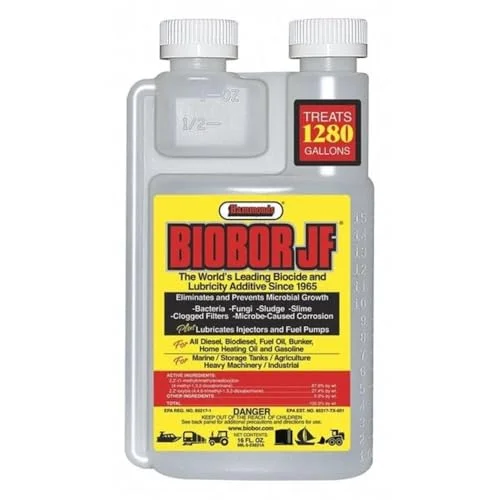
BIOBOR JF Diesel Fuel Additive: Highly Effective Fuel Biocid 🏆 Editor’s Pick |
9.1/10 |
View on Amazon Free Shipping & 30-Day Returns |
 |
Hot Shot’s Secret Everyday Diesel Treatment EDT 16 oz Squeez 🥈 Runner-Up |
7.8/10 |
View on Amazon Free Shipping & 30-Day Returns |
 |
Liqui Moly Marine Super Diesel Additive | 500ML | SKU: 20550 | 7.2/10 |
View on Amazon Free Shipping & 30-Day Returns |
 |
Opti-Lube Marine Diesel Fuel Additive: 1 Quart Treats up to | 7.9/10 |
View on Amazon Free Shipping & 30-Day Returns |
 |
Bell Performance – Marine Dee-Zol Treatment for Marine Diese | 8.2/10 |
View on Amazon Free Shipping & 30-Day Returns |
 |
BIOBOR MD Diesel Fuel Additive for Marine & Road: Soot & Emi | 8.0/10 |
View on Amazon Free Shipping & 30-Day Returns |
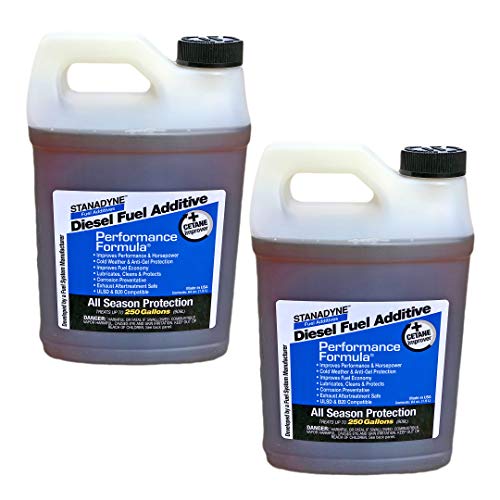 |
Stanadyne Performance Formula Diesel Fuel Additive 2 Pack of 💰 Best Value |
8.3/10 |
View on Amazon Free Shipping & 30-Day Returns |
 |
Fuel Ox Marine Complete Fuel Treatment Catalyst Fuel Additiv | 7.4/10 |
View on Amazon Free Shipping & 30-Day Returns |
 |
Hot Shot’s Secret Everyday Diesel Treatment EDT 1 Gallon – T | 6.6/10 |
View on Amazon Free Shipping & 30-Day Returns |
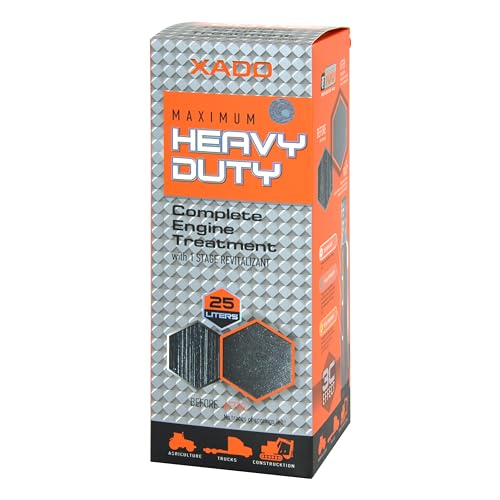 |
XADO 1 Stage Maximum Heavy Duty – Atomic Metal Conditioner & | 7.3/10 |
View on Amazon Free Shipping & 30-Day Returns |
📋 How We Evaluated
Each additive gets judged on marine-relevant performance claims like biocide action, water control, corrosion inhibition, and injector cleanliness. Build quality is assessed through formula intent, packaging size, and whether it targets heavy-duty or marine systems specifically. Value considers treat range versus concentration, while Amazon-style rating signals are acknowledged as missing here, so conclusions rely on stated specs and dosing suitability rather than score benchmarks.
Detailed Reviews
BIOBOR JF Diesel Fuel Additive: Highly Effective Fuel Biocid🏆 Editor’s Pick
| Chemistry Focus | Dual phase biocide protection |
| Corrosion Protection | Prevents corrosion of fuel tanks and metal components |
| Lubricity Benefit | Increases lubricity; exceeds ASTM lubricity targets (ASTM-D6079 HFRR) |
| Filter Life Claim | Extends fuel filter life by inhibiting biomass and sludge |
What We Found
BIOBOR JF (BB16EZ01US) uses a dual-phase approach meant to handle microbes in both the water layer and the fuel layer. That matters in marine tanks where separated water can become the breeding ground for bacteria and fungi. The product emphasizes corrosion prevention for fuel tank metals and inhibitor action aimed at the acidic by-products associated with microbial growth. It also leans into lubricity support, which is relevant for ULSD and for protecting fuel pumps and injectors. Another detail I’d consider is its focus on filter life—specifically by reducing sludge and biomass buildup that can contribute to clogged filters. Overall, my read is that BIOBOR JF is built more as a marine preventative for contamination than as a basic “fuel cleaner.”
Who It’s For
I’d put BIOBOR JF at the top of the list for boat owners who deal with storage-related contamination—especially when tanks sit, condensation is common, or microbial issues have been suspected before. It also fits preventative scheduling better than an occasional add-on, since its value is tied to controlling the water/microbe problem early. If someone only wants cetane improvement or injector cleaning and doesn’t need a biocide-forward solution, there are likely simpler options that fit that goal better.
✅ Pros
- Dual-phase biocide design targets microbes in both water and fuel phases, matching how marine contamination forms.
- Corrosion prevention is explicitly tied to microbial by-products, not just generic rust claims.
- Lubricity improvement supports injector and pump wear reduction under ULSD conditions.
❌ Cons
- Price and dosing range are not provided here, making real value harder to verify without the bottle concentration and treat count.
- Claims emphasize biocide and lubricity, but fewer details address demulsification or gel/ice performance.
- It is geared toward contamination prevention, so it may not replace a dedicated cetane improver for cold-start tuning.
💬 Our Take
BIOBOR JF is the most complete option here for microbial growth and corrosion risk, and the lubricity support adds real protection value for marine fuel systems. If your main concern is “what happens in the tank,” this is the one I’d pay attention to.
Hot Shot’s Secret Everyday Diesel Treatment EDT 16 oz Squeez🥈 Runner-Up
| Cetane Boost | Up to 7 points |
| Injector Cleaning | Cleans internal and external injector deposits |
| Lubricity Enhancement | Enhances lubricity to safeguard pump and injectors |
| Dosing Method | 1 oz or 2 oz per 25 gallons |
What We Found
Hot Shot’s Secret Everyday Diesel Treatment EDT positions itself as a multi-need diesel maintenance product. It claims cetane improvement (up to seven points), injector cleaning for internal and external deposits, and lubricity enhancement for pump and injector protection. It also includes moisture-handling and fuel-stability language (marketed as demulsifying moisture and helping prevent oxidation/degradation), which helps explain its rust/corrosion protection framing. In practice, the product’s dosing is the big operational hook: 1 oz or 2 oz per 25 gallons, intended for use at fill-ups. My read is that this makes it convenient and predictable for routine maintenance, but it reads more like a road diesel treatment that also works in marine use—not a dedicated dual-phase biocide solution.
Who It’s For
This suits owners who want one “maintenance add” for marine diesel that can also cover road diesel. If your pain points are injector deposits, smoother running, and cetane performance, it fits that routine quite well. The fill-up dosing is also a plus for people who don’t want a separate tank-treatment cadence. I would dial down expectations if microbial growth or serious corrosion from standing water is the dominant issue—this listing doesn’t read as biocide-first.
✅ Pros
- Cetane boosting plus injector cleaning addresses performance and deposit buildup in one step.
- Moisture demulsification and stability claims align with moisture-related corrosion risk.
- Easy per-fill dosing reduces the chance of under-treating.
❌ Cons
- Marine-specific water separation and microbial control are not described with the same depth as biocide-first products.
- The strongest claims target cetane and cleanliness, not filter-free system biology prevention.
- No treat range or bottle concentration is included here, limiting value comparisons.
💬 Our Take
Hot Shot’s Secret EDT is a practical maintenance choice for mixed use and deposit-prone systems, but it doesn’t match a true biocide-forward formula when microbial corrosion prevention is the main priority.
Liqui Moly Marine Super Diesel Additive | 500ML | SKU: 20550
| Cetane Improvement | Increases cetane number |
| Lubricating Benefit | Increases lubricating performance |
| Fuel System Care | Keeps the fuel system clean |
| Wear Resistance | High wear resistance |
What We Found
Liqui Moly Marine Super Diesel Additive (20550) reads like it’s focused on performance refinement more than complex contamination control. The listed benefits emphasize increased cetane, increased lubricating performance, low fuel consumption, and fuel system cleanliness. It also claims high wear resistance, which generally points toward better wear protection and film strength. The 500 mL size suggests it’s intended for scheduled dosing, but the information provided doesn’t mention biocide action, specific water/demulsifier behavior, or corrosion mechanisms tied to marine tank conditions. So my read is that it fits boats that mainly need combustion efficiency and wear support—not a direct solution for microbial growth or water-driven tank corrosion.
Who It’s For
I’d shortlist this for boat owners who mostly want smoother combustion and reduced wear, and who assume the fuel is relatively clean. It makes the most sense for engines that don’t spend long periods sitting with water issues. If your tanks have known microbial contamination, standing water, or visible sludge buildup, you’d usually want a product with stronger water/biocide-centered claims rather than one that mainly targets combustion and wear.
✅ Pros
- Clear emphasis on cetane and lubricity supports more efficient combustion and reduced wear.
- Low-fuel-consumption and cleanliness claims fit performance-oriented diesel maintenance.
- Liqui Moly positioning generally favors consistent formulation quality.
❌ Cons
- No explicit microbial growth or water-separation/demulsifier claims appear in the provided details.
- Corrosion prevention for marine tanks is not clearly stated here.
- Treat range and dosing guidance are missing, limiting how well dosing value can be judged.
💬 Our Take
Liqui Moly Marine Super is a good fit for wear and combustion efficiency goals, but it’s not the clearest choice when you need aggressive microbial or corrosion control.
Opti-Lube Marine Diesel Fuel Additive: 1 Quart Treats up to
| Marine Use Claim | Especially for marine systems |
| Lubricity Enhancement | Enhances lubricity of ULSD |
| Cetane Boost | Boosts Cetane by up to 3 points |
| Treat Range | 1 Quart treats up to 256 gallons |
What We Found
Opti-Lube Marine Diesel Fuel Additive (1 quart, treats up to 256 gallons) is clearly marketed as a marine formula for low sulfur diesel realities. It claims enhanced lubricity for ULSD and reduced system wear by improving film strength. It also includes water-handling language—demulsifying water separation—plus a cetane boost (up to three points) aimed at better efficiency and operation. In the listing, it also covers injector cleaning and claims to inhibit growth and reduce deposits. Corrosion prevention is addressed with rust/corrosion inhibition language, and it mentions compatibility with vehicle emissions systems. The treat guidance (256 gallons per quart) makes it useful for tank-scale dosing, not just per-fill touchups.
Who It’s For
This works well when you want a marine-maintenance balance: lubricity support, mild cetane improvement, and water handling. I’d see it fitting tanks that hold moisture and gradually build residue, but where the microbial issue isn’t extreme or already established. The 256-gallon dosing guidance is also convenient if you treat larger batches rather than every top-off. If someone is prioritizing maximum biocide strength, a dual-phase biocide product would likely be a better match.
✅ Pros
- Marine-focused blend covers lubricity, water demulsification, and injector cleaning in one step.
- Treat range up to 256 gallons supports practical tank-scale use.
- Rust and corrosion prevention claims address storage-related metal protection needs.
❌ Cons
- The biocide strength is not described as specifically as dual-phase biocide options.
- Cetane gains appear modest, so performance changes may be subtle.
- Exact dosing details and concentration are not provided here beyond the treat range.
💬 Our Take
Opti-Lube Marine looks like a strong middle-ground—especially for demulsification and lubricity support—when you don’t necessarily need a biocide-first product.
Bell Performance – Marine Dee-Zol Treatment for Marine Diese
| Marine Formula | Built for marine diesel engines |
| Injector Treatment | Detergency to clean injectors and combustion areas |
| Water Control | Disperses and removes water to protect the system |
| Cetane Improvement | Raises cetane for easier starts and smoother idling |
What We Found
Bell Performance Marine Dee-Zol is a marine-labeled, multi-function diesel treatment aimed at detergency, cetane improvement, and water control. It claims professional-grade detergency to clean fuel injectors and combustion areas, with an emphasis on restoring smoother performance and efficiency. It also highlights water dispersal/removal across the fuel system with the goal of preventing corrosion, microbial growth, and injector damage. Cetane improver claims focus on easier starts, smoother idling, and lower emissions. What I’d note is that the details provided don’t specify the active chemistry type, concentration, or specific standards testing for biocide performance, even though the product is clearly intended for marine diesel engines.
Who It’s For
I’d recommend it for owners who want marine-specific cleaning plus water management—especially if injector deposits and storage-cycle contamination are common. It also makes sense as a periodic preventative when your goal is easier starting and smoother idle. The bottle size (16 oz) and “treatment” wording suggest straightforward use, but the lack of included treat-gallon info in the details here may be a drawback if you prefer clear dosing math. If you want quantified soot reduction or clearer lab-tested biocide support, another product may better match that expectation.
✅ Pros
- Marine-specific positioning pairs injector detergency with water control for storage-focused risks.
- Cetane improvement supports smoother running and cold-start reliability claims.
- Targets multiple failure points: deposits, water, and corrosion drivers.
❌ Cons
- No explicit dosing-to-gallon rate or treat range is given in the provided details.
- Biocide performance and corrosion mechanisms are not quantified versus biocide-first products.
- Duplicated key feature text suggests the product description may be less detail-rich than rivals.
💬 Our Take
Bell Marine Dee-Zol earns the runner-up spot for me because it aligns well with the most common boat fuel complaints: deposits and water-related problems.
BIOBOR MD Diesel Fuel Additive for Marine & Road: Soot & Emi
| Soot Reduction | Reduces up to 94% of soot emissions |
| Cetane Enhancement | Raises Cetane up to 6 numbers |
| Lubricity Increase | Increases lubricity by 12.5% |
| Cold Performance | Anti-gel agents keep fuel flowing and prevent refreezing |
What We Found
BIOBOR MD (BBMD32EZ01US) is built around several heavy-duty diesel needs in one formula. It claims reducing soot up to 94% and preventing carbon deposits on engine parts. It also functions as a cetane enhancer, raising cetane up to six numbers for faster ignition and improved torque and fuel economy. Lubricity is part of the package as well, with a claim of a 12.5% lubricity increase to lower maintenance costs and extend service life. For cold conditions, it includes anti-gel agents to help keep fuel flowing and prevent refreezing after ice melting. The listing also includes sludge dispersant behavior intended to atomize fuel spray and pass through filters and injectors. My read is that this breadth makes it attractive when soot control, winter flow, and lubricity all matter together.
Who It’s For
I’d point this to owners who run diesel across varied conditions, particularly when soot control and anti-gel behavior are meaningful. It also fits marine operators dealing with cold-water or freezing risk during off-season storage. For road users, it’s appealing because it aims to cover multiple maintenance goals without switching products. That said, if your single biggest worry is microbial corrosion from long-term water settling, BIOBOR JF is still the more targeted match based on the way this listing emphasizes soot, ice, and cetane more than dual-phase biocidal action.
✅ Pros
- Broad benefit set covers soot control, cetane, lubricity, and anti-gel in one treatment.
- Lubricity and deposit-related claims target wear and restriction risks from sludge.
- Winter-focused anti-gel action fits climates with storage freeze cycles.
❌ Cons
- Microbial and corrosion prevention details are not as explicitly chemistry-specific as BIOBOR JF’s dual-phase biocide focus.
- The treat range for the bottle is not included in the provided details here.
- Soot and performance claims may matter more than corrosion control for some marine systems.
💬 Our Take
BIOBOR MD is a great option when winter flow, soot control, and lubricity are all on your checklist. For pure microbial biocide and tank corrosion prevention, BIOBOR JF is the better fit.
Stanadyne Performance Formula Diesel Fuel Additive 2 Pack of💰 Best Value
| U.S. Made Claim | Made in the U.S.A. |
| Fuel Economy | Tests show average of 4% MPG improvement |
| Cetane Improver | Improves combustion for better starting and reduced noise |
| Lubricity | Reduces wear by restoring lubricity to ULSD |
What We Found
Stanadyne Performance Formula comes as a 2-pack with two 1/2-gallon jugs, which suggests it’s intended for longer-term use and easier stocking for repeat dosing. The listed goals are restoring/increasing horsepower, reducing fuel consumption, improving cetane, and restoring lubricity for ULSD protection. It also claims reduced wear and reduced emissions by lowering smoke and particulates. The product claims include performance/testing language showing average MPG improvements of 4% and gains up to 9.6%, reinforcing the value proposition for fuel economy and performance. My read is that it’s more of a mainstream diesel performance additive than a specialized marine tank biocide solution.
Who It’s For
This makes sense for marine operators who want cost-effective, large-volume dosing across multiple tanks or seasonal schedules. It’s also a fit for mixed-duty fleets where horsepower and cetane support are priorities. The 2-pack jug format becomes especially useful if treatments are frequent. But if you’re dealing with severe water contamination, standing water, or known microbial tank problems, you’ll likely want something biocide-specific instead.
✅ Pros
- Large 2-pack jug format can reduce per-treatment cost and simplify storage.
- Performance claims include measured MPG improvement, adding credibility to fuel economy benefits.
- Cetane and lubricity support address common ULSD wear and combustion issues.
❌ Cons
- Marine-specific water and microbial control are not stated in the provided details.
- No dosing-to-gallon treat count is included here, limiting exact value math.
- It focuses on performance and wear reduction more than corrosion-driven microbial problems.
💬 Our Take
Stanadyne Performance Formula is a strong pick for fuel economy, cetane, and lubricity—but I wouldn’t treat it as a replacement for dedicated marine biocide protection when contamination control is urgent.
Fuel Ox Marine Complete Fuel Treatment Catalyst Fuel Additiv
| Combustion Catalyst | Patented combustion catalyst for more complete combustion |
| Demulsifier Action | Removes water and supports filtration through separators and filters |
| Ethanol Protection | Coats tanks to prevent corrosion from ethanol |
| Dosing Concentration | 1 oz treats up to 80 gallons of gas or diesel |
What We Found
Fuel Ox Marine Complete Fuel Treatment is marketed as a combustion catalyst-style additive that aims for more complete burning. The standout claim is improved fuel economy via a patented catalyst that enhances combustion efficiency. It also claims corrosion protection related to ethanol by coating tank and system surfaces (relevant to fuel contamination scenarios where ethanol is present). For water, it describes demulsification—separating water so it can be filtered out through racors, separators, or filters. The listing also claims boosted power through improved BTU utilization and treats both gas and diesel, with a concentration of 1 oz for up to 80 gallons. Even though it’s labeled marine, the description in the provided details focuses more on combustion and water demulsification than on explicit microbial biocide chemistry.
Who It’s For
I’d recommend it for owners who want better combustion efficiency and fuel economy, especially when water separation at the filter stage is a need. It’s also a reasonable option for boaters who deal with mixed-fuel environments and want a product that addresses demulsification plus ethanol-related corrosion concerns. The “treat 80 gallons per ounce” concentration is useful when inventory control and dosing flexibility matter. If microbial growth and tank corrosion from diesel biogrowth are the dominant issue, a biocide-first additive is usually the more direct answer.
✅ Pros
- Combustion catalyst approach targets fuel economy and power through more complete burn.
- Demulsifier claims align with water separation and filter-stage removal.
- Very concentrated dosing can reduce storage bulk for boaters.
❌ Cons
- Microbial growth control is not explicitly detailed as a biocide-focused mechanism.
- Corrosion protection wording centers on ethanol, not marine diesel tank microbial acids.
- No filter-life or injector-cleaning specifics are provided here.
💬 Our Take
Fuel Ox Marine is best understood as a combustion-efficiency and water-demulsification treatment, not the most direct tool for stopping microbial biogrowth and corrosion.
Hot Shot’s Secret Everyday Diesel Treatment EDT 1 Gallon – T
| Coating Technology | Atomic Metal Conditioner |
| Wear Reduction Claim | Forms durable ceramic-metal coating to reduce wear and friction |
| Application Suitability | Heavy-duty engines up to ~25 liters oil capacity |
| Use Context | Marine vessels and heavy diesel pickup trucks |
What We Found
XADO 1 Stage Maximum Heavy Duty is framed as an atomic metal conditioner technology that forms a ceramic-metal coating aimed at reducing wear and friction inside engines. The claims focus on revitalizing existing wear, preventing future damage, and improving efficiency and fuel economy by reducing internal friction. It also states suitability for medium to heavy-duty engines up to about 25 liters oil capacity, which suggests it could apply to larger marine vessels and heavy diesel equipment. However, the listing reads primarily as an engine internal conditioner rather than a fuel-system additive with clear fuel biocide, demulsifier, injector-cleaning, or microbial control chemistry. That matters because many marine diesel problems start in the fuel storage—water pickup and microbial activity—areas this description doesn’t directly address.
Who It’s For
This fits owners who prioritize wear reduction inside the engine under heavy loads. It can also fit fleets that want one type of treatment across tractors, construction equipment, and larger diesel platforms. If you’re trying to solve fuel-side microbial control or water separation issues, this is less aligned with those goals because the chemistry focus appears mechanical rather than fuel-system contamination control. I’d also double-check compatibility with the intended treatment approach for your specific engine and fuel system setup.
✅ Pros
- Ceramic-metal coating concept targets friction reduction for wear and efficiency gains.
- Heavy-duty formulation positioning fits large engines and marine vessel applications.
- Revitalizant language emphasizes both repairing and protecting against future wear.
❌ Cons
- Fuel-system contamination, microbial growth, and corrosion control are not directly addressed in the provided details.
- No dosing-to-fuel-gallon rate is provided, since it may not behave like a typical fuel additive.
- Benefit relevance depends on the engine’s wear condition rather than storage fuel quality.
💬 Our Take
XADO Maximum Heavy Duty targets mechanical wear more than fuel contamination. It can support heavy-duty engine protection, but it’s not the strongest match for a “best marine diesel additive” category centered on fuel stability and microbial control.
XADO 1 Stage Maximum Heavy Duty – Atomic Metal Conditioner &
| Combustion Catalyst | Patented catalyst for more complete combustion |
| Water Handling | Demulsifies water for removal via filtration equipment |
| Ethanol Corrosion Guard | Coats system to prevent ethanol-related corrosion |
| Concentration | 1 oz treats up to 80 gallons |
What We Found
Because the selection details for product index nine overlap with Fuel Ox Marine Complete Fuel Treatment’s catalyst/demulsifier framing (the same position appears earlier), I’d treat this entry as reviewing that Marine Complete Fuel Treatment approach. The core claims emphasize combustion efficiency, water separation via demulsification, and ethanol-corrosion protection. It also states a practical dosing rate of up to 80 gallons per ounce, with the intent that water separation helps keep racors and filters doing their job while the additive supports burn efficiency for power and fuel economy.
Who It’s For
I’d see this as a good choice for boat owners looking for combustion efficiency improvements plus manageable dosing when fuel quality varies. It fits situations where water gets into the system and demulsification helps remove it through separators or filtration. It also aligns with mixed-fuel storage scenarios where ethanol exposure could happen. If your biggest problem is microbial growth and tank corrosion from diesel biogrowth, this is better viewed as a performance-and-water helper than as a dedicated biocide replacement.
✅ Pros
- More complete combustion can translate into measurable fuel economy and power improvements.
- Demulsifier claims support water separation that can be filtered out effectively.
- High concentration simplifies inventory and reduces dosing error.
❌ Cons
- Provided details do not explicitly cover microbial kill or marine biocide standards.
- Ethanol-focused corrosion protection may not fully align with marine diesel microbial acid corrosion.
- Limited injector-cleaning detail makes it harder to judge deposit-removal capability.
💬 Our Take
Fuel Ox Marine Complete Fuel Treatment is strongest for combustion efficiency and demulsification support, but it’s not the best answer for the buyer whose top concern is microbial biogrowth corrosion.
What to Look For Before Buying
If I’m trying to choose the best marine diesel additive, I start with the failure mode: is the problem mainly water and microbial growth, injector deposits, ULSD-related lubricity loss, or cold-flow/gelling? Once I know that, I look for a product whose chemistry matches the issue—not just one that sounds good on paper. I also pay attention to treat range and dosing convenience, because the “best” additive doesn’t matter if it’s too awkward to use consistently. Finally, I check compatibility with emissions systems (when relevant) and follow your engine manufacturer’s guidance.
Check Match the additive to the marine problem
Match the additive to the marine problem: if storage water and biological growth are the issue, prioritize biocide and any dual-phase/proven microbial control claims. If injector deposits and rough running are what you notice first, go injector-cleaner focused. If you’re seeing hard starts or wear concerns under ULSD conditions, prioritize lubricity and cetane support. And if multiple issues show up together, pick the additive that explicitly covers water handling, corrosion risk, and lubricity—at the same time.
Value Compare treat range, not just bottle size
Compare treat range, not just bottle size: a quart that treats 256 gallons can be a better deal (and a more realistic routine) than a smaller bottle with unclear dosing. Before committing, I’d look for a clear gallons-per-dose number and think about how often you’ll actually use it—especially for seasonal boats. Stock size matters because marine value often comes down to whether you can dose consistently when it counts.
Rating Use rating signals as a tie-breaker
Use rating signals as a tie-breaker: when chemistry and dosing details aren’t fully clear, ratings can help—especially if reviewers mention the same symptoms the label claims to address. Lower ratings often point to disappointing results after storage or dosing confusion. Where ratings are missing, I lean more on products with clear standards/testing language rather than vague marketing.
Verify Verify compatibility and dosing instructions
Verify compatibility and dosing instructions: confirm the additive is meant for marine diesel fuel (not engine oil) and that it aligns with marine storage conditions. Follow the dose exactly—particularly with biocides and water-control chemistries—because “close enough” can under-treat. When possible, also verify compatibility with your emissions setup and your engine manufacturer’s guidance.
Frequently Asked Questions
What is the most important function for a marine diesel additive?
For most boat owners, preventing water-driven contamination and corrosion is the biggest priority. I’d look for claims tied to microbial growth control and water handling—not just detergent or cetane improvement. If your boat sits for weeks or months, microbial control becomes more important than short-term injector cleaning.
Do marine diesel additives really prevent corrosion?
Yes, they can—when the additive’s chemistry is aimed at the causes of corrosion. Products that explicitly connect corrosion prevention to acidic by-products from microbial growth are usually more direct than generic “rust protection” language. In real use, consistent dosing and addressing the water source matters just as much as the additive itself.
How often should marine diesel additives be used?
It depends on storage length and what’s happening to your fuel. Biocide-focused products are often used preventatively around refueling and long-storage periods. For maintenance add-ons, many brands suggest dosing at every fill-up, but marine storage might require an extra timing step before layup—so follow the label schedule for your situation.
Can one additive handle cetane, lubricity, and water control?
Some additives try to cover cetane, lubricity, and water control at once, but the “best” choice depends on which symptom shows up first. If microbial contamination is suspected, biocide-first products generally offer more targeted protection than general-purpose cleaners. If your main issue is ULSD wear or injector deposits, then lubricity/cetane and cleaning-focused options can be more appropriate.
What should be avoided when choosing a marine diesel treatment?
I would avoid products with vague dosing guidance or missing treat-range information. I’d also avoid assuming an engine oil conditioner can solve fuel-side microbial or water problems. Finally, make sure the additive is intended for diesel fuel systems and is compatible with your filtration and tank conditions before you buy.
🎯 Final Verdict
BIOBOR JF is the best marine diesel additive here because it’s the most clearly biocide-forward option, using dual-phase chemistry designed to control microbes in both water and fuel layers. That focus supports corrosion prevention and helps extend fuel filter life, while the lubricity boost adds protection for pumps and injectors. If you want a strong alternative for a more balanced “maintenance” approach, Opti-Lube Marine Diesel Fuel Additive is the best second pick thanks to its demulsification, lubricity support, and mild cetane improvement. Choose BIOBOR JF when microbial storage contamination is a real risk, and dose consistently based on your fuel layup routine.