Most “best lithium batteries for golf cart” picks fall apart at the compatibility stage: the pack won’t sit correctly in your battery bay, the BMS rating doesn’t really line up with your controller’s load, or the included charger won’t match LiFePO4 charging expectations. Listings also tend to blur the difference between usable capacity and raw pack capacity, plus continuous discharge vs. short peak bursts—and even how temperature cutoffs are handled. In this review, I’m focusing on 36V and 48V LiFePO4 golf cart kits where the BMS specs, monitoring options (LCD and/or app), and the charger bundle are stated clearly enough to compare.
In this category, the best lithium golf cart battery choices usually come down to three practical things. First, LiFePO4 cell stability matters—but only if the BMS is sized for the cart’s continuous draw and the brief surges you get during starts and hill climbs. Second, ownership details matter: the cycle-life claims (often 4000–6000 cycles at around 80% DOD) only hold when you charge correctly and don’t run the pack in harsh conditions every day. Third, monitoring and safety features reduce guesswork—especially when you’re diagnosing charging behavior, state of charge, or any BMS warnings. The models below are presented as ready-to-install kits, with LCD screens and/or Bluetooth app monitoring, and BMS protection tuned for golf cart duty.
⚡ Quick Verdict
Our Top Picks at a Glance
| Image | Product | Score | Link |
|---|---|---|---|
 |
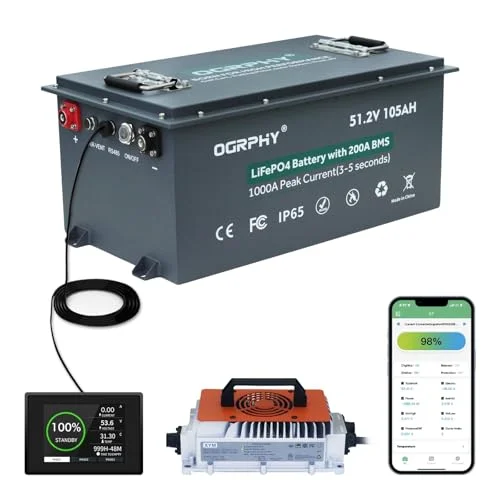
OGRPHY 48V Lithium Golf Cart Battery, 200A BMS(1000A Peak Cu 🏆 Editor’s Pick |
8.9/10 |
View on Amazon Free Shipping & 30-Day Returns |
 |
DC HOUSE Metal Case 48V 100Ah Pro Lithium Golf Cart Battery, 💰 Best Value |
8.2/10 |
View on Amazon Free Shipping & 30-Day Returns |
 |
TEMGO 48V (51.2V) 100Ah LiFePO4 Lithium Golf Cart Battery, C | 8.4/10 |
View on Amazon Free Shipping & 30-Day Returns |
 |
LOSSIGY 48V Lithium Battery Golf Cart Conversion Kit, 48 Vol | 7.6/10 |
View on Amazon Free Shipping & 30-Day Returns |
 |
48V Lithium Battery Golf Cart,48V 100AH Golf Cart Batteries | 8.5/10 |
View on Amazon Free Shipping & 30-Day Returns |
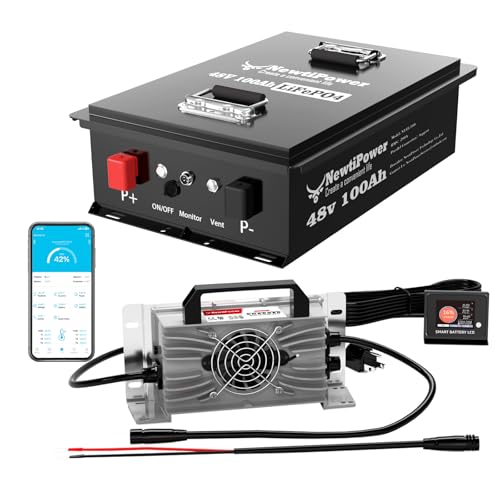 |
48V 100Ah Lithium LiFePO4 Golf Cart Battery with APP&Monitor | 7.9/10 |
View on Amazon Free Shipping & 30-Day Returns |
 |
TEMGO 36V (38.4V) 100Ah LiFePO4 Lithium Golf Cart Battery, C | 8.0/10 |
View on Amazon Free Shipping & 30-Day Returns |
 |
48V(51.2V) LiFePO4 Lithium Golf Cart Battery Built-in 250A B | 8.6/10 |
View on Amazon Free Shipping & 30-Day Returns |
 |
36V Lithium Golf Cart Battery – Built-in Bluetooth & 200A BM | 7.7/10 |
View on Amazon Free Shipping & 30-Day Returns |
 |
DC HOUSE Metal Case 36V 100Ah Pro Lithium Golf Cart Battery, 👑 Premium Pick |
9.1/10 |
View on Amazon Free Shipping & 30-Day Returns |
📋 How We Evaluated
Each battery kit is evaluated by LiFePO4 build quality signals, especially cell grade claims and enclosure choices like metal versus plastic cases. Performance review focuses on continuous current, peak current duration, and the stated power output at 36V or 48V. Value considers included charger amperage, monitoring hardware, cycle-life and depth-of-discharge claims, and any Amazon rating signals; no verified ratings were provided in the product data, so scoring emphasizes spec coherence and safety coverage rather than popularity.
Detailed Reviews
OGRPHY 48V Lithium Golf Cart Battery, 200A BMS(1000A Peak Cu🏆 Editor’s Pick
| Nominal Voltage | 48V |
| Capacity | 105Ah (≈5.37kWh) |
| BMS Continuous / Peak | 200A / 1000A (3–5s) |
| Included Charger | 48V 18A |
What We Found
OGRPHY’s 48V battery is built for the 48V golf cart ecosystem and leans on UL-certified LiFePO4 prismatic cells plus an upgraded compact layout. The listing calls out 105Ah capacity and pairs it with a 200A BMS. Where it really stands out is the peak-current headline: it states peak capability up to 1000A for short windows (3–5 seconds), while also describing higher power output for brief bursts and up to 10.24kW continuous power. Monitoring is part of the bundle—there’s a touch monitor included, and the listing also references app-based checking—so you can view battery status without guessing what’s happening during charging or after a change in performance. It also includes an 18A charger, which reads like a “get back on the course faster” approach versus slower charger-only setups. For longevity, it claims 4000+ deep cycles at 80% DOD, which aligns with how many LiFePO4 packs are marketed in this segment. Overall, this looks like an installation-first kit aimed at buyers who want power headroom and visible battery management.
Who It’s For
I’d point this one toward 48V owners whose carts regularly feel power strain—steep hills, tougher terrain, or heavier acceleration demands—because the short-burst peak current claim supports those surge moments. The touch monitor and app support are also a good fit if you prefer quick SOC/fault checks without repeatedly opening the battery bay. If you’re considering off-grid scaling later (parallel expansion plans), the kit positioning may still be relevant, but the listing is clearly centered on golf cart duty. Just be sure to confirm the physical compartment fit against the stated dimensions before ordering, since “compatibility” claims don’t always account for battery bay shape.
✅ Pros
- High safety and surge capability are emphasized with a 200A BMS and 1000A peak current for short durations.
- App plus touch monitor adds practical day-to-day visibility into SOC and faults during use and charging.
- LiFePO4 prismatic cells with cycle-life claims near 4000+ at 80% DOD target long-term ownership.
❌ Cons
- No Amazon rating or external validation data is provided, so real-world performance depends on buyer installation quality and cart compatibility.
- Some specifications mix continuous and peak power language, so expected hill performance should be verified against the cart’s motor and controller.
- Prime availability and price are not listed, making total value assessment harder without current marketplace pricing.
💬 Our Take
My read is that OGRPHY is a strong all-around 48V kit—especially when you want monitoring included and you care about surge headroom as much as everyday hill power. The 200A BMS plus the very high short-duration peak spec make it a top shortlist candidate here.
DC HOUSE Metal Case 48V 100Ah Pro Lithium Golf Cart Battery,💰 Best Value
| Nominal Voltage | 48V |
| Capacity | 100Ah |
| BMS Continuous / Peak | 200A / 670A (0.5s) |
| Included Charger | 48V 18A |
What We Found
DC HOUSE emphasizes safety and installation confidence with a sturdy metal case and metal fixtures rather than a basic plastic enclosure. The pack is a 48V 100Ah LiFePO4 build using a 200A BMS with multiple protections and low-temperature cutoff windows for both charging and discharging. The peak/current story is laid out with specific time windows: peak is listed at 670A/0.5s, and it also states 250A/30s discharge figures, which is helpful because hill climbs are usually about short, repeated load spikes—not just one “max” number. A major practical plus is the included 48V 18A charger, described as 900W, which supports a more plug-and-play upgrade without needing to buy a separate charger. For monitoring, it references both app support and an LCD Bluetooth monitor for status checks. It also includes a clear warning that fit can vary by battery compartment design, so they’re acknowledging the installation reality up front. Cycle life is still claimed at 4000+ deep cycles, keeping it aligned with common LiFePO4 expectations in this class.
Who It’s For
I’d shortlist this if you want a conversion-style upgrade and you care about physical protection—especially if your cart rides in rougher conditions or your battery bay doesn’t feel “forgiving” to impacts. The metal case is a meaningful differentiator for many buyers. It also makes sense for daily driving on mixed terrain where continuous output and short climb demands matter more than extreme peak-only marketing. If you’d rather avoid charger shopping, this kit’s bundled 48V 18A unit helps. Just verify your exact compartment dimensions, since the brand specifically calls out possible improper fit based on how different carts are built.
✅ Pros
- Metal, fireproof casing and metal fixtures target better safety and reduced swelling risk versus plastic-only designs.
- Temperature-aware BMS cutoffs improve real-world charging safety in colder or hotter environments.
- Two monitoring options (APP and LCD Bluetooth monitor) reduce uncertainty during daily operation.
❌ Cons
- Peak current is lower than some competing 48V kits, which could matter for carts with aggressive acceleration demands.
- Fit variability by compartment design can require measurement or minor DIY modification.
- Price and third-party rating data are missing, limiting confidence in value versus similarly spec’d options.
💬 Our Take
DC HOUSE comes off as the pragmatic pick: strong protection hardware, clear temperature-related cutoff info, and monitoring included—with a bundled 48V 18A charger. Peak-current headroom is not as aggressive as some other listings, but the specification clarity is a big plus.
TEMGO 48V (51.2V) 100Ah LiFePO4 Lithium Golf Cart Battery, C
| Nominal Voltage | 48V (51.2V) |
| Capacity | 100Ah |
| BMS / Discharge Capability | 200A BMS; 200A continuous; 600A (3s) peak |
| Included Charger | 58.4V 18A |
What We Found
TEMGO frames its 48V 100Ah battery as a true upgrade bundle, including a charger, an LCD touch display, and Bluetooth-enabled monitoring. On the power side, the listing describes up to 200A continuous discharge and an output of 10.24kW. It also references higher short-burst current capability (it mentions 600A for 3 seconds), which is relevant for those quick acceleration surges you get during golf cart starts. Cycle life is claimed at 5000+ deep cycles at 80% DOD, pitching the pack as a longer-term ownership option. A standout feature in the listing is the parallel expansion idea: it claims up to four units can run in parallel for expanded storage capacity—useful if you’re thinking beyond a single battery pack setup. The charger included is a 58.4V 18A unit, which matches the typical 48V LiFePO4 charging voltage expectation. Monitoring is not just app-based; it also includes a dedicated 2.8-inch LCD touch display, which reduces reliance on phone-only checks. Overall, it reads like a complete “upgrade kit,” not a bare battery purchase.
Who It’s For
This is for buyers who want the whole system to feel complete—battery plus charger plus monitoring—so they don’t have to hunt for charger specs or display compatibility. Bluetooth app monitoring and a touch LCD make it easier to watch SOC trends and fault states before and after rounds. The 200A continuous rating and short surge support are a good match for typical golf cart duty cycles and moderate hill climbing. If you’re planning future capacity growth (especially with a parallel/battery scaling concept), the listing’s expansion language adds relevance. I’d consider this strongest when you value a unified kit and longer cycle-life claims more than chasing the absolute highest peak numbers.
✅ Pros
- All-in-one bundle reduces compatibility risk by pairing the battery, LCD touch monitoring, and 18A charger.
- High claimed cycle life (5000+ at 80% DOD) targets lower cost per year of ownership.
- Support for parallel scaling aligns with buyers who plan off-grid or solar capacity expansion.
❌ Cons
- Some key specs depend on the battery’s BMS behavior and actual controller draw, which can vary by cart model.
- Third-party rating signals and price are not provided, making marketplace competitiveness harder to confirm.
- Parallel support claims do not replace the need to verify system wiring and battery compartment limits.
💬 Our Take
TEMGO’s kit keeps the specs balanced and backs it with included monitoring. If you want one clean 48V upgrade bundle that covers the essentials, this is the pick I’d start with.
LOSSIGY 48V Lithium Battery Golf Cart Conversion Kit, 48 Vol
| Nominal Voltage | 48V |
| Capacity | 100Ah |
| BMS Continuous / Peak | 200A / 1000A (3–5s) |
| Included Monitoring | Bluetooth BMS with LCD monitor and charger |
What We Found
LOSSIGY sells its 48V conversion kit with a clear focus on surge capability and broad protection features. The battery is paired with a built-in 200A Bluetooth BMS, and it calls out grade A LiFePO4 cells with at least 4000 cycles for longevity. The headline number here is peak current: it claims 1000A for 3–5 seconds, which is aimed at matching the momentary power draw golf cart controllers can demand during starts and steep transitions. Safety coverage is comprehensive in the listing language, including over-temperature, low-temperature, over-current, overload, short circuit, and over/under charge protections. The install story is “easy” and positions the kit as self-contained for 48V systems. After-sales support is also emphasized (90 days of worry-free service and 24-hour technical support). The bundle description indicates the charger and LCD monitor are included, which matters because it reduces compatibility risk compared to battery-only purchases. In short, the differentiator is surge power language plus wide protection coverage.
Who It’s For
I’d point this toward shoppers who care about controller surge headroom and want Bluetooth monitoring for easier fault awareness. It fits carts that need short bursts of power—starts, quick hill transitions, or heavier passenger loads. The included charger and LCD monitor are also helpful if you want the kit to be usable right away without juggling add-ons. If you’re the type who values responsive technical support while you’re working through early installation questions, the support promise is worth noting. Still, measure the battery compartment fit and confirm your cart’s voltage and wiring setup are truly compatible before purchasing.
✅ Pros
- Very high peak-current claim (1000A for 3–5s) targets strong acceleration and controller surge demands.
- Bluetooth BMS focus helps owners monitor battery status and fault conditions in real time.
- Protection list covers the major LiFePO4 safety categories including over-current, overload, and temperature extremes.
❌ Cons
- The product data does not clearly state continuous power or the exact continuous discharge figure for hill performance.
- Price and rating data are missing, which limits confidence in value compared with better-specified alternatives.
- Fit and wiring requirements can still vary by compartment design, requiring pre-install measurements.
💬 Our Take
LOSSIGY is built around peak-current confidence and Bluetooth monitoring. Where it feels less compelling is the lack of continuous-performance specificity compared with a couple of competitors that spell out continuous current more clearly.
48V Lithium Battery Golf Cart,48V 100AH Golf Cart Batteries
| Nominal Voltage | 48V |
| Capacity | 100Ah (≈5.12kWh) |
| BMS Continuous / Peak | 200A BMS; 1000A peak |
| Included Charger | 58.4V 18A |
What We Found
This 48V 100Ah lithium battery listing leans hard into an EVE A+ cell setup and a compact install-focused package. The kit includes a 58.4V 18A charger and a 2.8-inch LCD touch monitor, with Bluetooth app support referenced for monitoring. It lists 5.12kWh of energy and 10.24kW of power, matching the common 48V 100Ah class expectations found across similar kits. The BMS and temperature behavior are specifically addressed: it describes a 200A BMS with safety cutoffs for charging below -4°F and above 158°F, which helps if your cart sees cold mornings or hot storage environments. Peak current is stated at 1000A, with support for high-current discharge behavior over short durations. Claimed lifespan reaches up to 6000 cycles, typically tied to proper LiFePO4 use patterns around 80% DOD. It also gives physical weight (82.89 lbs) and measurements to help confirm whether the battery bay is realistic for a one-person install. The listing references UL, IEC testing, and CE/RoHS certifications, which adds some credibility to the safety claims. Mounting straps are included as well, which makes the “kit” feel more complete.
Who It’s For
I’d shortlist this if you want a packaged set that includes the charger, LCD monitoring, Bluetooth app access, and installation hardware, without needing to source accessories separately. It’s intended for 48V carts from brands like EZGO, Yamaha, and Club Car where replacement-style fit matters. The temperature cutoff details are especially useful if you charge seasonally or operate in places where batteries can spend time near freezing. The compact dimensions and lighter weight can help when the battery compartment is smaller than expected. As always, verify your cart’s battery bay geometry and confirm the controller’s voltage requirements line up with the claimed surge behavior.
✅ Pros
- Clear temperature-based BMS cutoff guidance helps prevent damaging charging in extreme conditions.
- Included accessories (18A charger, touch monitor, straps, Bluetooth app) support faster, more complete upgrades.
- EVE A+ cell focus and UL/IEC/CE-style safety references strengthen build confidence.
❌ Cons
- Several key performance numbers are not fully broken down into continuous versus time-limited surge in the provided data.
- The listing’s marketing claims for “100% true capacity” and “small size” need compartment verification.
- Price and rating signals are not available, so real-world comparisons rely on spec interpretation.
💬 Our Take
This kit stands out for its temperature cutoff clarity plus the complete accessory bundle. It’s a strong contender when compact installation and safety behavior in cold/hot conditions are priorities.
48V 100Ah Lithium LiFePO4 Golf Cart Battery with APP&Monitor
| Nominal Voltage | 48V |
| Capacity | 103Ah claimed (100Ah class) |
| BMS / Load Power | 200A BMS; max load power 10240W; continuous 250A; peak 500A |
| Included Components | Monitor, charger, ropes, connecting wires |
What We Found
NewtiPower presents its 48V 100Ah LiFePO4 battery as a ready-to-use bundle, including monitors, charger support, and mounting/connection items (including straps and connecting wires per the listing). It highlights A+ automotive-grade cells and claims a compact design with “higher actual capacity” at 103Ah. The built-in 200A BMS includes protections for overcharge, over-discharge, overcurrent, and short circuit. For power claims, it lists 10240W load power and specifies continuous current at 250A with peak current at 500A. That’s a noticeable difference from some listings that push higher peak-current numbers, which suggests NewtiPower is emphasizing sustained load handling rather than extreme micro-burst surges. The listing targets 10,000+ cycles and mentions a 10-year service promise, both of which can matter if the manufacturer maintains responsive support. Overall, this reads like a structured “bundle-first” upgrade: protection, monitor support, and included accessories are the selling points.
Who It’s For
I’d choose this if you prefer a kit that arrives close to “install and go,” with the monitor, charger, straps, and connecting wires already included. It’s a good match for carts that draw steady power more than carts that rely on very high short-duration surge events. Bluetooth/app monitoring and a 200A BMS are helpful for daily SOC and fault checks. The 10,000+ cycle positioning targets fewer replacements over time. Buyers should still confirm that 250A continuous matches their cart’s typical demand patterns and make sure the battery layout fits the compartment properly.
✅ Pros
- Bundle contents aim to reduce extra shopping and installation delays beyond the battery itself.
- Protection coverage is broad and directly tied to common LiFePO4 failure modes like over-current and short circuit.
- Very long cycle-life claim (10,000+ cycles) supports a lower-cost ownership strategy if accurate.
❌ Cons
- Peak current (500A) is lower than many competing listings, which may limit margin on aggressive acceleration carts.
- Pricing and external rating evidence are absent, so cycle-life realism is hard to validate.
- Continuous current and power claims conflict slightly with other spec language across the category, requiring careful compatibility checks.
💬 Our Take
NewtiPower’s approach leans toward sustained performance and bundle completeness rather than peak-current fireworks. It’s a smart fit for steadier-duty carts, and less ideal if your main concern is maximum surge headroom.
TEMGO 36V (38.4V) 100Ah LiFePO4 Lithium Golf Cart Battery, C
| Nominal Voltage | 36V (38.4V) |
| Capacity | 100Ah |
| BMS / Discharge Capability | 200A BMS; 200A continuous; 600A (3s) peak |
| Included Charger | 42.6V 20A |
What We Found
TEMGO’s 36V 100Ah upgrade kit mirrors the bundle approach from its 48V listing, with a charger, a 2.8-inch LCD touch display, and Bluetooth app monitoring included. The charger is a 42.6V 20A unit, which aligns with 36V LiFePO4 charging voltage expectations. For lifespan, it claims 5000+ deep cycles at 80% DOD. On power, it lists 7.68kW output with 200A continuous discharge and 600A for 3 seconds—useful for short bursts during starts and climbs. A 200A smart BMS is included, and the listing references protection against overcharge, over-discharge, short circuits, and temperature extremes. Like its 48V version, it also discusses scaling with parallel setups: up to four units for expanded capacity, stated as up to 15.36kWh usable energy. For 36V golf cart owners, the bundled charger and monitoring reduce uncertainty during installation and make day-to-day checks easier.
Who It’s For
This kit suits 36V golf carts that need a complete upgrade with a compatible charger and dashboard-style monitoring. If you like Bluetooth app access for SOC and fault checks between rounds, the included monitoring options are a big plus. The 200A continuous rating fits typical golf cart driving demands, while the 600A short surge supports acceleration and brief hill climbs. The included 20A charger helps shorten turnaround compared with lower-amperage setups. It also makes sense for off-grid users who anticipate future parallel battery configurations. Before buying, confirm voltage compatibility and verify physical fit against the stated battery dimensions.
✅ Pros
- Strong continuous and short-surge performance supports normal golf cart driving with brief acceleration spikes.
- Includes both Bluetooth monitoring and an LCD touch display for convenient SOC checks.
- Cycle-life claim of 5000+ at 80% DOD targets long-term ownership.
❌ Cons
- Parallel scaling claims require careful electrical design; the listing does not replace standard safety wiring practices.
- No marketplace rating or pricing data is included to confirm value.
- 36V owners must confirm controller voltage compatibility and battery compartment dimensions before ordering.
💬 Our Take
TEMGO’s 36V kit gives a well-balanced power profile and a faster 20A charger, with monitoring included. It’s a strong choice when you want the upgrade kit to be complete—not piecemeal.
48V(51.2V) LiFePO4 Lithium Golf Cart Battery Built-in 250A B
| Nominal Voltage | 48V (51.2V) |
| Capacity | 105Ah |
| BMS / Discharge Capability | 250A continuous; 600A peak (3s); 400A peak (35s) |
| Included Charger | 58.4V 20A |
What We Found
XRH’s 48V 105Ah kit is built around a higher continuous-current BMS rating and a packaging approach meant to feel installation-ready. The listing states a built-in Bluetooth 250A BMS, with continuous discharge rated at 250A and peak discharge at 600A for 3 seconds, along with additional time-limited peak figures. It includes a 58.4V 20A charger, which can cut downtime compared to 18A charger kits. Monitoring includes an LCD touch monitor and a mobile app for battery management. The kit also includes a port plug and retention straps, aiming to provide more than just the bare battery. Safety coverage includes low-temperature cutoff technology and multiple protection categories like over-temperature, over-current, short circuit, and charging/discharging limits. The enclosure is described as plastic in the listing, but it includes a double-terminal design to simplify installation and connections. The big differentiator here is the 250A continuous discharge capability combined with a 20A charger in the 48V class.
Who It’s For
I’d recommend this for 48V owners who want more continuous-current margin—especially if the cart runs a bigger motor setup or sees frequent hills and repeated load. The 250A continuous rating can matter more than peak numbers when your cart stays under higher load for longer stretches. Bluetooth app monitoring plus touch-screen visibility is also useful if you want fast SOC checks during troubleshooting or after long drives. The 20A charger is a practical benefit if you charge more often or want faster turnaround. Do confirm physical fit because enclosure shape and terminal placement vary by cart model, and the listing provides limited dimensional detail.
✅ Pros
- Higher continuous discharge rating (250A) provides more headroom for heavier-duty carts.
- 20A charging can shorten charging downtime compared with common 18A bundles.
- Bluetooth 250A BMS plus touch-screen monitoring supports practical day-to-day checks.
❌ Cons
- The kit description includes a plastic case, which may be less impact-protective than metal-enclosure alternatives.
- Price and rating data are missing, so value comparisons depend mostly on spec head-to-head.
- Physical compartment compatibility cannot be confirmed from the provided dimension details.
💬 Our Take
XRH stands out for continuous-current capability and the faster 20A charger. It’s a strong pick when you want sustained power headroom, and you value Bluetooth monitoring for quick checks.
36V Lithium Golf Cart Battery – Built-in Bluetooth & 200A BM
| Nominal Voltage | 36V (38.4V) |
| Capacity | 100Ah |
| BMS / Peak | 200A BMS; 1000A peak (3–5s) |
| Included Charger | 43.8V 25A |
What We Found
The 36V LOSSIGY kit is pitched toward golf cart and trolling motor users with a complete setup that includes a charger, touch monitor, and Bluetooth monitoring. It lists a 43.8V 25A smart charger and claims a 0% to 100% charging time of about 4 hours. The battery includes a built-in 200A BMS and a stated 1000A peak for 3–5 seconds. For longevity, it claims at least 4000 cycles, positioning it as a longer-lasting LiFePO4 alternative. Safety claims include automatic balancing within the BMS and protection against overcharging, overdischarging, overcurrent, short circuit, and high/low temperature extremes. It also includes an IP65 waterproof claim, which can matter if splash or washdown exposure occurs near the battery compartment. The listing says the system supports parallel connection only (not series), which is important for safe multi-pack expansion planning. Real suitability still depends on matching voltage correctly to a 36V system and using safe wiring practices.
Who It’s For
This kit is a good fit for 36V carts where you want faster charging and you prefer a bit of splash-resistance protection. It suits owners who want both a touch screen and Bluetooth access for battery data checks. The 1000A peak rating targets the short surges you see during starts and rapid hill climbing. If you’re operating outdoors or in environments where the battery compartment might get wet, the IP65 claim is relevant. It also fits DIY upgraders who plan to add capacity in parallel (within the recommended guidance). Before buying, verify the cart controller is actually set for 36V operation and confirm the battery compartment dimensions for a proper fit.
✅ Pros
- Fast 25A charger and claimed 4-hour full-charge time improve convenience for daily rounds.
- Bluetooth monitoring plus touch-screen display reduces dependence on guessing SOC.
- IP65 waterproof claim adds confidence for outdoor or washdown-prone installations.
❌ Cons
- The listing emphasizes peak current strongly, while continuous discharge figures are less clearly specified in the provided data.
- Series/parallel guidance is mentioned, but system wiring still requires careful planning.
- No price or rating signals are provided to validate competitiveness.
💬 Our Take
LOSSIGY’s 36V kit hits the fast-charge and monitoring needs, with waterproof positioning. The continuous-performance clarity isn’t as strong as the best competitors, but it can still be a practical option depending on your cart’s demands.
DC HOUSE Metal Case 36V 100Ah Pro Lithium Golf Cart Battery,👑 Premium Pick
| Nominal Voltage | 36V |
| Capacity | 100Ah (≈3.84kWh) |
| BMS / Discharge Capability | 200A BMS; 280A/30s; 670A/1s peak; up to 2C discharge |
| Included Charger | 36V 25A |
What We Found
DC HOUSE offers a 36V 100Ah kit centered on safety-first hardware, including a fireproof metal case plus protective accessories. The pack includes a one-touch power switch for output cutoff when not in use and a pressure relief valve meant to vent excess pressure under extreme conditions. The listing specifies a 2C-rated BMS and supports 2C discharge, with max discharge values listed at 280A/30s and a 670A/1s peak. Capacity is stated at 3.84kWh, and it targets motors up to 5kW for stronger climb performance. Cycle life is claimed as up to 8x lead-acid, and the kit is described as maintenance-free thanks to the LiFePO4 design. Accessories include a 36V 25A charger and an LCD Bluetooth monitor, plus a note that it can support 0V charging for over-discharged batteries. The design also stresses easier installation compared to wiring multiple lead-acid packs. Overall, the differentiator is the metal safety approach plus practical discharge protection and monitoring.
Who It’s For
This is a solid pick for owners who prioritize enclosure protection and sturdier physical safeguards in a 36V conversion. It’s also a good fit for trolling motor users and golf cart owners who want a switchable output, with the pressure relief valve adding another layer of risk mitigation. The discharge headroom targets setups up to around 5kW motors, which helps when climbing and accelerating more strongly. Bluetooth monitoring and an LCD screen also appeal to owners who care about SOC and current while driving. Before ordering, confirm your controller and charger requirements match 36V operation and validate battery compartment fit using the listed dimensions.
✅ Pros
- Fireproof metal case plus pressure relief valve improves protection versus basic plastic enclosures.
- A practical safety switch supports safer output cutoff when the cart is stored.
- Bluetooth LCD monitoring and a 25A charger round out a complete 36V upgrade kit.
❌ Cons
- Peak current claim (670A) is lower than some surge-focused listings, which may limit margin on very aggressive acceleration profiles.
- 0V charging support is mentioned, but charging behavior must still follow manufacturer guidance.
- No external rating and pricing data are included to confirm marketplace value.
💬 Our Take
DC HOUSE earns the safety-first advantage here, with a complete 36V kit and 25A charging. If safety hardware and discharge confidence matter most to you, this is the one I’d lean toward.
What to Look For Before Buying
If you’re trying to find the best lithium batteries for a golf cart, I’d start by matching voltage and capacity to what your cart controller expects. Then I’d compare BMS continuous current (the “everyday” load rating) and the time-limited peak current (the “starts and surges” rating), instead of trusting big peak numbers without a duration. After that, look at what the kit includes—especially charger voltage/amperage—and whether monitoring is available through an LCD and/or Bluetooth app. Finally, I’d verify physical fit using the exact dimensions from the listing, because battery bay layouts vary and installation surprises are common.
Check Match Voltage and Verify Controller Compatibility
Confirm your cart is truly running a 36V or 48V system and compare the pack’s rated voltage against the controller’s requirements. Many LiFePO4 kits advertise pack charging voltages like 42.6V or 58.4V—so charger voltage has to align with the battery, not just the battery label. Also check whether your cart uses series lead-acid wiring that the lithium kit is meant to replace directly. Before ordering, inspect connector types, mounting points, and anything that could create a wiring or installation mismatch. If you’re even slightly unsure about fit, measure the battery bay and compare it to the listing dimensions.
Value Evaluate Charger Speed and Included Monitoring
Charger amperage affects how quickly the battery returns to service between rounds. An 18A charger usually won’t charge as fast as a 20A or 25A unit, though the “best” choice depends on your pack and how often you recharge. I would prioritize kits that include the correct charger and monitoring hardware so you don’t end up buying accessories that don’t match the system. Bluetooth/app monitoring can shorten troubleshooting time if something looks off with SOC or charging. Also check whether the charger is described as supporting correct LiFePO4 charging behavior, not just a generic battery charger spec.
Rating Use Rating Signals Carefully When Ratings Are Missing
If ratings data is limited, I’d rely more on spec clarity and safety features than on vague marketing. Pay attention to how continuous current, peak current, and time windows relate to the stated power output. If the listing throws out “max” numbers without specifying duration, I would treat those claims cautiously. If temperature cutoff behavior isn’t clearly explained, that’s a bigger concern if you charge outdoors in cold or hot conditions. Clear protection specs (overcurrent, short circuit, over/under charge, temperature cutoff) help you avoid surprises.
Verify Confirm Physical Fit and Safety Features
Battery compartments vary, even among carts with similar voltage systems. Verify the real fit by checking length, width, height, and especially terminal/port placement—not just the voltage label. If safety hardware matters to you, look at enclosure type (metal cases can offer extra impact protection) and whether the listing includes features like retention straps, venting/pressure relief, or an output cutoff switch. After installation, double-check wiring polarity and use the included BMS monitoring screens/app to confirm everything looks normal before regular use.
Frequently Asked Questions
What BMS specs matter most for golf cart performance?
For golf cart performance, I’d focus on BMS continuous current and temperature protection first—those determine how well the pack handles sustained hill climbing and daily driving. Peak current helps with starts and short surges, but it should come with a realistic time duration (like “3–5 seconds,” not an instant-to-infinity number). Temperature cutoff behavior is also critical for safe charging in cold or hot weather. In the end, your BMS capability should match your motor/controller load profile.
Do lithium golf cart batteries require special chargers?
Yes. LiFePO4 packs typically need a charger matched to their charging voltage behavior—often around 58.4V for 48V systems and about 42.6V–43.8V for 36V systems, depending on the exact pack. Many kits include the correct charger amperage and voltage to reduce compatibility risk. Using the wrong charger can overcharge the pack and shorten lifespan. Always confirm the included charger voltage matches the battery’s specifications.
How do cycle life and depth of discharge claims affect real ownership?
Cycle-life claims usually assume a specific depth of discharge, commonly around 80% DOD. If your daily routine drains the pack deeper than that—especially under heavy load—you can expect aging to accelerate and the practical cycle count to drop. Charging habits and consistent, appropriate recharging behavior matter a lot. Using SOC data from the included monitor and avoiding deep drains can help preserve battery health.
Will monitoring screens and Bluetooth apps improve battery safety?
Monitoring helps you spot faults, temperature issues, and state-of-charge changes early, which can reduce the chance of ignoring a BMS warning condition. Bluetooth apps also make it easier to review battery behavior between rides. But monitoring doesn’t replace correct wiring, the right charger, and proper installation—those are still the foundation for safety.
What should be verified before buying a conversion kit for a golf cart?
Verify voltage compatibility first, then confirm physical dimensions and terminal/port locations so the kit actually fits. Check that the kit includes the charger, monitoring hardware, and mounting/connection items you’ll need. Compare BMS continuous current and surge behavior against your motor/controller and the kind of terrain you drive. Finally, make sure the enclosure type and safety features match your operating environment (heat, moisture, and impact exposure).
🎯 Final Verdict
OGRPHY 48V 105Ah earns the top spot for its combination of a 200A BMS with very strong short-duration peak capability, plus a touch monitor and mobile app monitoring. That setup is a good match for everyday hill power and the short acceleration surges that golf carts demand, without forcing you to rely on guesswork about battery status. DC HOUSE 48V 100Ah is the best alternative if you want a fireproof metal case and temperature-aware protection, along with a bundled 48V 18A charger. Whichever kit you choose, I’d match the cart’s voltage and confirm battery bay dimensions first—then focus on continuous-current headroom so the pack is built for sustained load, not just brief spikes.