My read is that the “best line output converter car audio” choice usually comes down to one annoying moment: once you add an aftermarket amp and a sub, factory sound can start feeling thin, weak in the low end, or even get noisy/poppy during turn-on. A lot of LOCs will output RCA signals, but not all of them keep bass behavior smooth, handle turn-on the way your OEM head unit expects, or play nicely with modern load/protection logic. That’s when the install turns into guessing—so this guide compares high/low converters versus active line drivers, and I point out which models make sense for common setups like speaker-wire tapping and tighter OEM integration.
A good line output converter should take speaker-level audio and turn it into stable RCA preamp output with minimal added fuss—then give you gain control that’s predictable with your amp. In my shortlist, I’d check three things first: whether it matches your factory input level expectations, whether turn-on is reliable (so you don’t get pops), and whether the output/gain approach matches what your downstream amp or sub needs. If your main complaint is bass roll-off at higher volume, active units and bass-correction features matter, not just “clean RCA.” I also like models that offer selectable turn-on behavior and/or load options, because they reduce the odds of OEM systems cutting audio when they detect something off. Compact housings and remotes help too when the mounting location is tight.
⚡ Quick Verdict
Our Top Picks at a Glance
| Image | Product | Score | Link |
|---|---|---|---|
 |
Kicker 46KISLOC2 K-Series Stereo Line-Output Converter w/Rem 👑 Premium Pick |
8.4/10 |
View on Amazon Free Shipping & 30-Day Returns |
 |
AudioControl LC1i Active 2-Channel Line Driver & Line Output 🥈 Runner-Up |
9.1/10 |
View on Amazon Free Shipping & 30-Day Returns |
 |
Scosche LOC2SL Line Output Converter with Remote Control Kno | 7.2/10 |
View on Amazon Free Shipping & 30-Day Returns |
 |
Scosche LOC80 Line Output Converter – 2 Channel High/Low RCA | 6.8/10 |
View on Amazon Free Shipping & 30-Day Returns |
 |
NuIth Car Audio Speaker Wire to RCA Line Output Converter, 2 💵 Budget Pick |
6.1/10 |
View on Amazon Free Shipping & 30-Day Returns |
 |
AudioControl LC2i 2-Channel Line Output Converter with AccuB | 8.9/10 |
View on Amazon Free Shipping & 30-Day Returns |
 |
CT Sounds CT-LC2 2-Channel Premium Line-Out Converter with B 🏆 Editor’s Pick |
9.3/10 |
View on Amazon Free Shipping & 30-Day Returns |
 |
Skar Audio SKE2LOC 2-Channel Active Line Output Converter | 8.0/10 |
View on Amazon Free Shipping & 30-Day Returns |
 |
Skar Audio SKAR2CH-LOC 2-Channel Speaker Wire to RCA Line-Ou | 8.6/10 |
View on Amazon Free Shipping & 30-Day Returns |
 |
AudioControl LC2i PRO 2-Channel Active Line Output Converter | 9.2/10 |
View on Amazon Free Shipping & 30-Day Returns |
📋 How We Evaluated
Each product gets evaluated on conversion practicality, including expected input handling and whether the unit outputs true line-level RCA signals. Build quality signals come from known platform features like adjustable gain, clipping indicators, and solid switching or remote-control design. Performance and value also consider whether the converter includes bass correction, load management, and clean turn-on behavior, plus the presence of usable rating data. Since rating data is missing here, suitability focuses on the stated feature set for common install scenarios.
Detailed Reviews
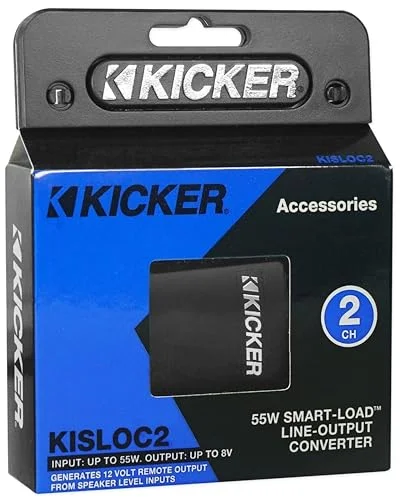
Kicker 46KISLOC2 K-Series Stereo Line-Output Converter w/Rem👑 Premium Pick
| Input Signal Handling | Up to 55 watts (16 volts) |
| Output Types | RCA line outputs plus 12V remote output |
| Remote Turn-On Output | 100 mA, 12V via DC offset |
| Channel Count | Stereo (2-channel) |
What We Found
Kicker’s 46KISLOC2 K-Series is built around a speaker-wire approach: it pulls signal from the factory speaker outputs and converts that into RCA plus a 100mA, 12V remote turn-on output. That DC-offset remote wire concept is useful when the factory radio doesn’t provide a clean trigger you can feed to an amp. It also has a stated input capacity of up to 55 watts at 16 volts, which lines up well with many typical OEM speaker signal ranges. Kicker’s messaging focuses on preserving the character of your original audio at different volume levels (they call out “true sonic accuracy”). The listing doesn’t provide deeper physical specs, but the overall design intent is a straightforward, low-intrusion bridge between OEM speaker outputs and an aftermarket amplifier. The included remote turn-on output should also help keep amplifier activation timing clean.
Who It’s For
I’d point you to this if your goal is basic speaker-to-RCA conversion using speaker-wire tapping, and you want the LOC to provide its own remote turn-on output. It fits the installs where you’re working with common factory signal levels (within that 55W at 16V input rating) and you’re not specifically trying to solve OEM impedance/load detection or bass compensation. It’s also a good match when you want one purpose-built converter rather than additional processing in the signal chain.
✅ Pros
- Adds RCA outputs and a dedicated 12V remote turn-on output using DC offset technology.
- 55W (16V) input rating supports many real-world factory speaker-to-amp installations.
- Kicker’s focus on “sonic accuracy” makes it a strong baseline choice for clean signal transfer.
❌ Cons
- No stated bass restoration or subwoofer-specific processing for factory bass roll-off.
- Input handling is capped at 55W, so very high-power factory systems may be a mismatch.
- No mentioned impedance load simulation, which can matter on newer amplified OEM setups.
💬 Our Take
Kicker’s 46KISLOC2 is for people who want clean, simple speaker-to-RCA conversion with a practical remote output—less for vehicles that need load control or dedicated bass correction.
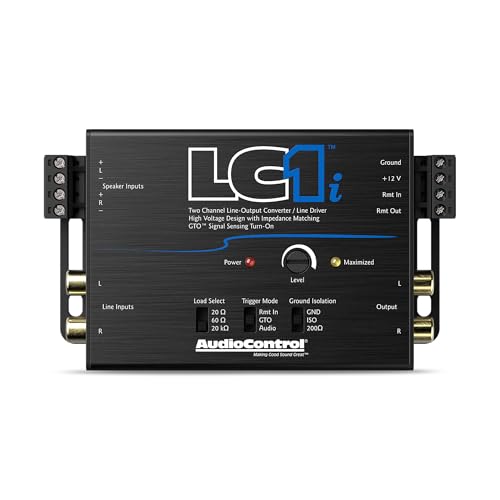
AudioControl LC1i Active 2-Channel Line Driver & Line Output🥈 Runner-Up
| Max Input Power | Up to 400W (40V) per channel |
| Load Options | 20 ohms, 60 ohms, 20k ohms |
| Turn-On Control | Selectable Great Turn On (GTO) signal sense |
| Remote Included | ACR-1 dash knob remote with 20-foot cable |
What We Found
AudioControl LC1i is all about active line driving and impedance matching for smoother factory integration. It’s rated to convert up to 400W (40V) per channel of speaker-level input into preamp outputs for subwoofers, amps, and processors. What stands out here is the onboard load selection: you can choose between 20 ohms, 60 ohms, and 20k ohms. That matters because one common LOC headache is OEM protection or shutdown behavior when it “sees” an improper speaker load. The LC1i’s load options are designed to help the factory system keep passing audio. It also uses a built-in line driver to send downstream gear the kind of signal it expects. Turn-on is handled with selectable Great Turn On (GTO) modes, plus an option for automatic or manual behavior through remote 12V input. The listing also calls out an ACR-1 dash knob remote with a 20-foot cable and a metal housing for cleaner mounting.
Who It’s For
This is the one I’d shortlist for cars with factory amplifiers where you may need load balancing to avoid dropouts or protection behavior. It also makes sense if you’re not replacing the head unit and you want to keep the OEM system acting like it’s supposed to. The high 400W per channel input headroom targets stronger factory signals and supports bigger aftermarket amplification plans. If you need quick access to gain adjustment after install, the ACR-1 remote knob is a practical touch.
✅ Pros
- 400W (40V) per channel capability supports demanding factory speaker outputs.
- Impedance load switches reduce the risk of OEM protection shutdowns.
- GTO turn-on sensing improves reliability compared to simple signal-trigger designs.
❌ Cons
- More features increase installation planning compared with basic budget LOCs.
- The value depends on whether load matching is actually needed in the vehicle.
- No explicit bass restoration is included, so factory roll-off may remain.
💬 Our Take
The LC1i is strongest when impedance/load flexibility and high input headroom are the priority—not when you just need basic high-to-RCA.
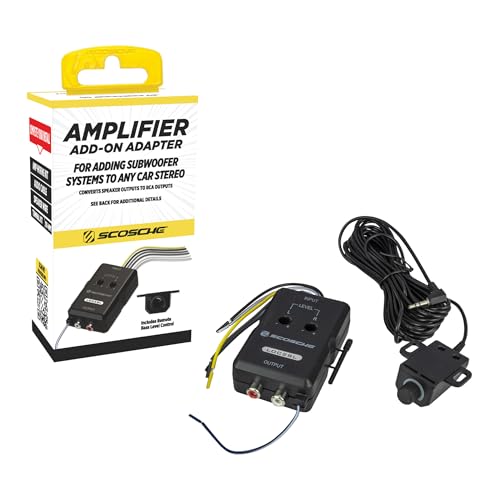
Scosche LOC2SL Line Output Converter with Remote Control Kno
| Channel Count | 2-channel |
| Output Type | High/low RCA converter for subwoofer amp |
| Controls | Remote control knob for level adjustment |
| Installation Style | Easy installation with compact design |
What We Found
Scosche LOC2SL is presented as a compact, 2-channel high/low RCA converter with support for a remote control knob. The idea is simple: convert factory speaker signals into RCA line level outputs so an aftermarket amp can run without complex rewiring. The listing leans into compatibility across different car audio setups and aims to keep signal conversion clean with reduced interference for crisp sound. It’s positioned as OEM-friendly in terms of build and footprint, which matters when you’re trying to fit everything behind panels. The remote knob is meant to make gain adjustment easier without reaching into the mounting spot once it’s installed. One limitation in the provided details: key electrical specs like maximum input watts, frequency response limits, or output voltage aren’t included here, so compatibility would still depend on your particular downstream amp sensitivity and how your factory head unit behaves.
Who It’s For
I’d choose the LOC2SL for a budget-friendly sub/amp addition where RCA inputs are the main requirement and speaker-wire tapping is the plan. It fits installs where space is tight and you want tuning access right at the dashboard or in-cabin mounting area. If your OEM setup doesn’t require special impedance loads or extra bass restoration beyond standard conversion, this type of LOC makes a lot of sense. The remote knob is especially helpful if you want to dial bass balance regularly during normal driving.
✅ Pros
- Remote knob access simplifies adjusting amp level during setup and afterward.
- Compact design helps fit tight locations without major rework.
- Focus on clean signal conversion supports clearer subwoofer performance.
❌ Cons
- No stated max input power or output voltage in the provided details.
- No explicit impedance load options for modern amplified OEM systems.
- No bass restoration technology is described to counter factory roll-off.
💬 Our Take
LOC2SL works best for straightforward speaker-to-RCA conversion and user-friendly tuning; it’s less compelling when your factory system needs impedance management or dedicated bass compensation.
Scosche LOC80 Line Output Converter – 2 Channel High/Low RCA
| Channel Count | 2-channel |
| Output Type | High/low RCA line output for subwoofer amps |
| Compatibility | Factory stereo integration for aftermarket amplifiers |
| Design | Compact and durable build for tight spaces |
What We Found
Scosche LOC80 is another 2-channel high/low RCA line output converter aimed at adding a subwoofer amplifier to factory systems. The core value is straightforward: convert speaker-level audio into RCA line level outputs to reduce rewiring and keep the install simple. Like the LOC2SL, it emphasizes versatility and a clean signal path designed to minimize interference, with a compact chassis meant for reliable long-term use in tight mounting spots. It also highlights seamless integration between a factory stereo and an aftermarket amplifier, aiming to preserve sound quality through the conversion stage. In the provided listing details, though, there aren’t max input watt specs, load management info, gain range, or clear remote turn-on behavior. Without those specifics, it’s harder to predict compatibility beyond “speaker-to-RCA into an amp,” which makes the downstream amp’s sensitivity and your vehicle’s output behavior more important.
Who It’s For
This is a good fit if you’re building a basic subwoofer or small amp setup and you’re comfortable using speaker-wire tapping. It’s best when you don’t need special load balancing from the converter and your factory head unit doesn’t rely on impedance tricks to stay awake. The compact housing suits common mounting spots like behind glove boxes, under seats, or near amplifiers. If your plan is “get RCA quickly, then set gain on the amp,” this aligns well.
✅ Pros
- Straightforward high/low RCA conversion enables simple speaker-wire integration.
- Compact housing supports clean, space-saving placement.
- Scosche’s signal-interference minimization focus targets better clarity.
❌ Cons
- No stated input power rating or output level limits in the provided details.
- No described impedance load options for amplified OEM systems.
- No bass-lift or roll-off compensation for factory sources.
💬 Our Take
LOC80 is an easy, no-fuss option for basic sub-amp integration; it’s not the first pick for complex OEM setups that demand load control or bass restoration.
NuIth Car Audio Speaker Wire to RCA Line Output Converter, 2💵 Budget Pick
| Channel Count | 2-channel or mono-capable design |
| Conversion | Speaker level to RCA line level |
| Control | Level gain adjustment on the converter |
| Turn-On Method | Speaker signal sensing relay trigger |
What We Found
NuIth’s speaker wire to RCA converter is positioned as a simple tap-and-convert adapter for adding a 2-channel or mono amplifier (or subwoofer amp) to stock audio. It converts high-voltage speaker signals down to lower-voltage RCA outputs, which is compatible with most aftermarket amps that use line inputs. A built-in level gain adjustment is intended to help dial bass down without having to stop and manually adjust the amp settings. The install description is straightforward: tap a speaker wire, sense the signal, and use a relay-style method for turning on power to the amplifier. The listing also highlights a neat power plug and “bonding and contact stability” for cleaner sound. What’s missing in the provided details is the kind of spec you’d want for confidence with demanding systems—frequency response, max input watts, output voltage, and turn-on current limits aren’t listed—so it’s harder to judge suitability for high-power or strongly amplified OEM setups.
Who It’s For
I’d treat this as a practical option for small-budget installs where the main goal is quick access to RCA from factory speaker outputs. It makes the most sense with a daily driver that has an uncomplicated factory head unit and a basic plan to add an amp/sub. The gain knob is useful if you’re trying to reduce boomy bass without a long tuning session. If you’re dealing with an amplified factory system that expects specific impedance behavior, or if you need precision bass correction, I’d be more cautious.
✅ Pros
- Includes a convenient gain adjustment for simpler bass tuning.
- Speaker-sensing relay turn-on reduces wiring complexity.
- Designed specifically for adding amps and subs to factory stereos via speaker taps.
❌ Cons
- No stated electrical ratings like max input watts or output voltage in the provided details.
- Speaker-sensing relay turn-on can be less consistent on some OEM head units.
- No impedance load simulation or bass roll-off correction features are described.
💬 Our Take
NuIth offers an accessible path to RCA inputs for basic builds, but the lack of detailed electrical ratings and OEM integration features makes it a cautious pick for demanding factory systems.
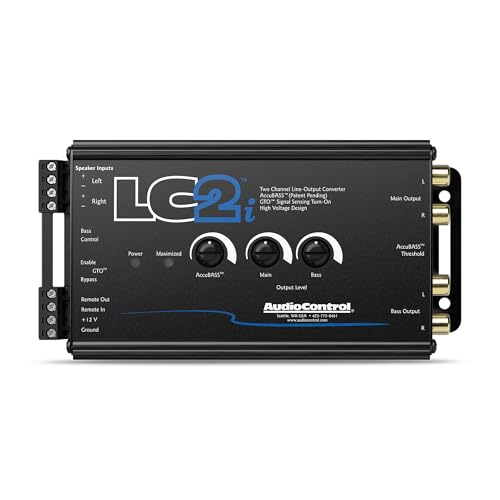
AudioControl LC2i 2-Channel Line Output Converter with AccuB
| Max Input Power | Up to 400W per channel |
| Bass Processing | AccuBASS to correct factory bass roll-off |
| Form Factor | Compact slim chassis with mounting brackets |
| Output Controls | Fixed and variable outputs with discrete onboard level controls |
What We Found
AudioControl LC2i is designed to improve factory audio by converting up to 400W per channel of speaker-level input into preamp outputs. Its signature feature is AccuBASS processing, which is meant to correct bass roll-off when volume increases on a factory radio—exactly the scenario people run into after adding an aftermarket amp, where the bass can feel like it falls away at higher listening levels. The LC2i also comes in a compact slim chassis with integrated mounting brackets to keep the installation tidy without eating up space. The listing also notes it retains vehicle control signals, including steering wheel and factory volume controls. Gain control is handled with onboard level controls that include both fixed and variable outputs, so you have a place to tune without relying entirely on the amp’s settings. One stated limitation in the provided information: it does not retain fader control when running multiple amplifiers. For multi-amp setups that need fader retention, the listing suggests other models in AudioControl’s lineup.
Who It’s For
This is for shoppers who want bass to stay fuller and more controlled after adding a sub or amp—especially if your complaint is volume-dependent bass drop-off. It suits installs where volume compensation matters more than “just” line conversion. The slim chassis helps if you’re mounting under seats or behind trim. It also fits owners who want steering-wheel control functionality to remain intact. If you don’t need fader retention across multiple amps, it’s a very clean match.
✅ Pros
- AccuBASS helps maintain bass response as factory volume increases.
- 400W per channel headroom supports stronger factory speaker feeds.
- Compact installation design simplifies mounting in limited spaces.
❌ Cons
- Fader retention does not apply when multiple amplifiers are used.
- No dedicated dash remote knob is mentioned in this specific version.
- No stated impedance load options for OEM amplified protection circuits.
💬 Our Take
LC2i is compelling for bass restoration and keeping a more factory-like tuning feel—my pick when bass roll-off correction matters more than OEM load matching.
CT Sounds CT-LC2 2-Channel Premium Line-Out Converter with B🏆 Editor’s Pick
| Channels | 2-channel premium line-out converter |
| Bass Compensation | BassLift restores factory bass roll-off |
| Outputs | Full-range main output and low-pass bass output |
| Manual Support | Includes 34-page step-by-step product manual |
What We Found
CT Sounds CT-LC2 is built around BassLift technology plus flexible output options. It’s a 2-channel premium line-out converter that includes a full-range main output and a low-pass bass output intended for subwoofer integration. BassLift is meant to restore or compensate for factory bass roll-off, which is a frequent issue when adding aftermarket amplification to OEM systems. Like other LOCs, it converts high-level signals from factory speakers into low-level RCA inputs for aftermarket gear. The listing also points to a 34-page product manual with step-by-step installation instructions, which can help reduce wiring mistakes. The standout difference versus simple pass-through LOCs is that CT-LC2 isn’t only about conversion—it adds a bass-focused processing path through BassLift and the low-pass bass output.
Who It’s For
I’d shortlist CT-LC2 when you want stronger bass response without depending entirely on amplifier EQ. It’s a good fit when you’d benefit from a dedicated sub-friendly output for sub amps or processors. BassLift is especially relevant for factory sources that roll off bass as volume rises. It also appeals to installers who want detailed documentation and a more complete solution than a basic LOC.
✅ Pros
- BassLift processing directly addresses factory bass roll-off, improving real-world bass retention.
- Dedicated low-pass bass output streamlines subwoofer amp setup.
- Includes a detailed manual to support accurate wiring and tuning.
❌ Cons
- No stated electrical input power rating or output voltage in the provided details.
- No described impedance load options for modern OEM amplified systems.
- System tuning may still require amplifier-level setup for best results.
💬 Our Take
CT-LC2 is the most bass-focused conversion in this list—BassLift plus the low-pass bass output makes it stand out for factory-source sub setups.
Skar Audio SKE2LOC 2-Channel Active Line Output Converter
| Turn-On Options | DC offset, audio sense, or remote 12V output |
| Adjustments | Fully adjustable bass control and main channel control |
| Frequency Response | 21Hz – 30kHz |
| Voltage | 13.8V DC with operating guidance |
What We Found
Skar Audio SKE2LOC is an active 2-channel line output converter that offers multiple selectable turn-on options. It supports DC offset signal sense, audio sense, and remote 12V output, which should improve compatibility with different factory head units and how they signal turn-on. Bass control and main channel control are fully adjustable, giving you direct tuning over both tonal balance and overall level. The listing includes a frequency response of 21Hz to 30kHz, suggesting a wide audio pass range rather than a narrow, sub-only path. Operating voltage is listed at 13.8V DC, aligned with typical car electrical environments. It also includes a remote level control and remote wire, which is helpful when you want the tuning point somewhere other than the mounting location.
Who It’s For
This is for installers and owners who want more flexibility in turn-on behavior and adjustable controls, instead of relying only on the amp for tuning. It’s also a fit when you’re not sure what kind of OEM trigger behavior you’ll get. The remote level control is handy when the best adjustment location stays within reach. Overall, it’s designed for active installs where practicality—tuning without excessive disassembly—matters.
✅ Pros
- Selectable turn-on modes improve reliability across different factory outputs.
- Independent bass and main channel controls support more precise tuning.
- Remote level control helps set gain without opening panels.
❌ Cons
- No stated max input power or load handling details in the provided information.
- No explicit impedance load simulation is described for modern OEM amplified systems.
- Performance expectations depend on proper setup of the remote level control and gains.
💬 Our Take
SKE2LOC brings flexible turn-on and real adjustment control to the table, making it a practical choice when OEM trigger behavior is uncertain.
Skar Audio SKAR2CH-LOC 2-Channel Speaker Wire to RCA Line-Ou
| Max Input Power | Up to 55 watts (16 volts) |
| Frequency Range | Flat 20Hz – 20kHz at all volume levels |
| Load Simulation | Applies 60-ohm load to each channel |
| RCA Output | Up to 8 Volts RMS |
What We Found
Skar Audio SKAR2CH-LOC is a speaker-wire to RCA line-out converter aimed at OEM compatibility and straightforward sub amp integration. It accepts up to 55 watts at 16 volts of input signal, matching typical factory speaker output ranges and fitting the common “capped” conversion category seen in passive-style LOC approaches. The listing provides a flat 20Hz to 20kHz frequency range at all volume levels, which implies the conversion stage is meant to keep response consistent rather than dulling low end as you increase volume. It also applies a 60-ohm load to each channel, intended to help bypass open-circuit protection behavior—useful on amplified OEM radios that may shut down or reduce output if the speaker load isn’t detected correctly. The RCA outputs are rated up to 8 volts RMS, which gives downstream amps a strong signal level to work with. Net effect: it’s positioned as a bridge from speaker outputs to line inputs with load-handling built in.
Who It’s For
I’d put this in the running for standard speaker-wire LOC installs where a sub amp needs RCA input and you want some protection logic help. It’s especially relevant for OEM radios that use protection circuits and may require load simulation. The 8V RMS output can also be beneficial for amps with lower sensitivity or for shorter cable runs where noise susceptibility is already less of an issue. It’s a good fit if you want consistent frequency behavior without adding extra bass-processing hardware.
✅ Pros
- 60-ohm load simulation helps avoid open-circuit protection shutdowns on some OEM radios.
- Flat 20Hz to 20kHz performance at all volume levels supports consistent conversion character.
- Up to 8V RMS RCA output gives a robust signal for aftermarket amps.
❌ Cons
- 55W (16V) input ceiling may under-match very high-output OEM speaker feeds.
- No bass restoration or roll-off compensation is described.
- No advanced turn-on control features are specified beyond typical LOC behavior.
💬 Our Take
SKAR2CH-LOC combines consistent response with practical 60-ohm load handling—an especially good fit for OEM setups that might otherwise trigger protection behavior.
AudioControl LC2i PRO 2-Channel Active Line Output Converter
| Max Input Power | Up to 400W per channel |
| Bass Processing | AccuBASS bass roll-off correction |
| Gain Control | Dual variable stereo gain with LED clipping indicator |
| Remote Control | ACR-1 dash knob remote with 20-foot cable |
What We Found
AudioControl LC2i PRO builds on the LC2i approach with AccuBASS plus more hands-on remote bass control. It converts up to 400W per channel of speaker-level input into high-quality preamp outputs for aftermarket subwoofers, amplifiers, and processors. AccuBASS is meant to correct bass roll-off as factory volume increases, targeting the common complaint that bass output drops off after an amp install. What the PRO version adds in the provided details is setup accuracy and easier tuning: it includes dual variable stereo gain controls and an LED clipping indicator to help reduce the chances of distortion during adjustment. For in-vehicle tuning, it includes the ACR-1 dash knob remote, a 20-foot remote cable, and a metal housing with integrated mounting tabs for cleaner flush installs. Turn-on can use selectable Great Turn On (GTO) signal sense for automatic powering. Overall, it’s positioned as an “integration first” option, not just a basic LOC that expects you to do all tuning later.
Who It’s For
This is for buyers who want factory bass behavior plus the ability to adjust bass level in real time without reaching behind panels—especially if your listening varies day to day. It also fits owners who prefer ergonomic, dashboard-level controls (thanks to the included dash remote). If you’re planning a more involved system with multiple amps and you care about gain and bass targeting, the PRO’s tuning tools can save some installer time and reduce guesswork.
✅ Pros
- AccuBASS helps maintain bass response as factory volume rises.
- LED clipping indicator and dual variable gain controls improve tuning accuracy.
- Included dash remote enables convenient bass level adjustments after installation.
❌ Cons
- More complex feature set can require careful setup time for best results.
- High-end performance depends on matching downstream amplifier gains to avoid clipping.
- No impedance load options are stated for OEM amplifier protection circuits in the provided details.
💬 Our Take
LC2i PRO pairs AccuBASS with practical dash-level bass control, making it feel more complete than basic LOC options.
What to Look For Before Buying
Choosing the right best line output converter car audio setup shouldn’t start with brand—it should start with how your factory audio behaves and what your aftermarket amp expects at its input. I’d focus on input handling, output voltage, and whether the turn-on method matches typical OEM behavior. Bass performance is the other big divider: if your factory bass rolls off as volume rises, you’ll want bass compensation features rather than only RCA conversion. Finally, I’d confirm installation practicality—remote controls, mounting size, and whether you’re doing speaker-wire tapping or a more integrated OEM workflow.
Check Match input handling and output voltage to the factory and amp
Match the converter’s input handling to your factory speaker output, and check the stated max input signal rating so you don’t end up under-driving or over-stressing it. Then look at RCA output voltage—if your aftermarket amp has lower sensitivity, stronger output voltage can make integration smoother. For high-output OEM audio, prioritize input headroom. Even with a clean LOC signal, you still need to set amp gain correctly to avoid clipping.
Value Choose the right feature depth for the problem
Decide what problem you’re actually fixing. A basic LOC helps with speaker-to-RCA wiring, but it won’t automatically solve bass roll-off or OEM protection/load behavior. Look at BassLift or AccuBASS-style processing if bass gets weaker at higher volume. If the factory system cuts audio when it detects an open load, impedance load options matter. Pick the feature depth that lines up with your symptoms.
Rating Use rating signals when available, but rely on specs
Since the provided listings don’t include rating data, I’d treat specs as the main “signal.” Prioritize clear electrical information like max input watts, frequency response, and output voltage. When user ratings are available elsewhere, I’d still look for consistent mentions of low noise, reliable turn-on, and clean output without distortion. If a product omits key electrical values, it’s harder to match it confidently to your amp and vehicle.
Verify Confirm turn-on compatibility and install ergonomics
Turn-on compatibility is where installs succeed or annoy you daily. Some LOCs use DC offset sense, others use audio sense, and others rely on remote 12V triggering—so verify what your head unit can realistically provide. Remote knobs and long cables can make a big difference once the converter is mounted out of reach. Also confirm the unit’s mounting features actually fit the location you plan to use.
Frequently Asked Questions
What does a line output converter do, and why not use speaker wires directly into an amp?
A line output converter takes high-level speaker signals and turns them into low-level RCA preamp signals. Most aftermarket amps expect RCA inputs, not speaker-level voltage, so feeding speaker output directly to an amp can lead to poor gain matching, distortion, or even amp protection triggers. The LOC keeps the integration cleaner so your amp can control volume and EQ where it makes sense.
How do turn-on methods affect noise, popping, or failed sub activation?
Turn-on methods matter because they control how reliably the LOC wakes up when the car starts or when audio begins. DC offset sense, audio sense, and remote 12V triggering all behave differently depending on the OEM head unit. If the LOC/amp turns on late, you can get pops at startup. If it never senses a trigger, you can end up with silence until you manually adjust something. A reliable turn-on reduces those daily annoyances.
Is bass roll-off correction built into every LOC?
No—bass roll-off correction isn’t built into every LOC. Many basic converters only handle speaker-to-RCA conversion and leave bass behavior to the amp and your vehicle’s EQ. Bass roll-off correction needs dedicated processing like AccuBASS or BassLift. If your bass drops out when you turn the volume up, that’s the feature set I would prioritize.
Why do some converters include impedance load options?
Some factory radios detect open loads and can reduce output or trigger protection when speaker loads change. Impedance load simulation (for example, using a specified ohm load per channel) helps the radio “see” a normal speaker. That can prevent shutdown behavior and keeps the system output stable—especially important with modern amplified OEM setups.
How should gain and clipping be handled after installing a line output converter?
After installing a LOC, I’d set amplifier gain systematically instead of guessing at random volumes. Use the LOC gain controls if your model includes them, then fine-tune amplifier input sensitivity. If the converter provides a clipping indicator, use it to avoid distortion. If you hear harshness or distortion at moderate volume, lower the LOC/amp gain or adjust sensitivity so the signal stays clean.
🎯 Final Verdict
CT Sounds CT-LC2 is my top pick for best line output converter car audio because it combines BassLift bass compensation with both a full-range main output and a dedicated low-pass bass output. That combo is directly aimed at one of the most common real-world problems: factory bass rolling off after you add an amp. AudioControl LC1i is the strongest alternative when your priority is OEM integration for amplified vehicles—especially when you need impedance/load options and higher input headroom. If your goal is bass-focused correction, go CT Sounds. If your goal is preventing OEM protection behavior and you need load handling, LC1i is the better match.