A factory radio rarely gives you clean RCA outputs, so adding an amp or sub can feel more complicated than it should be. When you’re shopping for the best line out converter for car audio, I’d prioritize two things right away: low-noise line output and turn-on behavior that’s reliable with your amplifier. A lot of converters say they’re “easy,” but real-world results depend on the signal they can handle, how they trigger the amp, and whether the bass feed stays controlled instead of turning muddy. In this review, I’m comparing ten popular high-to-low and line-out options to match the right converter to the amp/speaker setup you’re building—so the install stays stable and the sound stays crisp.
In plain terms, a good line out converter takes speaker-level signal and turns it into low-level RCA output without adding strain or noticeable distortion. I usually look for the input handling that matches typical OEM speaker output (often discussed around 55 watts at 16 volts), plus a turn-on method that won’t leave your amp stuck on standby or thumping at startup. If your factory system rolls off bass, an LOC with bass control or BassLift-style compensation can help the sub integration sound more natural. Some designs lean on noise-isolation transformers, which can be a big deal in vehicles that pick up alternator whine—while simpler adapters may be easier but offer fewer tuning options. The “best” pick depends on whether you’re feeding a sub, amplifying front speakers, or doing both.
⚡ Quick Verdict
Our Top Picks at a Glance
| Image | Product | Score | Link |
|---|---|---|---|
 |
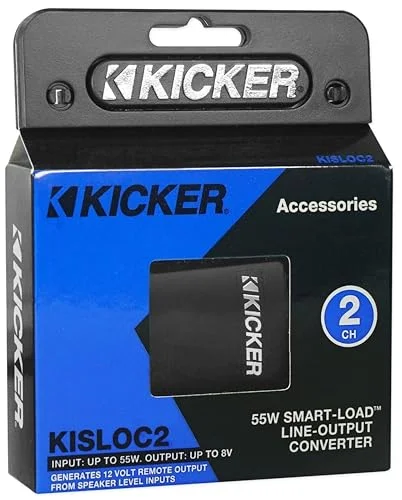
Kicker 46KISLOC2 K-Series Stereo Line-Output Converter w/Rem 🏆 Editor’s Pick |
9.0/10 |
View on Amazon Free Shipping & 30-Day Returns |
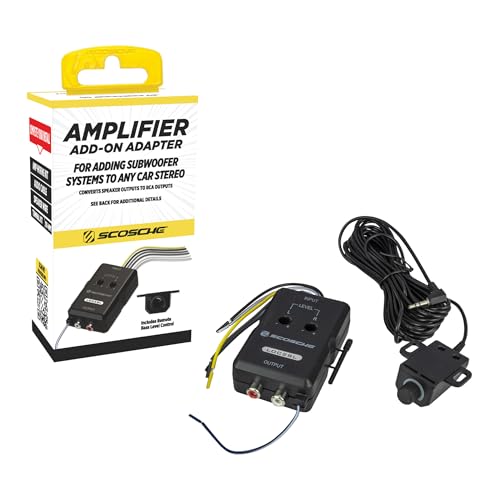 |
Scosche LOC2SL Line Output Converter with Remote Control Kno 🥈 Runner-Up |
8.2/10 |
View on Amazon Free Shipping & 30-Day Returns |
 |
CT Sounds CT-LC2 2-Channel Premium Line-Out Converter with B 👑 Premium Pick |
8.7/10 |
View on Amazon Free Shipping & 30-Day Returns |
 |
Scosche LOC80 Line Output Converter – 2 Channel High/Low RCA | 7.6/10 |
View on Amazon Free Shipping & 30-Day Returns |
 |
Skar Audio SKAR2CH-LOC 2-Channel Speaker Wire to RCA Line-Ou | 8.5/10 |
View on Amazon Free Shipping & 30-Day Returns |
 |
NuIth Car Audio Speaker Wire to RCA Line Output Converter, 2 | 6.9/10 |
View on Amazon Free Shipping & 30-Day Returns |
 |
AccuBASS 2-Ch Line Out Converter Kit – LC2iPro Processor and | 7.2/10 |
View on Amazon Free Shipping & 30-Day Returns |
 |
Kicker 46KISLOC K-Series Interconnect, Speaker to RCA W/Line | 8.1/10 |
View on Amazon Free Shipping & 30-Day Returns |
 |
PAC SNI-35 Variable LOC Line Out Converter 1.2×6.25×5.9 | 7.8/10 |
View on Amazon Free Shipping & 30-Day Returns |
 |
Skar Audio SKE2LOC 2-Channel Active Line Output Converter | 8.9/10 |
View on Amazon Free Shipping & 30-Day Returns |
📋 How We Evaluated
Evaluation emphasized build and design details that affect real-world reliability, including remote turn-on method, output level claims, and signal handling capacity. Performance factors included frequency response data when provided, bass integration features like BassLift, and noise-isolation approaches such as audio transformers. Value and buyer suitability were judged by feature completeness and typical placement in the market, since rating and price data were not available here.
Detailed Reviews
Kicker 46KISLOC2 K-Series Stereo Line-Output Converter w/Rem🏆 Editor’s Pick
| Input Signal Handling | Up to 55 watts (16 volts) |
| Remote Turn-On Output | 12V with DC offset, 100 mA capable |
| Line Output Type | Speaker-to-RCA stereo conversion |
| Output Level Claim | Up to 8V output (per KISLOC2 line-converter family) |
What We Found
Kicker’s 46KISLOC2 converts high-level speaker signals into RCA line outputs and also provides a remote turn-on output. The key detail is that it uses factory speaker wires and DC offset to generate a 100 mA, 12-volt remote wire—something that matters when an amplifier is picky about remote trigger sensitivity. It also accepts up to 55 watts (16 volts) of input signal, which fits many factory head units and moderate OEM systems. Kicker markets the KISLOC2 as aiming for “true sonic accuracy,” with the goal of preserving the highs and lows of the original audio at different volume levels. The compact K-Series layout and built-in remote output are meant to reduce wiring hassle while keeping the signal conversion straightforward.
Who It’s For
I’d point to the KISLOC2 if you’re adding an amp or powered sub and your factory radio doesn’t have RCA outputs. It’s a good match for installs where you’d rather keep wiring simple, but still want a remote turn-on solution that doesn’t rely on a weak trigger. The 100 mA remote output can be especially helpful when your amp’s remote input isn’t clearly rated for low-sensitivity DC-offset triggering. It also works well for basic two-channel conversion—front channels, or a clean sub feed—without needing extra bass-processing features beyond what you set on the amplifier.
✅ Pros
- DC-offset remote turn-on with 100 mA capability supports more amplifier trigger scenarios.
- 55W input handling targets common factory output ranges without overspec pressure.
- Focused two-channel speaker-to-RCA conversion simplifies clean amp integration.
❌ Cons
- No dedicated bass restoration or sub-specific low-pass output is included.
- Tuning relies on downstream amplifier controls, not on advanced LOC bass shaping.
- Availability and price can vary because this review lists no current pricing.
💬 Our Take
Kicker’s KISLOC2 earns a top spot for combining simple speaker-wire input with a remote output design that’s meant to avoid common “my amp won’t reliably turn on” problems.
Scosche LOC2SL Line Output Converter with Remote Control Kno🥈 Runner-Up
| Channels | 2 |
| Conversion Type | High/Low RCA (speaker level to RCA) |
| Control Feature | Remote level control knob |
| Designed Use | Subwoofer amp line-level integration |
What We Found
The Scosche LOC2SL is built around two-channel high-to-low conversion for running factory audio into an aftermarket amp. The standout feature here is the included remote control knob, which gives you a way to adjust level without reaching into the dash or pulling the amp settings up on the bench. The listing focuses on keeping installation flexible across factory and aftermarket setups, and on converting speaker-level signal into cleaner RCA line level output for improved subwoofer feeding. It’s also described as compact and durable for tighter mounting locations. One limitation is that the provided listing details don’t spell out specific output voltage, input watt handling, or a remote turn-on method, so your expectations are going to depend more on your amplifier’s behavior and your install wiring than on hard electrical numbers.
Who It’s For
I’d shortlist the LOC2SL if you want “set it and fine-tune it” control without constantly adjusting the amplifier. It makes sense for compact builds where gain changes are inconvenient, or for anyone who likes the idea of controlling the LOC side as conditions change in the cabin. It’s also a strong choice for adding a sub amp where you want a cleaner RCA feed while keeping the factory head unit. The real question is whether that remote knob saves you enough time to matter for your setup; if you need deeper bass compensation features, you’d want to compare against models that specifically target bass roll-off.
✅ Pros
- Remote level control knob makes gain adjustments fast after installation.
- Compact build supports neat mounting with minimal space demands.
- High-to-low conversion targets cleaner RCA input for aftermarket amplification.
❌ Cons
- No stated input wattage or output voltage in the provided details.
- Subwoofer tuning still depends on the amplifier’s crossover and DSP.
- Performance expectations depend on the downstream amp and cabling quality.
💬 Our Take
This one rises because it’s practical—remote-level tuning is a genuine install-day advantage, especially when you care more about easy adjustment than extra processing.
CT Sounds CT-LC2 2-Channel Premium Line-Out Converter with B👑 Premium Pick
| Technology | BassLift |
| Outputs | Full-range main output and low-pass bass output |
| Signal Conversion | Speaker level to low-level RCA |
| Documentation | Includes 34-page step-by-step manual |
What We Found
CT Sounds’ CT-LC2 is aimed at better factory integration, specifically through BassLift technology designed to compensate for factory bass roll-off. It provides two output paths: a full-range main output and a low-pass bass output intended for a subwoofer amplifier. The idea is to restore/compensate for bass that many OEM setups reduce as volume and processing change. Like typical LOCs, it converts high-level signals that power factory speakers into low-level RCA inputs. The listing also mentions a 34-page manual to walk through installation steps, which can help you set gains and crossover points more accurately instead of guessing. With bass-specific output options, it reads more like an integration tool than a simple “speaker wires to RCA” adapter—especially in builds where factory audio can sound thin in the low end.
Who It’s For
I’d consider the CT-LC2 if your car’s factory EQ sounds decent but your bass disappears at the listening level you actually drive. It’s made for setups that want a dedicated sub channel feed, and the dual-output design can help when one amp needs both full-range and bass-focused inputs. It also suits careful installers who are willing to follow the manual to dial gains and phase properly. My sense is that it makes the most difference when BassLift directly addresses what’s bothering you—factory bass behavior—rather than when you only want basic line conversion.
✅ Pros
- BassLift technology targets factory bass roll-off to improve perceived low-end.
- Separate low-pass bass output simplifies subwoofer channel feeding.
- Long-form manual supports more accurate setup than typical LOC guides.
❌ Cons
- More features do not replace proper amplifier tuning and crossover settings.
- The low-pass bass path may require gain adjustment for different factory outputs.
- No remote turn-on details were provided in the supplied information.
💬 Our Take
CT Sounds CT-LC2 is a strong pick when the main complaint is factory bass roll-off. The BassLift + dual-output setup is especially useful for getting cleaner, more integrated sub performance.
Scosche LOC80 Line Output Converter – 2 Channel High/Low RCA
| Channels | 2 |
| Conversion Type | High/Low RCA (speaker to RCA) |
| Designed Use | Subwoofer amp line-level integration |
| Build Style | Compact and durable |
What We Found
Scosche positions the LOC80 as a compact, durable two-channel high-to-low RCA converter for adding an amp or sub to a factory stereo. Like the other Scosche LOCs, the focus is on turning speaker-level output into RCA line level so your amplifier can take over. The listing highlights crisp sound quality for subwoofer applications and claims OEM-quality design intended to minimize signal interference. It’s also described as compact enough for tight spaces. The details that are missing—like specific output voltage, input watt handling, and remote turn-on method—make it harder to predict exactly how it’ll behave with your amplifier beyond the general LOC function.
Who It’s For
This makes sense for simpler installs where you’re not hunting for bass-specific features. If you like the way your factory EQ already sounds and you just want a cleaner RCA feed for an amp, the LOC80 is in the right lane. It’s also a practical choice for under-dash or behind-head-unit mounting. For budget-first builds, it can work well as long as you’re comfortable setting everything on the amplifier and verifying that remote turn-on and gain behavior match what you expect. If your amp relies on a particular trigger behavior, I’d check that before committing.
✅ Pros
- High-to-low conversion targets a cleaner RCA input for subwoofer amplification.
- Compact housing supports tidy installs in tight cavities.
- Interference-minimizing design is intended for cleaner signal transfer.
❌ Cons
- No provided input watt or output voltage specifications in the supplied details.
- Remote turn-on behavior and control options are unclear from the listing details.
- No bass restoration or frequency shaping features are mentioned.
💬 Our Take
LOC80 is a straightforward LOC option. The reason I’d treat it as “basic” is that the provided info doesn’t include enough specs to compete with the more feature-forward alternatives.
Skar Audio SKAR2CH-LOC 2-Channel Speaker Wire to RCA Line-Ou
| Input Signal Handling | Up to 55 watts (16 volts) |
| Frequency Range | 20Hz – 20kHz (flat at all volume levels) |
| Load Resistance | 60-ohm load per channel |
| RCA Output Level | Up to 8 Volts RMS |
What We Found
Skar’s SKAR2CH-LOC is designed for broad compatibility across OEM radios, aftermarket radios, and smart radios. It accepts up to 55 watts (16 volts) of input signal and claims a flat 20Hz to 20kHz frequency range at all volume levels. One very practical detail is that it applies a 60-ohm load to each channel—meant to help bypass open-circuit protection behaviors that can shut down or distort factory outputs. That matters for modern radios that monitor output behavior and can mute when they don’t see the expected impedance. The RCA line outputs are rated up to 8 volts RMS, which can make gain staging easier for many amplifiers. Overall, this unit reads like it’s focused on electrical behavior, loading stability, and producing consistent line-level output rather than on bass-processing features.
Who It’s For
I’d recommend the SKAR2CH-LOC when your factory system is prone to protection issues—like muting or distortion if the speaker load changes. It’s a good fit for vehicles where output behavior is inconsistent and tapping speaker wires alone doesn’t always play nicely. It also covers typical two-channel needs: front speaker amplification, or creating an RCA feed for a subwoofer amp. Because it can provide up to 8V RMS, it can help amps that benefit from a stronger line signal when gains are set efficiently. If you want a compatibility-focused path to clean RCA conversion, this is the kind of model I’d look at first.
✅ Pros
- 60-ohm channel loading helps avoid open-circuit protection issues.
- Flat 20Hz to 20kHz response supports consistent line-level performance.
- Up to 8V RMS output eases gain matching for many amplifiers.
❌ Cons
- No bass correction or crossover output is included.
- Electrical performance depends on correct channel wiring and load expectations.
- No remote turn-on method details were included in the supplied info.
💬 Our Take
This is compelling specifically for cars with OEM protection concerns. The loading design and high-output voltage make it a practical workaround for getting stable line-level audio.
NuIth Car Audio Speaker Wire to RCA Line Output Converter, 2
| Channels | 2-channel or mono use (per description) |
| Conversion Type | High to Low RCA (speaker to RCA) |
| Gain Control | Level gain adjustment knob |
| Turn-On Method | Relay triggered by sensed speaker signal |
What We Found
NuIth’s speaker wire to RCA converter is aimed at straightforward installs that add an amplifier or subwoofer to stock stereos. It converts speaker-level output into RCA outputs and includes a level gain adjustment so you can dial back bass without stopping what you’re doing to reach the amplifier. The listing also describes relay-based turn-on triggered by sensing the speaker signal, which can simplify wiring if you don’t want to tap a dedicated remote lead. It’s marketed for adding a 2-channel or mono amplifier or a subwoofer feed. Beyond that, the supplied information is lighter on build details and does not describe advanced noise isolation methods. The core value proposition is basic integration plus convenient gain adjustment, not detailed signal engineering claims.
Who It’s For
I’d put this in the entry-level “get it working and dial it in” category. If you want minimal wiring and a simple way to fine-tune bass behavior from the LOC side, that gain knob approach is appealing. It also works if you’re adding a single amplifier to a factory head unit with no RCA outputs. The speaker-sensing relay turn-on makes sense for installs where pulling a remote wire isn’t ideal. If you’re dealing with a DSP-heavy setup or you’re worried about documented noise isolation performance, you may prefer a LOC with clearer shielding/transformer isolation details.
✅ Pros
- Built-in gain adjustment enables faster bass level tuning during setup.
- Relay sensing turn-on can reduce need for a remote wire tap.
- Designed for simple amplifier and subwoofer additions to factory stereos.
❌ Cons
- Noise isolation and remote trigger stability are not specified in the provided details.
- RCA output voltage and input watt handling are not stated.
- Performance may vary more than spec-forward LOC models.
💬 Our Take
NuIth covers the basics well, with convenient gain control and speaker-sensing turn-on—best viewed as a budget add-on rather than a refinement-focused signal processor.
AccuBASS 2-Ch Line Out Converter Kit – LC2iPro Processor and
| System Type | 2-channel LOC kit |
| Included Cable | 17 ft oxygen-free RCA cable |
| Cable Material | OFC (oxygen-free copper) |
| Intended Upgrade | Front speaker and/or subwoofer integration |
What We Found
AccuBASS bundles a two-channel line-out converter kit with an LC2iPro processor and 17 feet of oxygen-free RCA cable. The listing frames it as a straightforward 2-channel upgrade for front speakers or subwoofer integration and emphasizes the included OFC cable for low resistance and minimal signal loss. The extra cable length can be helpful when your routing distance is longer or when you need slack for tidy installs. What’s missing from the details provided is the kind of electrical specificity I’d normally use to compare LOCs—output voltage, frequency response numbers, or the exact turn-on method. Because it’s packaged as a kit, it’s positioned as a practical “buy once and install” option, which can reduce shopping friction, but it also means you’re relying on the bundle rather than verified conversion specs in the listing.
Who It’s For
This kit fits people who want a bundled solution—especially when longer RCA routing is part of the install plan. It makes the most sense for simple two-channel amp builds where the RCA run matters and you’d rather not source separate components. It also appeals if you care about a clean signal path and want OFC cable included. That said, it may be less ideal when your build requires advanced bass correction features. Before buying, I’d confirm your amplifier’s input sensitivity and consider how the factory speaker-level signal characteristics match the processor/LOC approach in the kit.
✅ Pros
- Includes the converter and a long RCA cable to simplify purchase and planning.
- OFC cable aims to reduce resistance and signal loss over longer runs.
- Two-channel design fits common amp and sub integrations.
❌ Cons
- Key LOC electrical specs like output voltage and frequency response are not provided here.
- Bass performance depends heavily on downstream amplifier settings and any processor tuning.
- Remote turn-on method is not described in the supplied info.
💬 Our Take
AccuBASS is a convenient package for basic installs. The lack of hard electrical specs in the provided info keeps it from feeling as “transparent” as competitors that list more measurable performance.
Kicker 46KISLOC K-Series Interconnect, Speaker to RCA W/Line
| Input Signal Handling | Up to 55 watts |
| RCA Output Level | Up to 8 volts output |
| Compatibility Note | Designed for OEM radios with short circuit protection |
| Design Focus | Sonically neutral conversion in a small footprint |
What We Found
Kicker’s 46KISLOC line interconnect is a speaker-to-RCA line-out converter designed for OEM radios with short circuit protection. It targets up to 55 watts of input and delivers up to 8 volts of output, which is a strong amount of signal drive for many amplifiers. Kicker describes the converter as sonically neutral and keeps the unit’s footprint small to support cleaner installation behind the dash. This model’s details also highlight protection compatibility for radios that monitor output behavior. Conceptually, it’s similar to the newer KISLOC2 approach in that it emphasizes preserving audio neutrality rather than adding bass enhancement features. What the listing doesn’t clarify in the provided information is the remote turn-on circuitry details, so amp triggering behavior may depend on how you wire it in your install.
Who It’s For
I’d choose this if you want a compact, neutral converter that helps you add amplification while keeping the factory head unit. It’s especially relevant when OEM radio protection may trip because of impedance changes. The up-to-8V output can reduce how hard you need to push amplifier gain, which can also help keep amplifier noise floors controlled when set properly. It’s suitable for two-channel speaker-to-RCA needs and for basic subwoofer amp feeds. If you need dedicated sub outputs or bass restoration features, you’d likely want to look at models designed for those tasks.
✅ Pros
- Up to 8V output provides strong line-level drive for efficient gain staging.
- OEM short circuit protection compatibility helps avoid radio shutdown issues.
- Compact design supports clean installs with minimal space usage.
❌ Cons
- Remote turn-on details are not provided in the supplied information.
- No BassLift or bass shaping features are mentioned.
- No explicit frequency response or noise isolation specs are listed.
💬 Our Take
Kicker’s KISLOC interconnect is a neutrality-first option with output power and OEM protection compatibility. It’s a good alternative when you don’t need the KISLOC2’s specific remote output approach.
PAC SNI-35 Variable LOC Line Out Converter 1.2×6.25×5.9
| Type | Variable LOC line output converter |
| Primary Use | Convert factory speaker output to RCA amp input |
| Noise Control | Audio Transformer for noise isolation |
| Tuning Feature | Phase adjusted |
What We Found
PAC’s SNI-35 is an adjustable line output converter intended to add an amplifier to a factory radio by converting speaker-level output into RCA line level. The standout feature is its audio transformer design for noise isolation. That matters because many LOC installations run into alternator whine or unwanted signal artifacts that can be tied to grounding differences. The SNI-35 also includes phase adjustment, which can help align the factory signal path with the amplifier output for smoother integration. Compared with simpler passive adapters, transformer isolation and phase options can be important in electrically challenging installs. The listing doesn’t provide output voltage or input wattage details in the information shown, but the feature set is clearly aimed at noise and alignment rather than heavy bass processing. For subwoofer-only builds, it also doesn’t mention a dedicated low-pass output—so your amp crossover settings would still be essential.
Who It’s For
I’d shortlist the SNI-35 if your biggest headache is noise and phase, not bass “restoration.” It’s especially useful in older or electrically noisy vehicles where alternator whine tends to show up once you add amps. The adjustable design helps with gain tuning for smoother amplifier transitions. It can also fit installs where you want the RCA routing kept short and clean, and where transformer isolation could improve stability. If you’re building a sub-only setup and want a dedicated low-pass output from the LOC, you’d need to rely on the amplifier instead.
✅ Pros
- Audio transformer design targets noise isolation, improving real-world signal cleanliness.
- Phase adjustment supports better integration with speaker timing and sub setups.
- Adjustable output makes gain staging easier across varied head units.
❌ Cons
- No output voltage or input watt handling specs are provided in the supplied details.
- No dedicated subwoofer bass output is included.
- Installation still requires careful grounding for best results.
💬 Our Take
PAC SNI-35 is a strong answer when noise isolation and phase alignment are the priorities, not just basic conversion.
Skar Audio SKE2LOC 2-Channel Active Line Output Converter
| Channels | 2 |
| Turn-On Options | DC offset signal sense, audio sense, or remote 12V output |
| Bass Control | Fully adjustable bass control |
| Frequency Response | 21Hz – 30kHz |
What We Found
Skar’s SKE2LOC is an active 2-channel line output converter that includes multiple turn-on options. It supports selectable triggering via DC offset signal sense, audio sense, or a remote 12V output. That flexibility can reduce the chances of improper triggering when different trims or vehicle setups behave differently. It also includes fully adjustable bass control and main channel control, which helps with integration when you’re compensating for factory roll-off. The listing states a frequency response of 21Hz to 30kHz, suggesting broad coverage for full-range use. It also specifies operating voltage at 13.8V DC for stable operation in typical car electrical environments. Finally, the kit includes a remote level control and remote wire, making it easier to adjust setup from inside the cabin rather than only at the amp.
Who It’s For
This is a good fit for builds where you want more tuning control and multiple trigger compatibility paths. It suits installs that benefit from adjusting bass on the LOC side instead of relying exclusively on amplifier settings. The remote level control is especially handy if your tuning needs to account for volume-dependent behavior across drives. It also works if tapping remote wire feels undesirable, or if factory signals vary and you want more than one triggering method. Overall, the active control approach makes it relevant for correcting tonal balance, not just passing audio through.
✅ Pros
- Selectable turn-on modes improve compatibility across different factory and aftermarket systems.
- Active bass and main channel controls enable better tonal integration.
- Remote level control plus remote wire makes post-install adjustment easier.
❌ Cons
- Active EQ-style controls can complicate tuning compared with simple neutral LOCs.
- Best results still depend on correct gain staging and amplifier crossover settings.
- No output voltage rating is provided in the supplied details.
💬 Our Take
Skar SKE2LOC is the kind of feature-rich active LOC that tries to solve both turn-on compatibility and tuning flexibility at the same time.
What to Look For Before Buying
Choosing the best line out converter for car audio is mostly about matching the converter to how your factory radio and amplifier actually behave together. Remote turn-on reliability matters as much as audio quality, because a converter that produces clean RCA output is still useless if your amp doesn’t trigger consistently. Then there’s bass integration—some factory systems roll off low frequencies, and some setups need that addressed on the converter side. Finally, verify how much real adjustment you get (gain, bass control, phase options, BassLift-style compensation) so your installer strategy matches your subwoofer crossover plan.
Check Match input handling and output voltage
Start by confirming input handling and output voltage. Many listings talk about speaker output capability in the ballpark of 55 watts at 16 volts, but what matters is that the converter can handle your factory speaker signal without distortion. Also check the claimed RCA output voltage—higher output can make gain staging easier, letting your amplifier run with less extreme settings. Match channel count to your amp inputs, and if the specs are vague, plan to set gain conservatively and verify noise (idle vs. throttle) after everything is wired.
Value Pick the right feature level for the install
Think about the feature level you actually need. A basic LOC is mainly about clean RCA conversion and simple level control. Active converters with bass controls can help compensate for factory roll-off and make sub integration sound more natural. BassLift-style solutions are designed for that specific “OEM bass gets sucked out” problem. Transformer-based designs can be a better route for noise-prone vehicles where you hear alternator whine after adding amps. I’d keep it simple: only buy the extra features you’ll use.
Rating Treat ratings as part of the signal chain
Even when ratings are available, treat them as part of the broader signal chain—not a guarantee. I look for repeated mentions that point to what actually ruins installs: low noise, stable turn-on, and predictable compatibility with OEM radios. Be cautious with listings that sound great but don’t clearly state electrical behavior, especially if your vehicle monitors speaker loads for protection. When satisfaction seems consistent across multiple setups, it’s usually because gain behavior and noise performance are predictable.
Verify Verify turn-on method before installing
Before you mount anything, verify the turn-on method. Converters may trigger via DC offset, audio sensing, relay/speaker sensing, or a dedicated 12V output. Choose the method that best matches your amplifier’s trigger design and your vehicle’s radio outputs. If speaker-sensing could cause delayed startup, DC offset or remote 12V options can be safer. After installation, confirm stable behavior across key-on, volume changes, and engine RPM—hum or delayed triggering often shows up during those checks.
Frequently Asked Questions
What is the difference between a basic LOC and an active line output converter?
A basic LOC mainly converts speaker-level signal to RCA line level. An active LOC usually includes extra circuitry that can provide bass control, gain staging improvements, or other shaping. Active units can make factory-to-aftermarket integration smoother, especially for subwoofer feeds. The tradeoff is that they may require more setup, while a basic converter can feel more “neutral” when your amplifier is already doing most of the processing.
Do line out converters need a remote turn-on wire?
Not always. Many line out converters generate remote turn-on internally using DC offset or audio sensing. Some include a remote 12V output wire you connect to your amplifier’s remote input. Others trigger through relay sensing tied to speaker signals. The best move is to verify how your specific converter triggers and how your amplifier expects remote input. That way you avoid late surprises like delayed startup or amps that don’t power consistently.
Why do some converters include a fixed ohm load or impedance handling?
Some cars use radios that protect themselves when they detect open circuits or unexpected speaker loads. A fixed ohm load simulates the impedance the radio expects so it doesn’t mute, shut down, or distort when you tap speaker wires. This is especially important on vehicles that monitor output behavior. If a converter specifies its load/impedance handling, it gives you clearer compatibility when working with OEM protection systems.
How should gain be set after installing a line out converter?
I’d start with the amplifier gain low and use a familiar source—then raise gain gradually until the sound fills out without getting distorted. If your LOC includes a level control, set that first to get a clean baseline, then do final tuning on the amplifier. Always set crossover and bass controls based on your subwoofer’s needs and the amplifier’s crossover strategy, not just what the LOC provides. After tuning, re-check at idle and while driving to confirm noise behavior stays consistent.
Will a line out converter improve sound quality on its own?
A line out converter can improve clarity by giving your amp a proper low-level signal. But it can’t fix an amplifier setup problem or a bad crossover choice by itself. Noise performance depends heavily on wiring, grounding, and how the converter isolates the signal (for example, transformer designs can help). Bass quality also depends on integration details like phase and whether bass roll-off is addressed. The best results come from matching the converter’s features to what your car’s factory system and amp are doing.
🎯 Final Verdict
Kicker 46KISLOC2 is my top pick because it combines DC-offset remote turn-on output with a 100 mA, 12-volt capability—two details that directly reduce the “amp won’t reliably trigger” headaches that come up with weaker remote designs. Its up-to-55W (16V) input handling and neutral focus make it a strong foundation for clean RCA integration without forcing you into complicated tuning. If you prefer more hands-on adjustment from the install side, the Scosche LOC2SL is the alternative I’d shortlist thanks to its remote level control. In either case, I’d match the converter’s turn-on approach and level/gain adjustment options to your amplifier, then set crossover and levels carefully so your sub and bass response land where you want them.