
Motorcycle engines run hotter per liter than most car engines, and a lot of bikes still bathe the clutch plates in the same oil. That combo is why “any 10W-40 off the shelf” is a gamble. The right motorcycle oil is built for shear, clutch feel, and gear protection, not just a car API donut on the label.
This guide walks through ten solid picks riders actually buy, from single quarts to shop packs and gallon jugs. You will see who each bottle fits best, what JASO MA and MA2 mean in plain English, and how to avoid the usual viscosity mistakes that show up as slipping clutches or noisy top ends.
Best Motorcycle Engine Oil: Top 10 Compared
| Image | Product | Best for | Buy |
|---|---|---|---|
 |
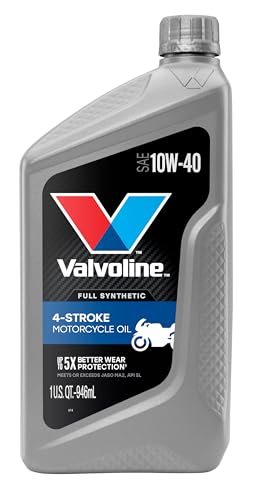
Valvoline 4-stroke motorcycle full synthetic 10W-40 (1 qt) | Riders who want a name brand full synthetic in a single bottle for service day. | View on Amazon
Free shipping and 30-day returns on many orders
|
 |
Valvoline full synthetic 10W-40 (case of 6 quarts) | High mile riders and small shops that like stocking the same oil all season. | View on Amazon
Free shipping and 30-day returns on many orders
|
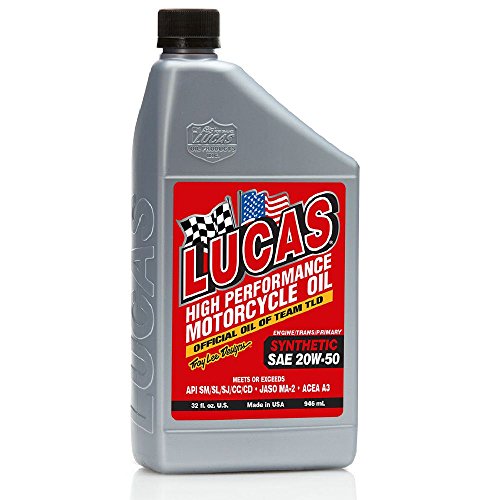 |
Lucas Oil 10702 synthetic motorcycle oil 20W-50 (1 qt) | Air cooled twins, warm climates, or manuals that spec a thicker multigrade. | View on Amazon
Free shipping and 30-day returns on many orders
|
 |
Lucas Oil 10767 high performance conventional 10W-40 (1 qt) | Budget conscious riders who still want a motorcycle specific formula. | View on Amazon
Free shipping and 30-day returns on many orders
|
 |
Valvoline 4-stroke motorcycle 10W-40 (1 qt) | Everyday commuter bikes when you want motorcycle oil without paying full synthetic prices. | View on Amazon
Free shipping and 30-day returns on many orders
|
 |
Kawasaki 4-stroke motorcycle oil 10W-40 (1 gallon) | Green team owners, multi bike garages, or anyone tired of buying quarts in bulk. | View on Amazon
Free shipping and 30-day returns on many orders
|
 |
Castrol Power1 4T 10W-40 full synthetic (6 quarts) | Sport and street riders who burn through oil and like Power1 on the label. | View on Amazon
Free shipping and 30-day returns on many orders
|
 |
Castrol Power1 4T 10W-50 full synthetic (6 quarts) | Hot weather, hard use, or bikes that spec 10W-50 in the manual. | View on Amazon
Free shipping and 30-day returns on many orders
|
 |
ULTRA 1PLUS 4T 10W-40 synthetic blend (API SL, JASO MA2) | Riders who want MA2 on the sheet and a blend price point in a gallon jug. | View on Amazon
Free shipping and 30-day returns on many orders
|
 |
Lucas high performance 10W-40 semi-synthetic (1 qt) | A middle ground between full synthetic cost and straight mineral oil. | View on Amazon
Free shipping and 30-day returns on many orders
|
Detailed Reviews: 10 Motorcycle Engine Oils
Order matches the table. Your owner manual still outranks any roundup. If the bike has a wet clutch, stick with JASO MA or MA2 unless the manufacturer explicitly allows something else.
Valvoline 4-stroke motorcycle full synthetic 10W-40 (1 qt)
Single bottle synthetic for riders who change oil on a Saturday and ride all week.
Full synthetic motorcycle oil is not magic, but it usually holds viscosity under heat better than budget mineral when you are stuck in traffic or lugging tall gears. Valvoline’s four stroke motorcycle line is aimed at shared sump bikes, which is the detail people skip when they pour passenger car oil and wonder why the clutch got grabby.
After a change, shifts should feel clean and the motor should not sound louder at the same RPM. If it does, recheck level before you blame the brand.
Pros
- Strong heat stability for a synthetic motorcycle formula.
- Easy to find and easy to pour from a single quart.
- Fits many 4-stroke bikes that spec 10W-40.
Cons
- Costs more per quart than conventional or blends.
- Still needs manual approval for your exact model.
Best for
Valvoline full synthetic 10W-40 (case of 6)
Buying six at a time is how you stop running out at 4 p.m. on a Sunday. If you maintain more than one four stroke, the case pricing often beats repeated single bottle buys by enough to matter over a season.
Storage tip: keep cases off a cold concrete floor if you can. Temperature swings and condensation hate sealed bottles too.
Pros
- Better per quart math for frequent changers.
- Same synthetic formula across the case.
- Handy for small shops and riding families.
Cons
- Upfront cost is higher than one quart.
- Needs shelf space you might not have in an apartment.
Best for
Lucas Oil 10702 synthetic motorcycle oil 20W-50
20W-50 shows up on older air cooled twins, some V twins, and bikes that see brutal summer heat. Lucas built a following on “stout” lubricants, and this SKU is the thicker option in the list when your book or climate points away from 10W-40.
Cold morning startups can feel a little slower to circulate with a heavier grade. That is physics, not a defect.
Pros
- Matches riders who need 20W-50 per manual or heat load.
- Synthetic base for tougher shear than old school straight grades.
- Popular with cruiser and air cooled crowds.
Cons
- Wrong choice if your bike wants 10W-40 or 10W-30.
- One quart may not fill big twins in one shot.
Best for
Lucas Oil 10767 conventional 10W-40
Not every bike needs a trophy fluid. A motorcycle rated conventional 10W-40 can be totally fine for mellow commuting and older machines with looser tolerances, as long as JASO clutch needs are still met on wet clutch bikes.
Change it on time. Conventional pays for itself in the wallet and costs you in the crankcase if you stretch intervals like synthetic.
Pros
- Lower buy in than synthetic lines.
- Lucas branding with motorcycle packaging.
- Sensible for mild use when spec allows conventional.
Cons
- Less headroom under extreme heat than full synthetic.
- May not match high performance track schedules.
Best for
Valvoline 4-stroke motorcycle 10W-40 (1 qt)
Think of this as the workhorse option in the Valvoline family when you do not need to pay synthetic prices for a simple service. It still needs to meet your bike’s service code, but for many street bikes, a quality motorcycle 10W-40 is the sweet spot.
If winter gets bitter, consider whether your manual allows a winter grade or shorter warm up habits. Oil that is fine in July can feel lazy in January starts.
Pros
- Usually cheaper than full synthetic from the same brand.
- Easy quart size for home mechanics.
- Wide fitment for 10W-40 four strokes.
Cons
- Not the pick for track temps on every bike.
- Older engines with leaks can weep with any fresh oil change.
Best for
Kawasaki 4-stroke motorcycle oil 10W-40 (1 gallon)
A gallon jug is honesty for people who ride enough to measure life in oil changes. Kawasaki branded fluid is a simple story at the dealer counter and in the garage when you want the OEM label on the bottle.
Pouring from a gallon rewards a long neck funnel and patience. Rushing is how you get a striped case bolt and oil on the tire.
Pros
- Great value per ounce if you use it up.
- OEM branding for Kawasaki owners who care about paperwork.
- Fewer empty bottles than buying quarts.
Cons
- Heavy and awkward compared with a single quart.
- Still verify compatibility beyond the color of your fairings.
Best for
Castrol Power1 4T 10W-40 full synthetic (6 pack)
Power1 is the lane for riders who twist the grip harder than the average commuter. A six quart pack lines up with frequent services or two bikes on the same spec, and synthetic buys you more room before the oil looks tired on hot days.
Count quarts before you start. Discovering you are one short at midnight is a tradition, but not a good one.
Pros
- Convenient stock for Power1 fans.
- Full synthetic for spirited street riding.
- Pack value versus singles.
Cons
- Big bikes may need more than six for multiple full changes.
- Storage footprint for the pack.
Best for
Castrol Power1 4T 10W-50 full synthetic (6 pack)
Stepping to 10W-50 is usually about heat, load, or a factory chart that lists it next to your climate zone. Castrol’s six pack is the same stocking logic as the 10W-40 sibling, just with a wider hot side of the viscosity spread.
If fuel dilution is an issue on your bike, oil analysis tells you more than forum threads.
Pros
- Matches hot weather and high load use cases.
- Synthetic Power1 formula in bulk.
- Six quarts for busy seasons.
Cons
- Too heavy if your manual wants 10W-40 only.
- Same storage bulk as any six quart pack.
Best for
ULTRA 1PLUS 4T 10W-40 synthetic blend (JASO MA2)
JASO MA2 on the label is a handshake promise for modern wet clutches that need friction material compatibility. The gallon jug is the story here: fewer trips, easier math for bikes that drink more than a quart, and a blend price that does not sting like full synthetic on a budget build.
API SL is older passenger car language, but paired with MA2 it still tells you someone thought about the bike side, not only the sedan shelf.
Pros
- MA2 callout for wet clutch bikes.
- Gallon sizing for volume users.
- Blend cost with upgraded additives versus plain mineral.
Cons
- Not every rider wants a gallon commitment.
- Check manual for API and JASO needs on newer bikes.
Best for
Lucas 10W-40 semi-synthetic motorcycle oil
Semi synthetic is the compromise lane. You get some synthetic benefit without paying the full ticket, which matters when you like short intervals or you ride in dirty conditions and change often anyway.
Lucas tends to feel “thick” in reputation. Trust the dipstick and the manual, not the forum meme.
Pros
- Balance of cost and upgraded base stock.
- 10W-40 fits a huge slice of street bikes.
- Simple quart maintenance.
Cons
- Not full synthetic if your use case demands it.
- Verify JASO needs for your clutch type.
Best for
Buying Guide: Motorcycle Engine Oil That Will Not Fight Your Clutch
Start with three inputs: what the manual says, whether you have a wet clutch, and how hot your typical ride gets. Everything else is preference and budget.
Viscosity is not “close enough”
10W-40, 10W-50, and 20W-50 are different films at temperature. The wrong grade can show up as noisy valvetrain, sluggish warm up flow, or clutch slip if friction modifiers are wrong for bikes.
Synthetic, blend, or conventional
Synthetic shines when heat and shear stack up. Conventional is fine for mild duty if you change on time. Blends split the difference on price and performance. None of them fix neglected changes.
API and JASO on the bottle
JASO MA and MA2 matter for shared sump bikes where the clutch swims in engine oil. If you ride a dry clutch machine, follow that manufacturer’s spec instead of internet defaults.
Wet Clutch Reality Check: Why Car Oil Is a Gamble
Passenger car oils sometimes carry friction modifiers that help cars and hurt motorcycle wet clutches. That is not elitism, it is chemistry. If you are unsure, buy oil that states JASO MA or MA2, or use exactly what the bike maker lists.
Slip that shows up right after a change is often the wrong category of oil, low level, or air in the hydraulics. Fix the cheap stuff first.
Storage, Shelf Life, and Half Full Bottles
Cap bottles tight, store upright, and keep them away from furnace dust and welding grit. Write the open date on the label. Oil is not milk, but contamination still wins dirty garages.
If a bottle sat open for years, buy fresh for a bike you care about. The savings are not worth a clutch pack.
FAQs: Motorcycle Engine Oil
What does motorcycle oil cost per quart?
Most motorcycle specific oils land around $8 to $20 per quart depending on synthetic level and pack size. Gallons and six packs change the per ounce math.
How often should I change motorcycle oil?
Use the manual interval first, then shorten it for hard use, dust, or lots of short trips. Oil is cheaper than bearings.
Can I mix brands between changes?
In an emergency top off, same grade and JASO class is the goal. For a full change, draining clean and refilling one product is simpler and easier to troubleshoot.
Is MA2 always better than MA?
MA2 is a newer friction standard for many modern wet clutches. Use what your manual or oil filler cap chart specifies.
Do I need different oil for break in?
Follow the manufacturer. Some bikes want a short initial interval with standard oil, others ship with a specific run in plan. Guessing is how you void goodwill.
Final Word
Pick a motorcycle rated oil in the viscosity your builder approves, respect JASO when the clutch shares the sump, and change it like maintenance matters. Do that and most bikes reward you with cleaner shifts, quieter valvetrain, and fewer “mystery” problems that trace back to the last cheap shortcut.

- 10 Best Tire For Zipp 303 Xplr 2026 - September 23, 2026
- 10 Best Tire For Zero Turn On Hills 2026 - September 23, 2026
- 10 Best Tire For Zx6r 2026 - September 23, 2026